
Bishop of Leeds calls for end to binary leave/remain labels in Brexit debate and focus on values to shape shared future

On 5th September 2019 the House of Lords considered the European Union (Withdrawal) (Number 6) Bill at its Second Reading. It had been passed by the House of Commons the previous day despite Government opposition. Its effect would be to require the Prime Minister to request an extension of the Article 50 period beyond the current 31st October Brexit deadline, should the Prime Minister not have agreed a withdrawal deal or Parliament voted for no deal, by the 19th October. The Bishop of Leeds, Rt Revd Nick Baines, spoke in the debate:

The Lord Bishop of Leeds: My Lords, it is already evident in some of the terms of this conversation—of this debate—that we have to get away from this binary thinking about leave or remain. They were terms that pertained to the referendum in 2016 where the question was “what”. Where we have got stuck is on the question of “how”. You do not need a degree in logic or philosophy to recognise that they are different questions. The Members of the other place and of this House trying to take their obligations seriously under the constitution to serve the people of this country means that we have got to this sort of impasse. It is not because of negligence, or because of waging ongoing campaigns from three years ago. I deeply resent the constant insinuation that if you voted remain then you remain a remainer and anything you do has to be suspected as being a plot to ensure that we remain. Many people in this House who voted remain have gone on to say that the referendum result was to leave and we have to move on to the question of how to do that but with the responsibility to look to the interests of our country. Continue reading “Bishop of Leeds calls for end to binary leave/remain labels in Brexit debate and focus on values to shape shared future”
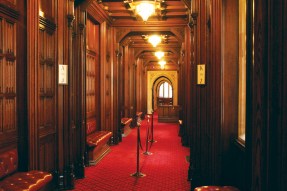
Votes: Motion to suspend usual procedures to enable consideration of European Union (Withdrawal) (No. 6) Bill

Lords voting Lobby
House of Lords Division Lobby

On 4th September 2019 the House of Lords considered a motion from the Leader of the Opposition to suspend the usual procedures for the taking of a Bill, in order to enable the House to take all stages of the European Union (Withdrawal) (Number 6) Bill 2017-19 on Thursday and Friday of that week.

A series of amendments were tabled to that motion by those objecting to that procedural change and those who disagreed with the Bill, which had been passed by MPs that day and would require Government to seek an extension of the Article 50 period for the UK to leave the EU.

A series of votes took place throughout the day and late into the night on the amendments tabled and also to bring an end to speeches by Members that were considered attempts to filibuster. A number of bishops took part in those votes, largely on the side of those Peers wishing to see the procedural changes made, and to ensure business could progress.

The House eventually passed the motion after agreement was reached between Government and Opposition parties. Details follow: Continue reading “Votes: Motion to suspend usual procedures to enable consideration of European Union (Withdrawal) (No. 6) Bill”

Bishop of Leeds appeals for common sense and consensus during Lords filibuster to delay Brexit extension Bill

Leeds0518On 4th September 2019 the House of Lords voted on a series of amendments to a Motion from the Leader of the Opposition to suspend the usual procedures for the taking of a Bill, in order to enable the House to take all stages of the European Union (Withdrawal) (Number 6) Bill 2017-19 on Thursday and Friday of that week. Conservative Peer Lord True moved an amendment to the Motion to oppose the suspension of the usual rules for consideration. The Bishop of Leeds contributed to the debate:

Lord Bishop of Leeds: My Lords, I strongly endorse what the noble Lord has said. It seems to me that we have to be realistic. I speak as a Lord Spiritual with an obligation to engage in what was called “high politics” earlier, as a Member of this House, noting that the Lords Spiritual cannot be whipped and that we are not a party.

It seems to me that we have to be realistic and say that this prorogation has been disingenuously propagated as being just a little extension to recess, when we know that it is of a completely different order.

Continue reading “Bishop of Leeds appeals for common sense and consensus during Lords filibuster to delay Brexit extension Bill”

Bishop of Durham asks about EU Settlement Scheme, vulnerable groups and children

19.04.24 DurhamOn 30th July 2019 the Bishop of Durham, Rt Revd Paul Butler, received a written answer from Government, in reply to three questions about children and vulnerable EU nationals and the EU Settlement Scheme:

The Lord Bishop of Durham: (i) HL17344 To ask Her Majesty’s Government what is the status of the guidance issued on 3 April to all local authorities and health and social care trusts in regard to the EU Settlement Scheme and looked-after children and care leavers; and whether it is mandatory for local authorities to follow that guidance.

(ii) HL17345 To ask Her Majesty’s Government what evidence was collected on the children who were non-UK European nationals accommodated under section 20 of the Children Act 1989, their family situations and possible vulnerabilities, before drafting the guidance on EU Settlement Scheme and looked-after children and care leavers issued on 3 April.

(iii) HL17346 To ask Her Majesty’s Government what plans they have to evaluate the impact of the funding of support and its provision to vulnerable groups, including analysis of what future work is needed to ensure that vulnerable groups are able to apply to the EU Settlement Scheme after funding ends in March 2020. Continue reading “Bishop of Durham asks about EU Settlement Scheme, vulnerable groups and children”

Bishop of Rochester supports Bill on status of EEA Nationals in UK

17.10 Rochester3On 19th July 2019 the House of Lords debated at Second Reading the EEA Nationals (Indefinite Leave to Remain) Bill, introduced by Lord Oates. The Bishop of Rochester, Rt Revd James Langstaff, spoke in the debate:
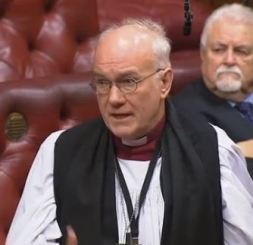
The Lord Bishop of Rochester: My Lords, some hundred yards down the road from my cathedral in Rochester there is an establishment known variously as La Providence or the French Hospital. It is an alms house-type foundation established for those of Huguenot descent. After it was bombed out of its previous premises in the 1940s, a predecessor of mine, the late Bishop Christopher Chavasse, who was himself connected with that community, found premises for it in Rochester—and that is where it remains. That building, which I walk past several times a week, is for me a kind of visual reminder of the spirit of generous welcome shown to that earlier generation of European migrants.

Continue reading “Bishop of Rochester supports Bill on status of EEA Nationals in UK”

Bishop of Oxford warns against “four temptations” in Brexit debate

On 27th February 2019 the House of Lords debated the Government’s EU Withdrawal Agreement and Political Declaration. The Bishop of Oxford, Rt Revd Stephen Croft, spoke in the debate.  His full speech is below: 

Oxford 5718b

The Lord Bishop of Oxford: My Lords, I always rise to speak in this Chamber with some fear and trepidation but never more so than today: not only because of the expertise, passion and conviction in this Chamber but also the jeopardy in which we find ourselves as a nation and a Parliament. My journey through the Brexit process is that for seven years until the referendum year, I was the bishop in Sheffield and south Yorkshire, where some of the communities voted by almost 70% to leave the European Union. I moved shortly afterwards to the diocese of Oxford, where the three counties, by and large, are significantly in favour of remain.

Continue reading “Bishop of Oxford warns against “four temptations” in Brexit debate”

Votes: European Union Withdrawal Agreement

On 28th January 2019 a vote took place on an Opposition Motion on the outcome of Government negotiations with the European Union. Two bishops took part. Baroness smith, who moved the amendment, explained its purpose here. Continue reading “Votes: European Union Withdrawal Agreement”

Bishop of Chester speaks during Trade Bill amendments on Customs Union

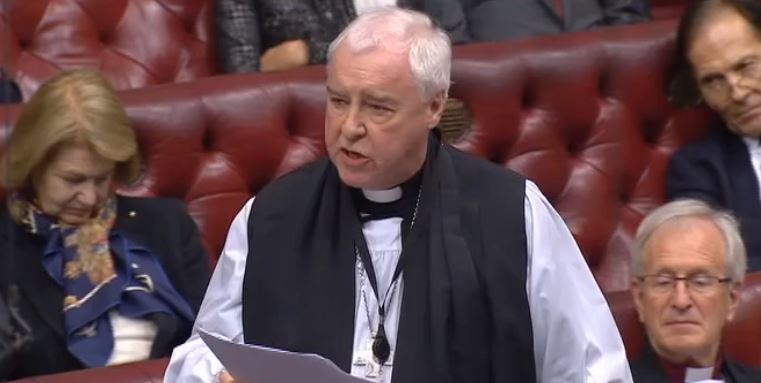
On 23rd January 2019 the House of Lords considered the Government’s Trade Bill during its Committee stage.  The Bishop of Chester, Rt Revd Peter Forster, spoke during debate on Amendment 24, moved by Lord Stevenson of Balmacara, which sought to keep the UK in a customs union with the European Union.
After Clause 5, insert the following new Clause—“Customs union​. It shall be the objective of Her Majesty’s Government to take all necessary steps to implement an international trade agreement which enables the United Kingdom to participate after exit day in a customs union with the European Union.”

The Lord Bishop of Chester: My Lords, it is always a pleasure to listen to the noble Lord, Lord Patten of Barnes, especially when religious imagery creeps into his speech with gospel truth and sacerdotal approaches. His opening remark reminded me of Trollope’s definition of hell: an eternity of listening to one’s own sermons. I do not know whether the noble Lord, Lord Patten of Barnes, has similar feelings about his speeches, but they are always wonderful to hear.

Bishop of Lincoln urges tolerance and respect for diversity in Brexit debate

On 14th January 2019 the House of Lords debated the Government’s EU Withdrawal Agreement and Political Declaration. The Bishop of Lincoln, Rt Revd Christopher Lowson, spoke in the debate. His full speech is below:

The Lord Bishop of Lincoln: My Lords, I am honoured to speak after the noble Baroness—honoured and a little daunted. This is the first time I have spoken on this issue. I therefore want to say something about my context of Lincoln and then consider what a Bishop might usefully add to this debate.

As your Lordships know, Lincolnshire is one of the parts of the United Kingdom that voted most emphatically in favour of the UK’s withdrawal from the EU, with 66% voting to leave. I have thought hard about why that should be the case. There are the obvious reasons—the tip of the iceberg, if you like. Nationally, these would be described in terms of sovereignty and immigration.

Continue reading “Bishop of Lincoln urges tolerance and respect for diversity in Brexit debate”

Archbishop of York calls for reconciliation and a more civil Brexit debate

On 12th December 2018 Lord Dykes asked Her Majesty’s Government “what representations they have received on a People’s Vote on Brexit.” The Archbishop of York, Most Revd John Sentamu, asked a follow-up question:

The Archbishop of York: My Lords, would the Minister agree with the African sentiment that when two elephants fight, the grass gets hurt? Is it now time to look for reconciliation as a nation and move forward? Is it now time to stop point-scoring and actually listen to one another with a sense of humility, humbleness and kindness and to have more civil discourse? Otherwise, elephants are fighting and the grass is getting hurt. Continue reading “Archbishop of York calls for reconciliation and a more civil Brexit debate”