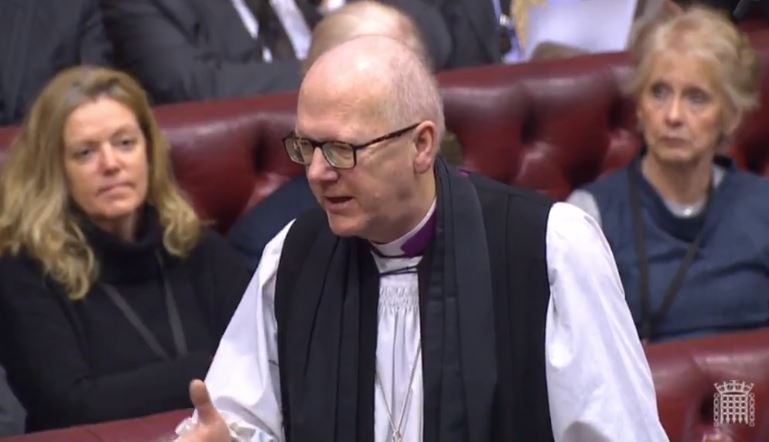
Financial Services Bill: Bishop of St Albans supports amendments on transparency and statutory governance

On 19th April 2021, during a debate on the Financial Services Bill, the Bishop of St Albans spoke in support of two amendments tabled by Lord Sikka, outlining the need for greater transparency around ministerial interventions in cases of financial misconduct, and supporting the establishment of a supervisory board to strengthen the accountability of financial watchdogs:
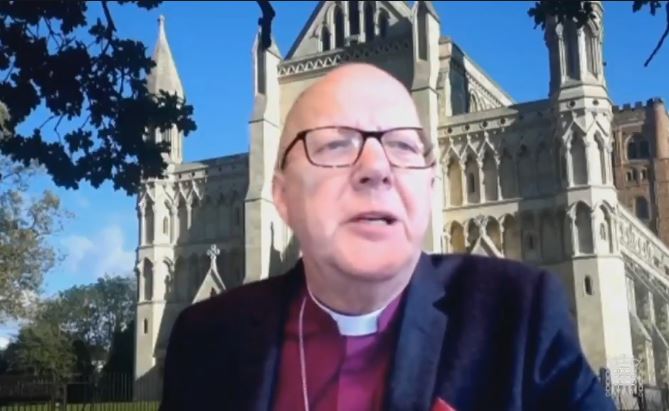
The Lord Bishop of St Albans [V]: My Lords, I will be brief in my support for this amendment. I am very grateful to the noble Lord, Lord Sikka, and the noble Baroness, Lady Bennett of Manor Castle, for speaking at great length. I therefore do not need to add a huge amount more, not least as I intend to go into a bit more detail on my concerns about transparency when speaking in support of Amendment 34, which touches on similar issues of accountability.

I am a little puzzled why the noble Baroness, Lady Neville-Rolfe, thinks that this is a case of bad cases making bad laws. It seems to me that there have been very considerable concerns in the past. Surely those ought to be investigated.

Continue reading “Financial Services Bill: Bishop of St Albans supports amendments on transparency and statutory governance”
Financial Services Bill: Bishop of St Albans supports amendments to establish standards for debt collectors and to regulate online gambling

On 14th April 2021, the House of Lords debated amendments to the Financial Services Bill. The Bishop of St Albans spoke in support of an amendment seeking to introduce a regulatory body for debt collectors, and moved his own amendment which would establish greater autonomy for users on blocking online gambling purchases:

The Lord Bishop of St Albans [V]: My Lords, I shall speak to Amendment 16 and then address my own Amendment 27. The introduction of a regulatory body to oversee the rules governing the behaviour of bailiffs would greatly strengthen complaints handling for the victims of practices that fall outside the national guidelines. The FCA reported in its Financial Lives 2020 Survey that 3.8 million people in the UK are currently experiencing “financial difficulty”. It is a terrible situation that takes a significant toll on people’s health and relationships. This amendment seeks to address an important concern: the fair treatment of people by enforcement agents who collect debts, often from vulnerable people who are in grave financial distress.

The absence of an independent regulator means that, when breaches of national standards occur, any complaints will be dealt with through the company or a trade association, before possibly being passed on to an ombudsman. This is an arduous process that prevents complaints from being adequately actioned. Furthermore, these national standards are not legally binding, which obscures the extent to which an individual can seek redress. No industry is exempt from poor practice. While most enforcement agents will probably abide by national standards, nevertheless we need to make sure that they are properly regulated.

Continue reading “Financial Services Bill: Bishop of St Albans supports amendments to establish standards for debt collectors and to regulate online gambling”

Votes: Financial Services Bill

On 14th April 2021, the House of Lords debated the Financial Services Bill. Votes were held on amendments to the bill, in which Bishops took part:

Continue reading “Votes: Financial Services Bill”

Votes: Financial Services Bill

On 24th March 2021, the House of Lords debated the Financial Services Bill. Votes were held on amendments to the bill, in which a Bishop took part:

Continue reading “Votes: Financial Services Bill”

Financial Services Bill: Bishop of St Albans tables amendment on regulation of financial advice

The Bishop of St Albans tabled his amendment 136 to the Financial Services Bill in Grand Committee on 3rd March 2021, and spoke in support of a further amendment on debt financing:

The Lord Bishop of St Albans [V]: My Lords, I shall speak to Amendment 136, which is in my name. I tabled the amendment because of concerns about the lower levels of responsibility placed on appointed representatives and the increased risk of poor financial advice that this poses.

The objective of the senior managers and certification regime to influence an individual’s behaviour by making them personally accountable to the regulator is one that I agree with and it was the correct response to the culture that had arisen in the City of London prior to the financial crash in 2008. I know that some Members of this House have criticised the application of the senior managers and certification regime, or lack of it, by the FCA, and I agree that it is worrying. However, I do not want to comment on the effectiveness of the SMCR but to remedy an anomaly that exists within the current framework.

The SMCR currently applies to directly regulated financial advisers, yet it does not extend to those who are appointed representatives. This anomaly means that, while a directly regulated adviser carries a personal responsibility for the quality of the advice they provide to their customer, no such responsibility is incumbent upon the adviser who is an appointed representative. This is despite the reality that a customer seeking financial advice is unlikely to know the difference between the two types of adviser and the possible effects that this might have on the quality of the advice they receive.

Continue reading “Financial Services Bill: Bishop of St Albans tables amendment on regulation of financial advice”

Financial Services Bill: Bishop of St Albans speaks at second reading

The Bishop of St Albans spoke at the second reading of the Financial Services Bill on 28th January 2021, raising issues of ethical investment and tax avoidance:

The Lord Bishop of St Albans: My Lords, it is right to underline the importance of the financial services sector in our country and the huge contribution it makes. There are many laudable things in this Bill: the strengthening of money laundering regulations; encouraging saving; and the creation of parity between white collar crimes, such as market manipulation, and general fraud by extending the maximum sentence.

I was disappointed, however, to hear that the Commons amendment exploring the whole issue of ethical investment with reference to genocide did not make it into the Bill. I understand the Government’s reservation—they do not want to politicise the FCA. Nevertheless, I hope that “global Britain”, as laid out by the intentions of the Bill, will also be very much “ethical Britain” as we place ourselves in the world under the new freedoms that we have. I also note, with other noble Lords, the concern that there seems to be so little clarity on the question of parliamentary scrutiny. I am sure we will return to this as the Bill passes through your Lordships’ House. Of course, fundamental to this whole future is that the FCA is adequately resourced to fulfil its task.

Continue reading “Financial Services Bill: Bishop of St Albans speaks at second reading”