Bishop of St Albans asks about use of farmland as flood defences

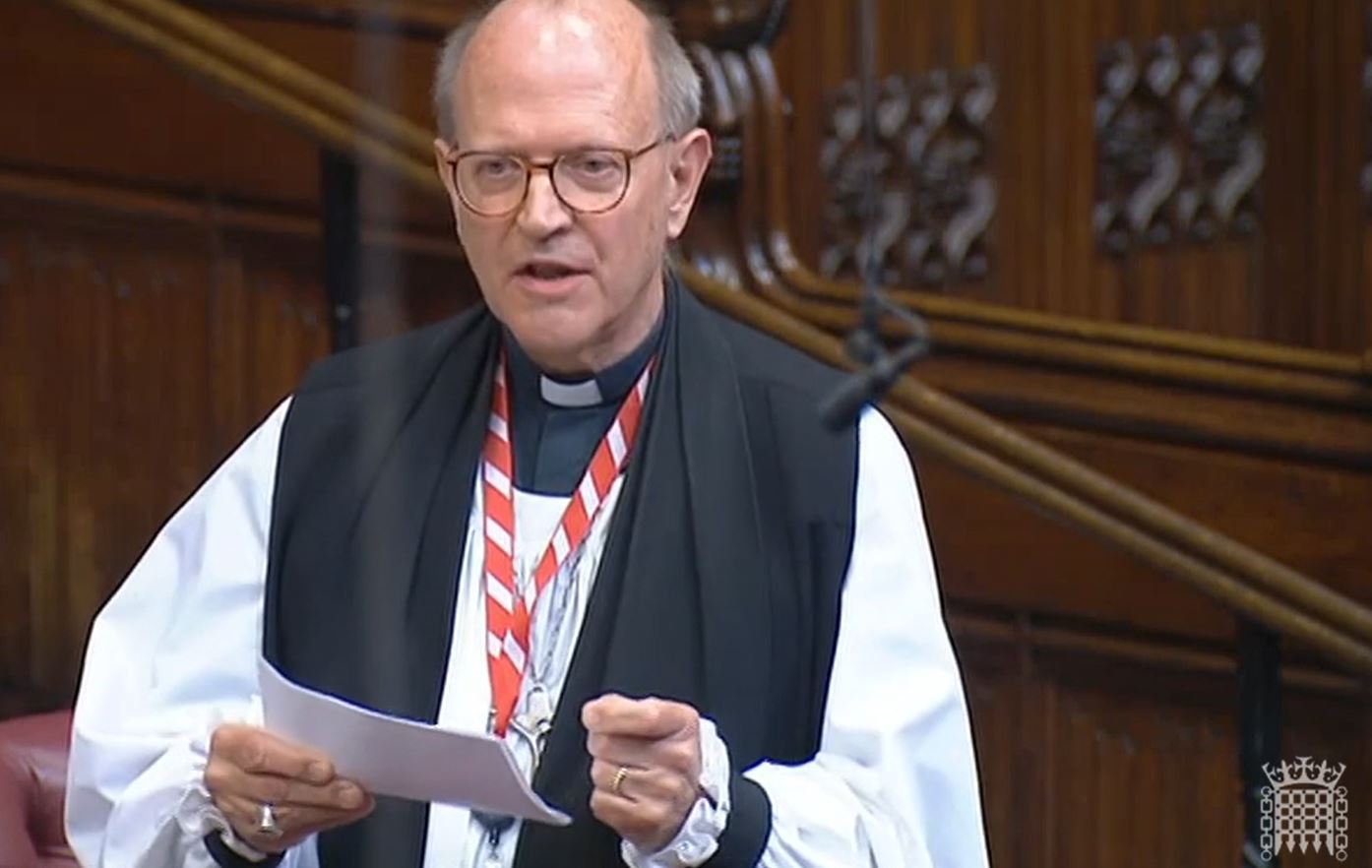
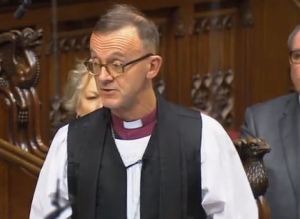
The Bishop of St Albans asked a question about the use of farmland as flood defences, and the need for compensation for farmers, on 30th November 2023, following a discussion on maintenance of flood defences in England:

The Lord Bishop of St Albans: My Lords, more than half of Britain’s best farmland is on flood plains. Farmers are providing a public service by protecting towns and cities from flooding, but this means that they incur costs. What are His Majesty’s Government doing to ensure that farmers are adequately recompensed for this public service that they provide for our nation?

Continue reading “Bishop of St Albans asks about use of farmland as flood defences”

Bishop of St Albans asks about floods in Libya

The Bishop of St Albans received the following written answer on 17th October 2023:

The Lord Bishop of St Albans asked what representations they have made to the government of Libya concerning the recent floods in that country; and what emergency provision they will be providing to them.

Lord Ahmad of Wimbledon (Con, Foreign Office): The UK is horrified by the scale of flooding in eastern Libya following Storm Daniel and is committed to working with partners to deliver aid in support of the Libyan people.

Continue reading “Bishop of St Albans asks about floods in Libya”

Bishop of Durham asks about recent floods in Rwanda and the Democratic Republic of the Congo

The Bishop of Durham received the following written answer on 5th June 2023:

The Lord Bishop of Durham asked His Majesty’s Government what assessment they have made of the recent flooding in the Democratic Republic of the Congo and Rwanda; and what humanitarian and financial support they are providing in response.

Continue reading “Bishop of Durham asks about recent floods in Rwanda and the Democratic Republic of the Congo”

Bishop of St Albans asks about management of surplus water and flood risks

The Bishop of St Albans received the following written answers on 22nd February 2021:

The Lord Bishop of St Albans asked Her Majesty’s Government what plans they have to ensure that farmers involved in the Environmental Land Management Scheme are adequately compensated for the impact of introducing nature-based solutions on future flood risk on their land.

Continue reading “Bishop of St Albans asks about management of surplus water and flood risks”

Bishop of Worcester pays tribute to emergency services responding to floods

On 25th February 2020 Lord Greaves asked the Government “what steps they are taking to compensate households and local businesses that have been affected by flooding caused by recent storms and heavy rainfall.” The Bishop of Worcester, Rt Revd John Inge, asked a follow up question:

The Lord Bishop of Worcester: My Lords, Worcestershire has been as badly affected as anywhere in England by the recent floods and the river level is still rising in Worcester. At the same time, I have to observe that a great deal of work has been done since 2007, which has meant the damage has been much less than would otherwise have been the case. I support the call for swift and full compensation. At the same time, I pay tribute to the emergency services, which have been superb during these floods. Will the Minister join me in paying tribute to them?
Continue reading “Bishop of Worcester pays tribute to emergency services responding to floods”

Bishop of St Albans suggests irresponsible developers should be liable for costs of flood damage

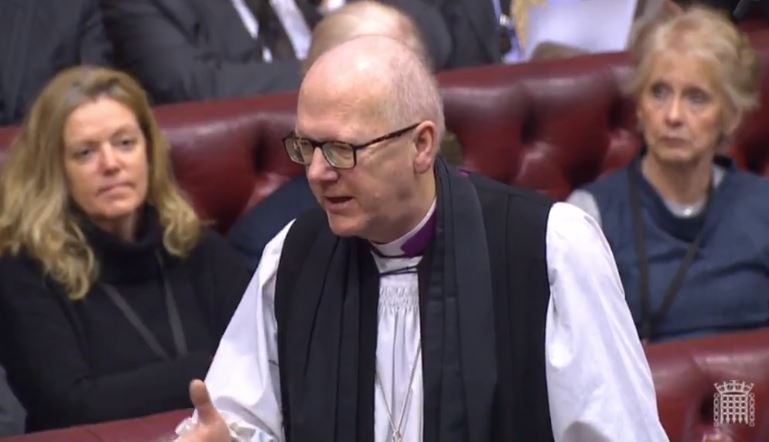
St Albans 2On 8th November 2016, Baroness Jones of Whitchurch asked Her Majesty’s Government “whether flood defences are in place to protect vital infrastructure this winter.” The Bishop of St Albans, Rt Revd Alan Smith, asked a follow up question:

The Lord Bishop of St Albans: The Minister has already referred to the EFRA Select Committee report, Future Flood Prevention. One of its recommendations is the imposition on developers of a statutory liability for the cost of floods where those developments have not complied with planning regulations or the local planning situation, thereby causing additional flooding. Does the Minister agree with this eminently sensible suggestion, and will Her Majesty’s Government adopt it? Continue reading “Bishop of St Albans suggests irresponsible developers should be liable for costs of flood damage”

Bishop of St Albans asks Government about housebuilding in flood areas

StAlbans171115On the 10th February 2016 the Bishop of St Albans received two written answers about housing and flooding.

The Lord Bishop of St Albans: To ask Her Majesty’s Government how many new housing developments were built in the period 2010 to 2015 against advice given by the Environment Agency. [HL5516] Continue reading “Bishop of St Albans asks Government about housebuilding in flood areas”

Bishop of St Albans asks about new housebuilding on floodplains

On 4th February 2016 the Bishop of St Albans, Rt Revd Alan Smith, received a written answer to a question on flooding.

StAlbans171115The Lord Bishop of St Albans: To ask Her Majesty’s Government what proportion of new houses built in each of the years from 2010 to 2015 were built on floodplains, and whether they expect that proportion to change in the next five years. [HL5515]


Continue reading “Bishop of St Albans asks about new housebuilding on floodplains”

Bishop of Leeds leads debate on national response to flooding

On 14th January 2016 the Bishop of Leeds, Rt Revd Nick Baines, led a short debate in the House of Lords on flood management. His speech and the Government response is below. The full text of the debate, including a speech by the Bishop of St Albans, can be read here.

The Lord Bishop of Leeds: To ask Her Majesty’s Government how they intend to review their long term strategy for flood management, particularly in rural areas that do not qualify for large-scale flood defences.

LeedsThe Lord Bishop of Leeds: My Lords, I am grateful for the opportunity to put to the Government the Question before us. If there was a sound track to this debate it would probably include Phil Collins’s “In Too Deep”.

It is important to note the destructiveness of the recent flooding, given that the news agenda moves on very quickly and communities which found themselves at the heart of a sympathetic nation quickly feel themselves to be forgotten. For some of the communities in my diocese, the recent floods come in the wake—almost literally—of other occurrences in recent years. For them the need for longer-term and more joined-up measures is obvious.

I pay tribute to civic leaders, emergency services, public service workers, members of the Armed Forces, the Environment Agency and local volunteers, many of whom sacrificed holidays and family time over Christmas to support victims of this appallingly destructive flooding. Continue reading “Bishop of Leeds leads debate on national response to flooding”

Bishop of St Albans suggests new approaches to flood management

On 14th January 2016 the Bishop of Leeds, Rt Revd Nick Baines, led a short debate in the House of Lords on flood management. The Bishop of St Albans, Rt Revd Alan Smith, also spoke in the debate.

StAlbans171115The Lord Bishop of St Albans: My Lords, I thank my right reverend colleague for today’s debate. Due to the shortage of time, straightaway I shall focus a little more on whole-catchment flood management. A renewed focus on this approach has been one of the notable outcomes of the current flood crisis, helped of course by the exemplary work of the Pickering slow-the-flow scheme, which the noble Baroness, Lady McIntosh, described so eloquently.

The potential of whole-catchment approaches—for example, using meandering rivers, planting trees and building permeable dams to slow water in upland areas and reduce peak flow further downstream—is enormous. In the long term, it provides a cheaper, more environmentally friendly method of flood management, which works, as a number of people have already said, with natural processes rather than constantly trying to hold back the tide. Such approaches also have the benefit of being effective across a catchment, rather than simply focusing on one or two high-value areas, and so can help to lower the flood risk in rural hamlets and villages that might otherwise not qualify for flood protection. Continue reading “Bishop of St Albans suggests new approaches to flood management”