MPs QUESTIONS TO CHURCH COMMISSIONERS: Overseas visits, Bath and Wells, church buildings, credit unions and flooding

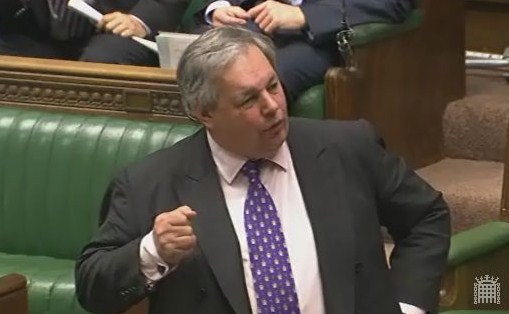
In Church Commissioners’ question time in the House of Commons on 13th February 2014, Sir Tony Baldry MP was asked by MPs to answer questions on overseas visits by Archbishops, the residence of the Bishop of Bath and Wells, the use of church buildings, credit unions and flooding. 

14.01 CCQ Baldry

Transcript (via Parliament.uk):

Continue reading “MPs QUESTIONS TO CHURCH COMMISSIONERS: Overseas visits, Bath and Wells, church buildings, credit unions and flooding”

The Bishop of St Albans raises concerns about growing regional economic inequality

Baroness Wilcox asked Her Majesty’s Government what recent assessment they have made of the levels of manufacturing activity in the United Kingdom.

The Bishop of St Albans asked a supplementary question:

The Lord Bishop of St Albans: My Lords, I am sure we all want to encourage a much more robust manufacturing base in this country. An article in the Economist last week pointed out that, unlike the rest of the country, the north-east and south-west regions still saw an increase in unemployment up to the year ending November 2013. There are huge problems at the moment in the south-west, which was already facing a downturn in its tourist industry and now has floods and difficulties with trains. Is there anything the Government can do to encourage a more long-term, stronger economic and, indeed, manufacturing base in the south-west of England?

Viscount Younger of Leckie: Our industrial strategy focuses on the whole country. I note the right reverend Prelate’s point about the south-west where they are suffering so terribly from the floods. The industrial strategy has five main strands which are bearing fruit, particularly in places such as Liverpool and Tyneside, and the south-west is just as important.

(via parliament.uk)

Bishop of Worcester responds to Government statement on flooding

The Lord Bishop of Worcester: My Lords, I am grateful for the Minister’s Statement. As we all know, attention has rightly focused on the Somerset Levels and the terrible plight that people are enduring there, but when I left Worcester this morning the city was gridlocked as a result of the closure of the main bridge across the river and the situation remains acute. I do not want to apportion blame; I want to pay tribute to those who are working very hard and to the understanding and graciousness of the inhabitants of Worcester. However, it is true that the implications of this will be enormous, economically and from a human point of view. Can the Minister confirm that a coherent policy will be forthcoming for all the affected areas, not just those most terribly affected?

Lord De Mauley: The right reverend Prelate is absolutely right—I can confirm that. We have finite resources and must apportion them in a proper way, in accordance with priorities, and the priorities must be human life and property. While I am at the Dispatch Box, can I say that, although I have not given them credit, I know that the churches in Somerset in particular are playing a major part in helping people affected by this dreadful tragedy?

(via parliament.uk)

Bishop of Ripon and Leeds uses final speech to speak about economic and climatic challenges in the UK

R_LIn a wide-ranging debate, the Bishop of Ripon and Leeds focused his remarks on the need for a clear and coherent national strategy for responding to natural disasters such as the recent extreme flooding in parts of the country. He also urged the Government to link such a strategy with a long-term and international strategy for tackling climate change. He also commented on the role of the Church of England in education and its commitment to ensuring that there is adequate provision as the population grows. Continue reading “Bishop of Ripon and Leeds uses final speech to speak about economic and climatic challenges in the UK”