On 27th January 2022 MPs asked the Second Church Estates Commissioner, Andrew Selous MP, answered questions in the House of Commons chamber:
Churches and Cathedrals: Sustainability
Jerome Mayhew (Broadland) (Con)
What assessment the Church of England has made of the steps needed to put the maintenance of churches and cathedrals on a sustainable basis. (905258)
The Second Church Estates Commissioner (Andrew Selous): The Church estimates that over the next five years at least £1.14 billion of maintenance and repairs are needed for churches and cathedrals. The Church is very grateful that 550 churches and cathedrals have already benefited from the culture recovery fund, but there remains an urgent need for predictable and sustainable sources of funding, which enable us to keep skilled builders and craft people in work.
The Bishop of St Albans asked a question on the government’s efforts towards supporting development in Ukraine, during a debate on growing tensions between Russia and Ukraine on 26th January 2022:
The Lord Bishop of St Albans: My Lords, it is right that we attend to the situation in Russia, but Ukraine is a deeply divided country. The situation is not helped by, for example, Ukraine’s decision three years ago to make Ukrainian the national language, precluding the involvement of some 50% of Russians in the south and east of the country, who speak only Russian. What are Her Majesty’s Government doing to bring economic development and social cohesion to try to strengthen and bolster the life of Ukraine, as it faces this threat?
The Bishop of Southwark received the following written answers on 26th January 2022:
The Lord Bishop of Southwark asked Her Majesty’s Government what discussions they have had with the government of India over its refusal to allow Oxfam and the Missionaries of Charity operating in that country to receive money from abroad.
Lord Ahmad of Wimbledon (Con): We are aware that some Non Government Organisations (NGOs) have faced difficulties in India due to the application of the Foreign Contribution Regulation Act (FCRA) by the Indian authorities, and that some have recently had applications to renew their foreign funding licenses rejected. We continue to support a wide range of local NGO partners in India, including through programmes, and officials have discussed issues facing NGOs directly with the Indian Government.
The Bishop of St Albans received the following written answer on 25th January 2022:
The Lord Bishop of St Albans asked Her Majesty’s Government, further to concerns expressed by the Greek Orthodox Patriarch of Jerusalem that “radical fringe groups” are trying to drive Christians out of Jerusalem, what assessment they have made of the future status of Christians in Jerusalem.
On 20th January 2022, the Bishop of Leeds asked a question regarding Russian Foreign Minister Sergey Lavrov’s statement regarding the Organisation for Security & Cooperation in Europe (OSCE):
The Lord Bishop of Leeds: My Lords, what assessment have Her Majesty’s Government made of the statement by Sergey Lavrov two days ago that the OSCE used to convene parties on an equal basis but it is now simply a defender of western interests? What impact does that have on our conversations with the Russians?
Lord Sharpe of Epsom (Con): I am sorry but I shall have to write to the right reverend Prelate on that. I have not seen Sergey Lavrov’s statement.
The Bishop of Coventry tabled a question on reconciling differences between states with nuclear weapons and states without nuclear weapons on 12th January 2022:
The Lord Bishop of Coventry: To ask Her Majesty’s Government what steps they are taking to reconcile differences between nuclear possessor states and non-nuclear possessor states at the Review Conference of the Parties to the Treaty on the Non-Proliferation of Nuclear Weapons.
Lord Ahmad of Wimbledon (Con, Foreign Office): My Lords, the United Kingdom recognises its responsibilities as a bridge builder among nuclear weapon and non-nuclear weapon states at the 10th review conference on the Treaty on the Non-Proliferation of Nuclear Weapons. To support discussions, we are submitting working papers on transparency, verification and peaceful uses. We will host side events including a joint P5 event on doctrines and policy.
On 11th January 2022, The Bishop of Leeds asked a question on the impact of violence in Kazakhstan on the wider region around the country:
The Lord Bishop of Leeds: My Lords, have Her Majesty’s Government made any assessment of the impact of this instability on the wider region, particularly given Kazakhstan’s proximity to China, its very strong cultural relationships with Turkey, and its importance for the stability of the southern republics and those nations that lie below it?
Following a government statement on Russian aggression towards Ukraine on 10th January 2022, the Bishop of Leeds asked a question on perceptions on attitudes regarding the rule of law in the UK:
The Lord Bishop of Leeds: My Lords, I note that the Statement refers several times to the rule of law, and I am delighted to hear the commitments made by the Minister and the Government. However, it has not gone unnoticed in the Russian press that there have been threats to the rule of law, not least by the Government here proposing legislation that might undermine international treaties. The Statement says:
“The free world must rise to meet the moment. Britain is stepping up and leading by example.”—[Official Report, Commons, 6/1/22; col. 170.]
That is not necessarily how it is seen elsewhere. Perhaps the Minister can comment on that. I do not ask the question to be awkward; I am simply concerned about it.
The Bishop of Durham received the following written answers on 8th December 2021:
The Lord Bishop of Durham asked Her Majesty’s Government, following the announcement made by the United Nations High Commissioner for Refugees on 27 October that 60,000 refugees are voluntarily returning home to Burundi this year, what steps they will take to support (1) the UN, and (2) the refugees’ return, and (3) integration in that country.
“I have experienced first-hand the sting of injustice—injustice born of being caught up in events that are bigger than we are and in the face of which we are powerless.”
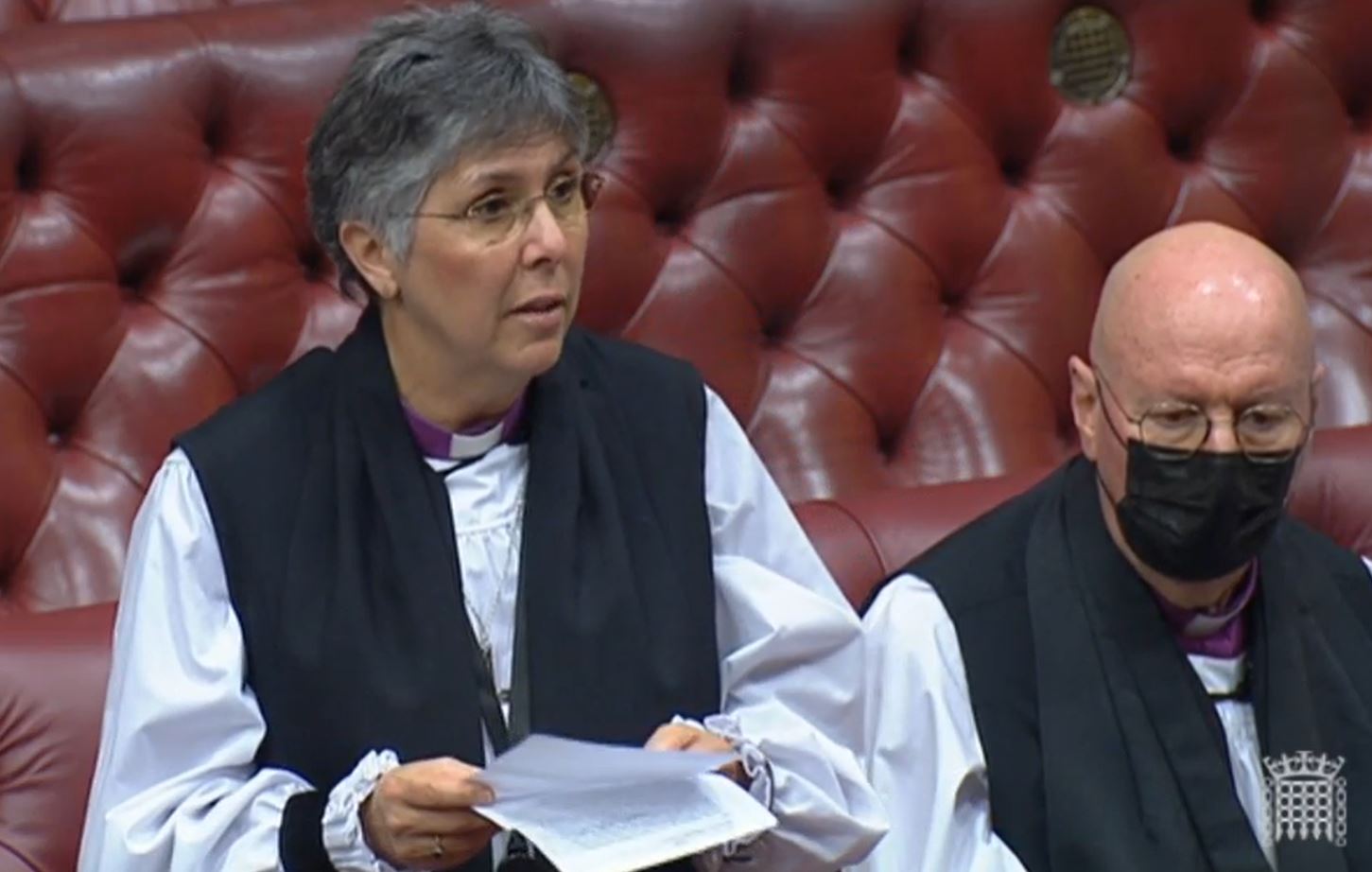
The Bishop of Chelmsford, Rt Revd Guli Francis-Dehqani, made her maiden speech in the House of Lords on 2nd December 2021, in a debate led by Lord Collins of Highbury, “That this House takes note of the detention of Nazanin Zaghari-Ratcliffe and the case for further action by Her Majesty’s Government to secure her release.”
The Lord Bishop of Chelmsford (Maiden Speech): My Lords, I was introduced to the House barely a month ago, having recently taken up my post as Bishop of Chelmsford, that vast and wonderful diocese that covers the whole of Essex and east London. It is a privilege to serve this diocese, which is complex, diverse and full of opportunities and challenges. Today, I thank everyone here who has offered me the warmest of welcomes. I am immensely grateful, in particular, for the help and support that I have received from staff and officials.
I have a deep and personal interest in the subject of this debate. Not only have I met Richard Ratcliffe and followed the story of Nazanin over the years, but I myself originally come from Iran. Born and brought up there, I left as a teenager during the Islamic Revolution, following difficult and traumatic circumstances. I was born into a Christian household, my father having been a convert from Islam to Christianity, in a small village in the centre of Iran. We were part of the tiny Anglican Church in Iran, which, when I was growing up in the 1970s, was made up primarily of converts and second- and third-generation Christians.




 The Church of England in Parliament
You must be logged in to post a comment.