
On 27th February 2020 the House of Lords debated a motion from Baroness Tonge, “To move that this House takes note of the United States’ proposals for peace between Israelis and Palestinians, announced on 28 January.” The Bishop of Southwark, Rt Revd Christopher Chessun, spoke in the debate:
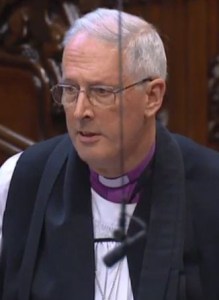 The Lord Bishop of Southwark: My Lords, I am grateful to the noble Baroness, Lady Tonge, for securing this important debate. I also express my gratitude to the Minister and to his officials for the careful but clear Answers to my Parliamentary Written Questions relevant to this debate that he gave on 11 and 13 February.
Your Lordships’ House will be aware from my interventions in earlier debates that I am the only Anglican bishop who is a member of the Vatican-mandated Holy Land Co-ordination group, which visits Christian communities in Israel and Palestine every January. I also make at least one other visit to the region each year and will be on ecumenical pilgrimage there next week. Last year, I was also in Egypt with His Eminence Archbishop Angaelos, Coptic Archbishop of London, and other church leaders. Continue reading “Bishop of Southwark asks Government to extend full recognition to the Palestinian state”
 On 13th and 14th February 2020 the Bishop of Durham, Rt Revd Paul Butler, received written answers to questions about Rwanda and Tearfund’s report into older people:
 The Lord Bishop of Southwark:
  Andrew Selous (South West Bedfordshire) (Con): It is a pleasure, albeit a sad necessity for many of us, to speak on a debate on this issue yet again in this House. The analysis I have seen from Open Doors and others shows that in the past three years alone more than 10,000 Christians have been killed for their faith—that is a staggering number. We are right to hold this debate today, because, as others have mentioned, the evidence shows that Christians are the target of about 80% of all the acts of religious discrimination or persecution around the world.
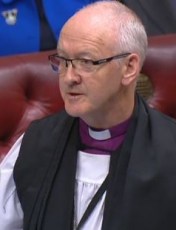 On 4th, 5th and 6th February 202o the Bishop of Leeds, Rt Revd Nick Baines, received written answers, to questions on freedom of religion and belief.
 The Lord Bishop of St Albans: I thank the noble Baroness for her reply. It is perhaps appropriate that a Member on these Benches is raising issues about plagues of locusts, but a humanitarian crisis is unravelling in front of us. In some parts of Ethiopia, 90% of the crops have already gone and 20 million people face no food. Last Thursday, the UN said that we need $76 million now to begin to address the problems. What are Her Majesty’s Government doing to ensure immediate food aid if it is required and, in the longer term, that there is seed for next year’s crops so that people have security?
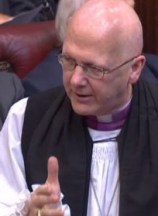 On 7th January 2020 the Bishop of St Albans, Rt Revd Alan Smith, received a written answer from Government, about racial discrimination and the Uyghur people:
 The Church of England in Parliament
You must be logged in to post a comment.