On 9th March 2026, the House of Lords debated the Crime and Policing Bill. Votes were held on amendments to the bill, in which a Bishop took part:

On 9th March 2026, the House of Lords debated the Crime and Policing Bill. Votes were held on amendments to the bill, in which a Bishop took part:
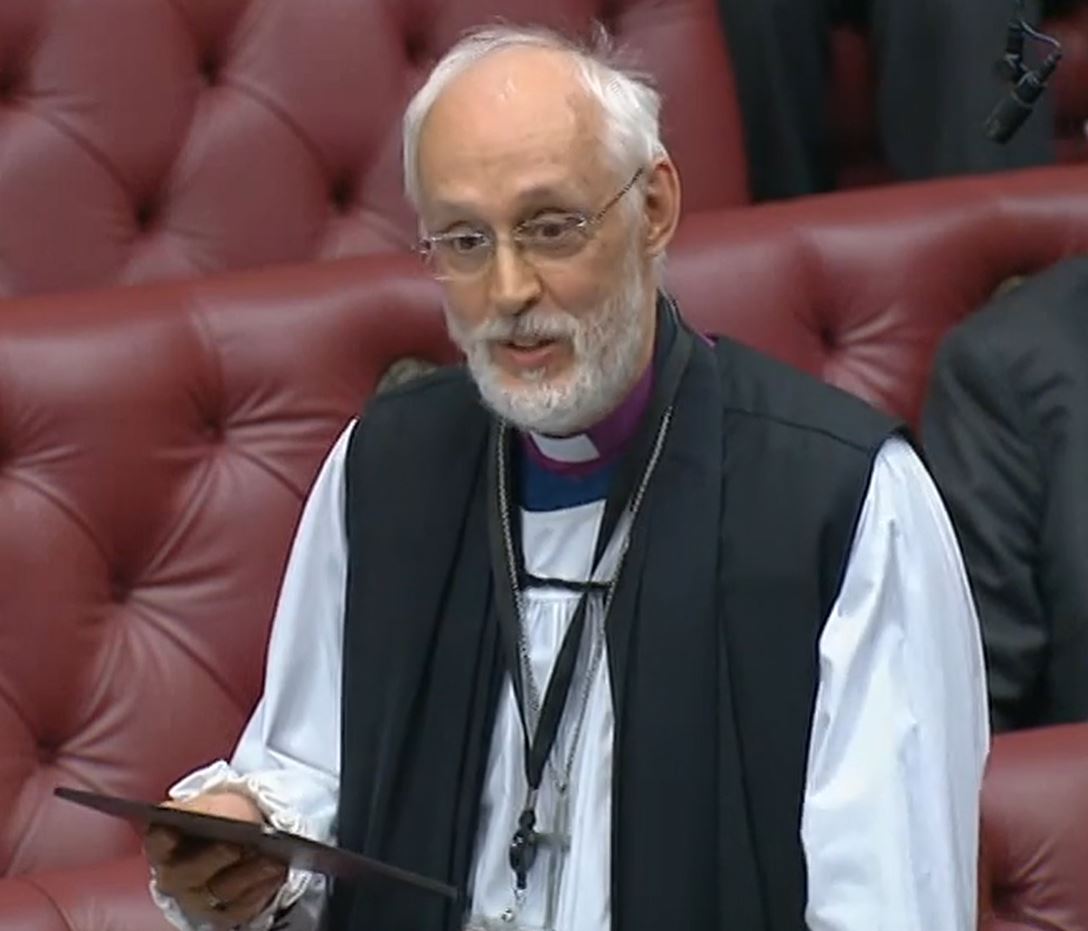
The Bishop of Manchester spoke to two groups of amendments on regulation of public gatherings during a debate on the Crime and Policing Bill on 13th January 2026, pointing out the possible unintended impact of religious processions and events:
The Lord Bishop of Manchester: My Lords, the more I listen to the debate this afternoon, the more worried I am getting. It seems to me that, over recent years, we have successively tightened up regulations around protests, including quite peaceful protests, making it harder and harder for people to express publicly their deep concerns around a whole range of issues. I am not sure that we need more clarity; that is for judges and juries to determine on the details of a particular case. The whole principle of the jury system is that we are judged by our peers and that, if we have undertaken some activity which has brought us before the courts, it is for other people like us to determine on the particular instances. They can take into account the culture and context, in a way that is impossible to do by way of legislation. I am quite wary about over- specifying here. Sometimes clarity is not necessarily the best thing to achieve.
Continue reading “Crime and Policing Bill: Bishop of Manchester speaks to amendments on policing of public gatherings”
On 25th June 2025, the Second Church Estates Commissioner, Marsha De Cordova MP, gave the following written answer to a question from an MP:
Clergy: Freedom of Expression
Mike Wood MP (Con, Kingswinford and South Staffordshire): To ask the hon. Member for Battersea, representing the Church Commissioners, what guidance the Church of England provides to clergy on the expression of gender-critical views.
Marsha De Cordova MP (Lab, Battersea): The Church of England does not provide specific standalone guidance to clergy on the expression of gender-critical views.
Continue reading “Church Commissioners Written Questions: Clergy – Freedom of Expression”
The Bishop of Manchester received the following written answers on 22nd April 2025:
The Lord Bishop of Manchester asked His Majesty’s Government what assessment they have made of the implications of the police raid on a Quaker meeting house on 27 March for religious and democratic freedoms.
Continue reading “Bishop of Manchester asks about freedom of expression and right to protest”On 10th May 2023, the Bishop of St Albans asked whether the police or government would give guidelines to those who wish to protest regarding the scope of the public order act, following arrests under the act during the Coronation of King Charles:

The Lord Bishop of St Albans: My Lords, I am sure that we all support the police for doing a magnificent job. One of the problems we are grappling with is that we have only read reports in the media, and of course the police may know things that we do not. However, by all accounts, someone who had been planning for months, working with the police, was arrested and simply did not realise that the luggage straps they were using to create their banners would fall foul of the legislation. Therefore, trying to be constructive, will either the police or the Government give some guidelines, to people who genuinely want to have a protest, about what is likely to fall within the scope of the Act, so that they can demonstrate peaceably?
Continue reading “Bishop of St Albans asks about guidelines for protesters on Public Order Bill”On 14th March 2023, the House of Lords debated Commons amendments to the Public Order Bill. Votes were held on amendments to the bill, in which bishops took part.
On 7th February 2023, the House of Lords debated amendments to the Public Order Bill (2022) in the second day of the report stage. Votes were held on amendments to the bill, in which Bishops took part:
During a debate on amendments to the Public Order Bill on 30th January 2023, the Bishop of Manchester expressed concerns regarding amendments to clause 9 of the bill:
Clause 9: Offence of interference with access to or provision of abortion services.
The Lord Bishop of Manchester: My Lords, in Committee I shared my concerns about Clause 9 as it then stood. I am grateful for conversations that have taken place since. I particularly thank the noble Baronesses, Lady Sugg and Lady Barker. The latter has listened patiently and sympathetically to me and my friends on these Benches at some length.
My concerns regarding Clause 9 had nothing to do with the moral merits or otherwise of abortion; they lie in my passion to see upheld the rights of citizens of this land, both to receive healthcare and to protest. Women must be able to access lawful medical interventions without facing distressing confrontations, directed at them personally, when they are identifiable by their proximity to the clinic or hospital. At the same time, anyone who wishes to protest in general about abortion law must be able to do so lawfully, with the least restriction on where and when they may do so.
Continue reading “Public Order Bill: Bishop of Manchester expresses concerns on amendments relating to protests at abortion clinics”On 30th January 2023, the House of Lords debated amendments to the Public Order Bill. The Bishop of Manchester spoke in the debate, supporting amendments by Baroness Chakrabarti concerning police powers to arrest protestors for “locking on” offences:

The Lord Bishop of Manchester: My Lords, I shall speak very briefly in support of the amendment to remove Clauses 1 and 2 that my right reverend friend the Bishop of Bristol signed. She regrets that she cannot be in her place today. As the noble Baroness, Lady Chakrabarti, said, establishing new offences of locking on and being equipped for locking on have very significant consequences for the right to protest. A few days ago I got an email from a retired vicar in my diocese. He wrote to tell me he is awaiting sentencing: he has just been convicted of obstruction by gluing himself to a road during a protest by an environmental group. The judge has warned him and his co-defendants that they may go to prison. I cite his case not to approve of his actions—which I fear may serve to reduce public support for his cause rather than increase it—but because it clearly indicates to me that the police already have sufficient powers to intervene against those who are taking an active part in such protests. Anything extra, as the noble Lord, Lord Paddick, has just so eloquently illustrated, is superfluous.
Continue reading “Public Order Bill: Bishop of Manchester speaks in favour of amendments on police powers”On 30th January 2023, the House of Lords debated amendments to the Public Order Bill (2022) in the first day of the report stage. Votes were held on amendments to the bill, in which Bishops took part:
Division 1:
The Archbishop of Canterbury, the Bishop of Manchester and the Bishop of Southwell & Nottingham took part in a vote on an amendment to the bill tabled by Lord Coaker: “to insert a new clause: Meaning of ‘serious disruption.’”
Continue reading “Votes: Public Order Bill” The Church of England in Parliament
You must be logged in to post a comment.