Bishop of Guildford asks about preserving value of marriage ceremonies

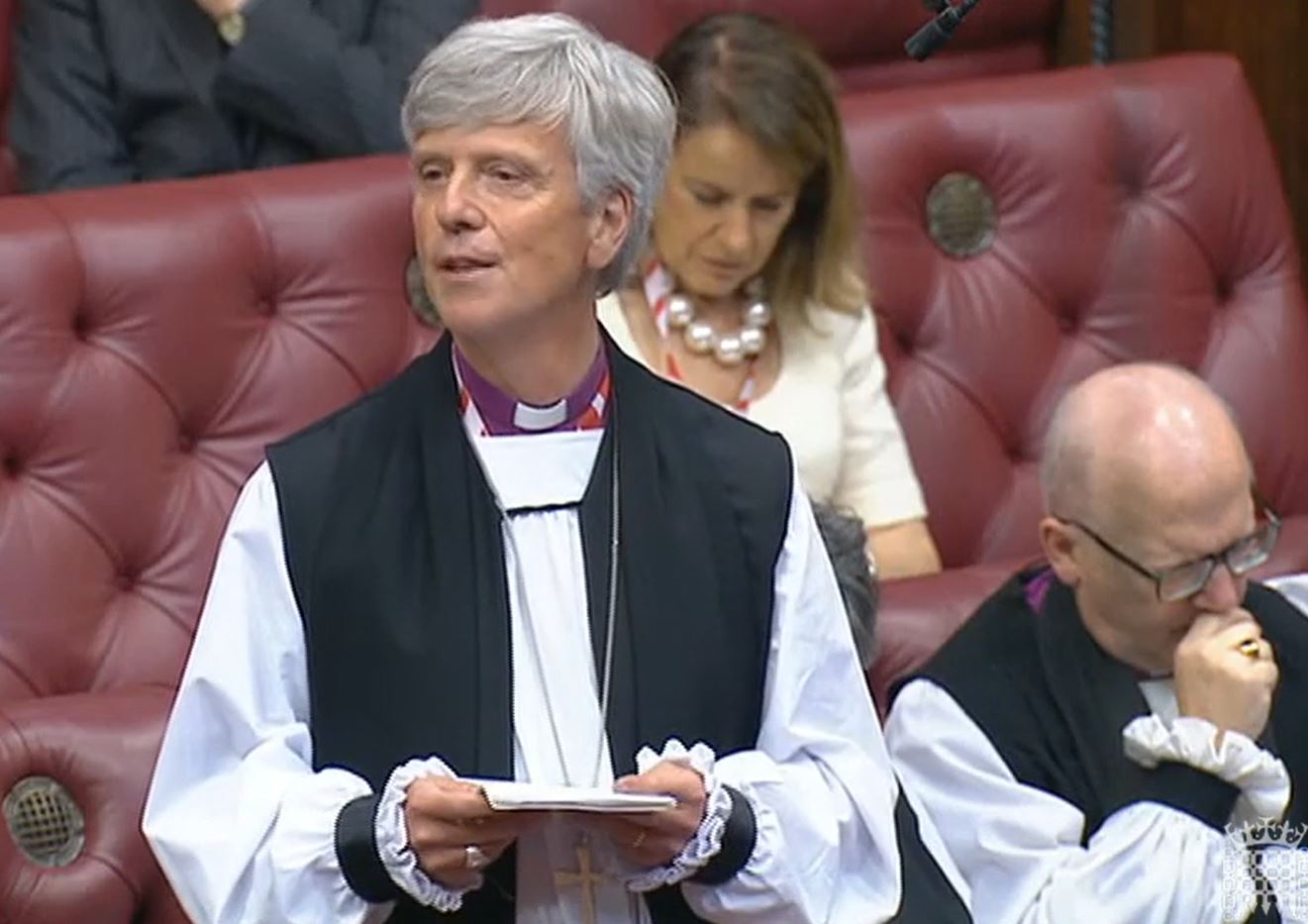
The Bishop of Guildford asked a question on the potential for humanist weddings to be introduced in England on 30th June 2025, raising the issue of commercial celebrants potentially devaluing the marriage ceremony:

The Lord Bishop of Guildford: My Lords, noble Lords will not be surprised to hear from these Benches that I am thoroughly in favour of marriage. I want to stress the many benefits of getting married in church, but I am also in favour of encouraging more people to marry wherever, provided that the ceremony reflects the seriousness of the commitment being entered into and the love that lies at its core. To that end, does the Minister agree that if adjustments were to be made to our current premises-based system to enable legal humanist marriages, the door should not be opened so wide that it brings in a free market in commercial celebrants that will cheapen and devalue what is such a vital and foundational institution?

Continue reading “Bishop of Guildford asks about preserving value of marriage ceremonies”

Bishop of Sheffield asks about risks of changes to marriage celebrant legislation

On 16th October 2024, the Bishop of Sheffield asked a question on the potential risks of changes to laws around marriage celebrants undermining the solemn nature of marriage:

The Lord Bishop of Sheffield: My Lords, on these Benches we would welcome humanist wedding ceremonies being given legal status, but the recommendations of the Law Commission go beyond that and would create a free market celebrant-based approach to the wedding industry. I gather that Humanists UK shares our concern that such a move could undermine the solemn nature of marriage, which is never a trivial transaction. Given this unlikely alliance between the Lords spiritual and Humanists UK, can the Minister confirm that the Government will not enact the recommendations of the Law Commission without considering carefully the impact of a further commercialisation of weddings?

Continue reading “Bishop of Sheffield asks about risks of changes to marriage celebrant legislation”

House of Commons Debate: Bishops in the House of Lords

On 6th July 2023, a debate was held in the House of Commons on the motion That this House has considered the matter of bishops in the House of Lords, organised by the All-Party-Parliamentary Humanist Group. Andrew Selous MP, the second Church Estates Commissioner, spoke in the debate:

Tommy Shepherd MSP (SNP, Edinburgh East): I beg to move,

That this House has considered the matter of bishops in the House of Lords.

It is a pleasure to serve under your chairship, Mr Davies. Some people, perhaps including members of my party, might wonder why a member of the SNP has secured a debate on the House of Lords, so I want to make it clear from the outset that my principal role here today is as co-chair of the all-party parliamentary humanist group, which comprises more than 150 Members of both Houses and has representatives from all the main political parties. I moved the motion in that capacity.

Aaron Bell MP (Con, Newcastle-under-Lyme): As secretary of the same group, I congratulate the hon. Member on securing this debate, which is not only overdue, but timely: as he knows, yesterday in the Lords, there were amendments to the Government’s legislation. I suspect he agrees with the principle of those amendments—he and I differ on that—and he probably agrees with me that the archbishop who tabled them is a very distinguished Member of that House, but does he share my sense of unease about somebody who has not been elected or appointed, and who is merely in the Lords in his capacity as a bishop, potentially changing the law of this country?

Continue reading “House of Commons Debate: Bishops in the House of Lords”

Education (Non-Religious Philosophical Convictions) Bill: Bishop of Southwark speaks on importance of religious education in schools

On Friday 3rd February, the House of Lords debated the Education (Non Religious Philosophical Convictions) Bill in its second reading. The bill would introduce provision for “religious worldviews” to replace religious education in some schools. The Bishop of Southwark spoke in the debate, arguing that religious education fills a key place in the curriculum:

The Lord Bishop of Southwark: My Lords, I speak in this debate feeling somewhat like an officer of the Salvation Army commending temperance to a conference of brewers. None the less, while I believe that the noble Baroness, Lady Burt of Solihull, has made some important points introducing this Bill and I am grateful for them, I want to make some general points to gently demonstrate why this proposed measure for RE in schools without a religious character is unnecessary. I am glad to follow the noble Lord, Lord Griffiths of Burry Port, although my view is somewhat different on this occasion from his wisdom and I have no immediate plans to join the British Humanist Association.

First, I stress the value of what remains of religious education within our schools. While the outcomes of education remain a contested area of debate in society, the purpose of education and what it does to us receives much less attention. Too much is assumed in that regard, and that partly informs this Bill. My belief is that human flourishing happens in body, mind and spirit and that education engages us in each of these aspects, which need to be held together holistically.

Continue reading “Education (Non-Religious Philosophical Convictions) Bill: Bishop of Southwark speaks on importance of religious education in schools”

Bishop of Birmingham speaks of shared values of religious and non-religious

“I celebrate today the contribution of humanists and atheists to the common good. I revel in our common humanity, our shared commitment to society and the gift of friendship.”

On 25th July 2013,  Lord Harrison led a debate in the House of Lords to take note of the contribution of atheists and humanists to United Kingdom society. The Bishop of Birmingham, the Rt Revd David Urquhart, welcomed the debate and the contribution of humanists and aetheists to the common good. He hoped that the debate would challenge intolerant tribalism and noted that people of faith, atheists and humanists had in common a desire to explore profound questions about life.

01.04.14 Bishop of BirminghamThe Lord Bishop of Birmingham: My Lords, while I am still privileged to occupy the Bench of the Lords spiritual on behalf of the nation, I am delighted to say that the debate today is most welcome and I am honoured to follow the previous three speakers. They have given us the opportunity to hear the great deal of good that can and should be recognised, wherever we find it, whether in philosophy—the noble Baroness, Lady Whitaker, reminded us of the great traditions of humanist philosophy—or in science. I note the point of the noble Baroness, Lady Meacher, about the very serious business of assisted dying; I am sure that we will work hard on that together to get it right.

There is also the wonderful good that comes from humanists or atheists ringing bells. So often in society we appear to be motivated simply by our own interests, with the consequence that acknowledging good in others is interpreted simply as disloyalty to one’s tribe. Within the church, we are not immune to this problem. None the less, the Christian tradition points to the wider generosity; when Jesus was asked for an example of neighbourliness, he told a story about the Samaritan and not a good religious Jew, such as himself. I hope that, among many other themes, this debate will challenge intolerant tribalism in all walks of life wherever we find it. Continue reading “Bishop of Birmingham speaks of shared values of religious and non-religious”