Votes: Nationality and Borders Bill

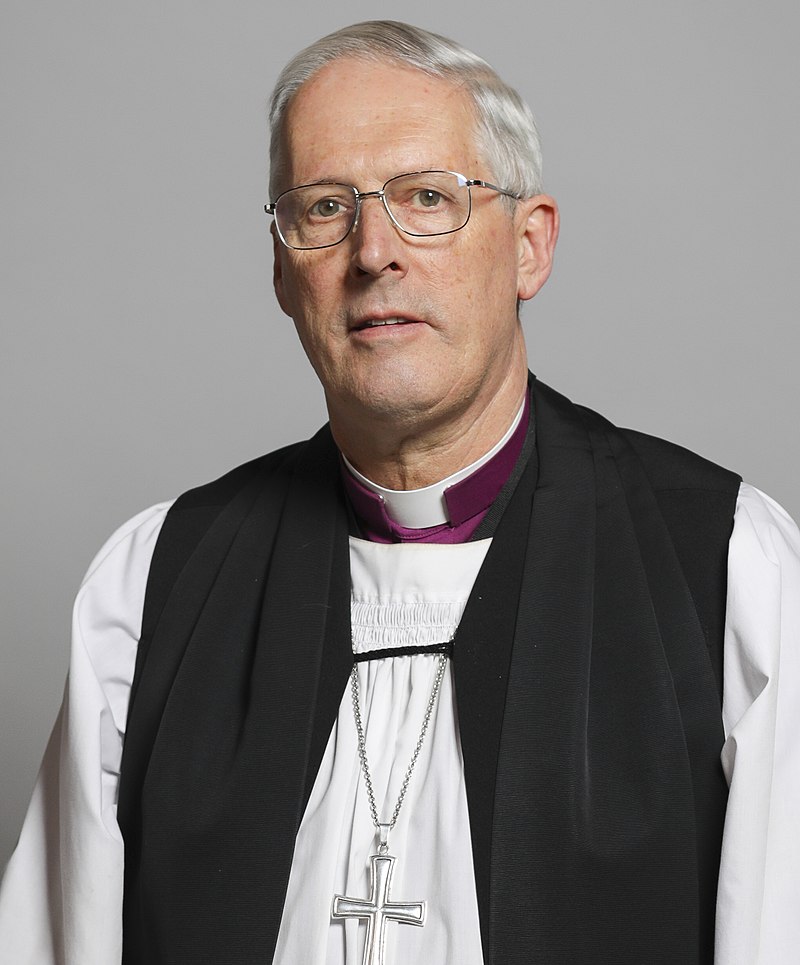
On 28th February 2022, the House of Lords debated the Nationality and Borders Bill in the first day of the report stage. Votes were held on amendments to the bill, in which Bishops took part:

Continue reading “Votes: Nationality and Borders Bill”

Nationality and Borders Bill: Bishop of London speaks on modern slavery provisions

On 5th January 2022, the House of Lords debated the Nationality and Borders Bill in its second reading. The Bishop of London spoke in the debate, welcoming some provisions in the bill whilst expressing concerns that it might have a counterproductive effect on protections against modern slavery:

The Lord Bishop of London: My Lords, it is a pleasure to follow the many noble Lords in this House who bring such expertise to our deliberations and compassion to our scrutiny of this Bill. I wish to focus my remarks particularly on Part 5 of the Bill, on modern-day slavery. It has been said that the Modern Slavery Act was a pioneering piece of legislation. 

I would agree with that, but there is so much more work for us to do to confront this blight on our communities. Addressing modern-day slavery is close to the Church of England’s heart. Through the Clewer Initiative and other programmes, we have worked to raise awareness and to support survivors. This is a matter in which civil society, law enforcement and government share a joint responsibility to act.

Continue reading “Nationality and Borders Bill: Bishop of London speaks on modern slavery provisions”

Nationality and Borders Bill: Bishop of Durham raises concerns about effects on children

On 5th January 2022, the Nationality and Borders Bill was introduced to the House of Lords in its second reading. The Bishop of Durham spoke in the debate that followed, raising concerns that bill would fail to adequately protect children and others seeking asylum:

The Lord Bishop of Durham: I declare my interests as a member of the RAMP Project and a trustee of Reset, as laid out in the register. This Bill will raise strong views across the Chamber, as already illustrated by the three Front-Bench introductions, for which I thank all three, because I believe that they have served the House well in all three cases. I hope that we can have a debate that is reasoned and evidence-based, ever mindful of the individual humanity of each asylum seeker and refugee of whom we speak.

This Bill needs to be assessed against the Home Office’s own values of being compassionate, respectful, courageous and collaborative. Other values are important, too: the value of every human being as one made in the image of, and loved by, God, the value that we place on the rights of the child both through the United Nations and the Children Act 1989—and then there are the values relating to the right to family life.

Continue reading “Nationality and Borders Bill: Bishop of Durham raises concerns about effects on children”

Bishop of Gloucester asks about alternative detention pilot scheme

The Bishop of Gloucester received the following written answer on 3rd December 2021:

The Lord Bishop of Gloucester asked Her Majesty’s Government when they will
publish the evaluation of the ‘Action Access’ alternative detention pilot.

Baroness Williams of Trafford (Con): The United Nations High Commissioner for Refugees (UNHCR) have appointed the National Centre for Social Research (NatCen) to independently evaluate this pilot.

NatCen will be publishing the evaluation on their website the aim is for the evaluation to be published by the end of the year.

Hansard

Bishop of Coventry – stopping people smugglers and dangerous channel crossings requires more than policy of deterrence

“a policy that does not go beyond deterrence is not sufficient”

On November 25th 2021 the House of Lords debated a motion from Baroness Hoey, “That this House takes note of the number of migrants arriving in the United Kingdom illegally by boat“.

The Lord Bishop of Coventry: My Lords, I too am grateful to the noble Baroness, Lady Hoey, for securing this debate, especially at this time. I was helped this morning by the “Thought for the Day” from my colleague, the right reverend Prelate the Bishop of Leeds, in which he said that this is a time to dig deeper into our emotions and face the grief we feel at the loss of humanity. It is that sense of grief, our common commitment to the preservation and dignity of life, as well as to a passion for justice for those suffering the ills and evils of the world, which unites us. The noble Baroness, Lady Hoey, demonstrated that.

Our shared grief is the proof we do not really need of the humanity and vulnerability that unites us. These common concerns, which underpin both our aim to stop migrants making dangerous journeys and our grief today, are the same concerns and moral instincts that require us to sit back and face the reality that a policy that does not go beyond deterrence is not sufficient.

Continue reading “Bishop of Coventry – stopping people smugglers and dangerous channel crossings requires more than policy of deterrence”

Bishop of Southwark asks Government about deportations to Jamaica

The following written question was replied to on November 22nd 2021:

The Lord Bishop of Southwark: To ask Her Majesty’s Government what steps they have taken following the remarks by the High Commissioner for Jamaica on 4 November: “from a human rights perspective I am deeply concerned about cases in which persons are being removed having lived in the UK since childhood and have no known relations in Jamaica or familiarity with Jamaica”. [HL3845]

Continue reading “Bishop of Southwark asks Government about deportations to Jamaica”

Church Commissioner Written Answers: Asylum Seekers and Baptism

22nd November 2021

Baptism: Asylum

Chris Loder: [76831] To ask the Member for South West Bedfordshire, representing the Church Commissioners, how many services the Church of England has conducted specifically for the purposes of Baptising people seeking asylum in each of the last five years.

Continue reading “Church Commissioner Written Answers: Asylum Seekers and Baptism”

Police, Crime, Sentencing & Courts Bill: Bishop of Bristol supports amendment to limit data extraction powers of immigration officers

On 27th October 2021, during a committee debate on the Police, Crime, Sentencing and Courts Bill, the Bishop of Bristol spoke in support of an amendment tabled by Lord Rosser which would seek to remove immigration officers from lists of people authorised to carry out data extraction from personal devices:

The Lord Bishop of Bristol: My Lords, some common themes are emerging. I rise in support of Amendment 107, which was tabled by the noble Lord, Lord Rosser, and to which I have added my name, alongside that of the noble Baroness, Lady Jones.

The inclusion in this Bill of immigration officers among those authorised to undertake digital extractions strikes me as extremely troubling, particularly in the absence of significantly more detail on the safeguards, including the meaning of “agreement” and the specificity of the data sought, and the relevant training and expertise of these officers. Voluntary provision and agreement to extract data must surely rely on a level of informed consent. If it is not, then “voluntary” and “agreement” are just empty words.

Continue reading “Police, Crime, Sentencing & Courts Bill: Bishop of Bristol supports amendment to limit data extraction powers of immigration officers”

Bishop of Southwark raises concerns about legality and effect of immigration rule changes

On 27th May 2021 the House of Lords debated the Government’s Immigration Rules and Statements of Changes to them. A Motion to Regret the Statements was moved by Lord Green of Deddington, though not put to a vote. His Motion read:

That this House regrets that the Statements of changes to the Immigration Rules (HC813, HC1043 and HC1248), published respectively on 22 October 2020, 10 December 2020 and 4 March, do not provide clear and comprehensible descriptions of the changes proposed, nor of their likely effect. Special attention drawn by the Secondary Legislation Committee, 33rd and 40th Reports, Session 2019–21.”

The Lord Bishop of Southwark: My Lords, I too am grateful to the noble Lord, Lord Green of Deddington, for securing this important debate on his Motion to Regret. Last year, several Members of your Lordships’ House cautioned against the major extension of the Government’s capacity to make law with minimal recourse to Parliament in the Immigration and Social Security Co-ordination (EU Withdrawal) Act. Today, at the initiative of the noble Lord, Lord Green of Deddington, and not of Her Majesty’s Government, we have 90 minutes to examine three statutory instruments relating to the Immigration Rules, one of which runs to 507 pages. All three were subject to the negative resolution, which involved little or no scrutiny of such important areas of life. Your Lordships’ House last defeated Her Majesty’s Government by praying against a negative resolution 21 years ago. Is the Minister satisfied with the level of scrutiny that these statutory instruments have received? Would she agree with me that it would have been better to publish them first in draft and to seek the views of both Houses in a debate?

Continue reading “Bishop of Southwark raises concerns about legality and effect of immigration rule changes”

Queen’s Speech – Bishop of Durham on children, young people and immigration

On 12th May 2021 the House of Lords debated the Queen’s Speech. The Bishop of Durham spoke, focusing on its impact on children and young people, and on the proposals for immigration.

“My Lords, it is a privilege to be the first to speak from these Benches on Her Majesty’s gracious Speech. I look forward to the valedictory speech of my colleague, the right reverend Prelate the Bishop of Portsmouth, who has served the House so well during his years as a Lord spiritual. I also look forward to the maiden speeches of the noble Baroness, Lady Blake, and the noble Lord, Lord Lebedev.

“I make my comments within a very specific framework: are the measures contained in the gracious Speech good for the children and young people of our land? At the outset of her tenure as Children’s Commissioner, Dame Rachel de Souza commented: ‘I want to see childhood right at the top of the Government agenda. That means every speech from the Prime Minister and Chancellor mentioning children, and every Government department constantly pushing to improve the lives of children’— so it was good to hear a range of references to children. Having the best start in life by prioritising early years is essential. There is no debate any longer that the months in the womb and the first 1,001 days of a child’s life are absolutely critical to lifetime development. Much deeper investment in all aspects of early years well-being—mental, physical, social and spiritual—is essential.

Continue reading “Queen’s Speech – Bishop of Durham on children, young people and immigration”