The Bishop of Guildford spoke in support of amendments aiming to prevent children from accessing online pornography during a debate on the Online Safety Bill on 25th April 2023:
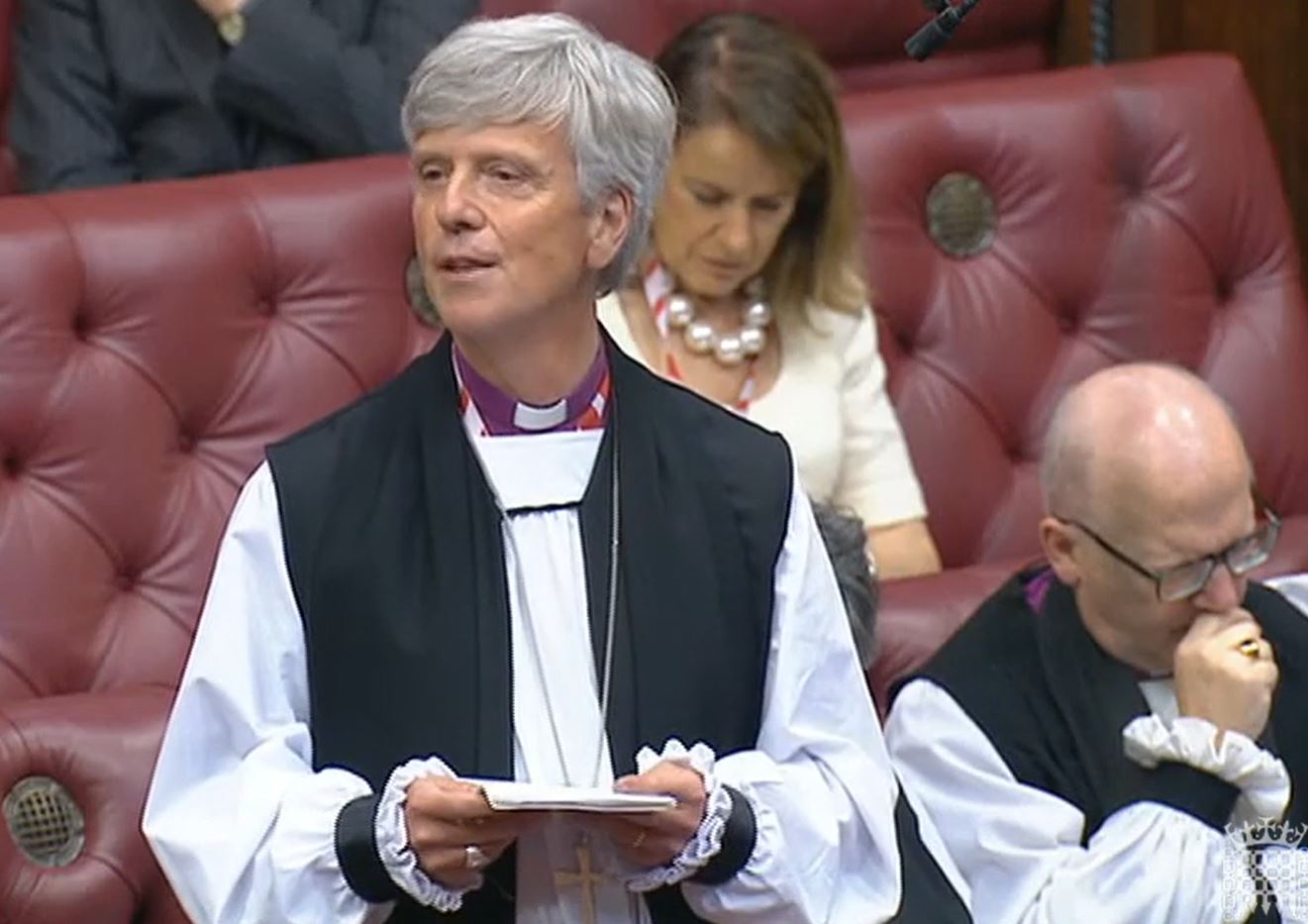
The Lord Bishop of Guildford: My Lords, one of our clergy in the diocese of Guildford has been campaigning for more than a decade, as have others in this Committee, on children’s access to online pornography. With her, I support the amendments in the names of the noble Baronesses, Lady Kidron and Lady Harding.
Her concerns eventually made their way to the floor of the General Synod of the Church of England in a powerful debate in July last year. The synod voted overwhelmingly in favour of a motion, which said that we
“acknowledge that our children and young people are suffering grave harm from free access to online pornography”
and urged us to
“have in place age verification systems to prevent children from having access to those sites”.
On 25th April 2023, the House of Lords debated the Online Safety Bill in committee. The Bishop of Oxford spoke in the debate, in support of various amendments to the bill that would extend protections for children against online harms:
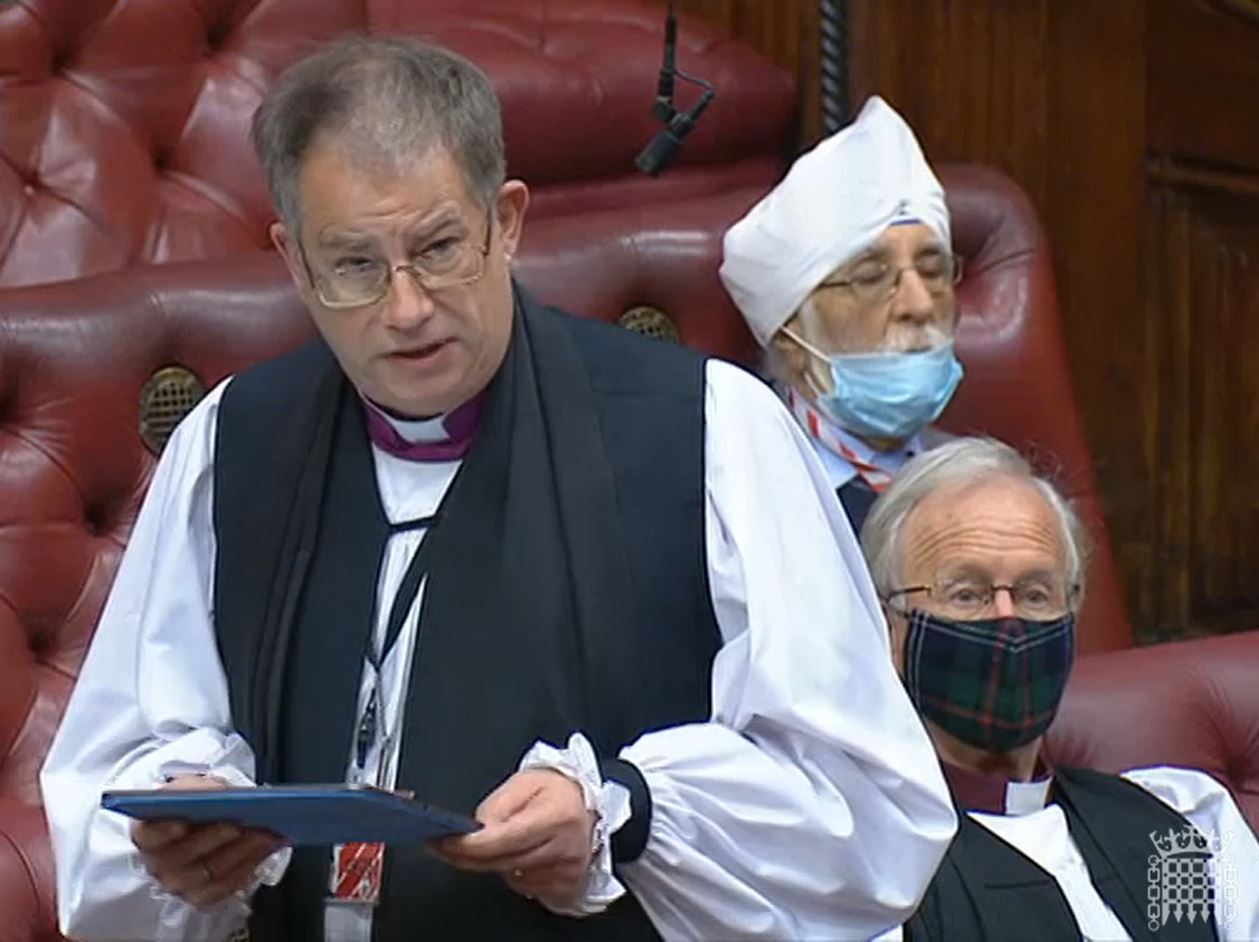
The Lord Bishop of Oxford: My Lords, it is a pleasure to follow the two noble Baronesses. I remind the Committee of my background as a board member of the Centre for Data Ethics and Innovation. I also declare an indirect interest, as my oldest son is the founder and studio head of Mediatonic, which is now part of Epic Games and is the maker of “Fall Guys”, which I am sure is familiar to your Lordships.
I speak today in support of Amendments 2 and 92 and the consequent amendments in this group. I also support the various app store amendments proposed by the noble Baroness, Lady Harding, but I will not address them directly in these remarks.
I was remarkably encouraged on Wednesday by the Minister’s reply to the debate on the purposes of the Bill, especially by the priority that he and the Government gave to the safety of children as its primary purpose. The Minister underlined this point in three different ways:
“The main purposes of the Bill are: to give the highest levels of protection to children … The Bill will require companies to take stringent measures to tackle illegal content and protect children, with the highest protections in the Bill devoted to protecting children … Children’s safety is prioritised throughout this Bill”.—[Official Report, 19/4/23; col. 724.]
On 19th April 2023, the House of Lords debated the Online Safety Bill in its first day of the committee stage. The Bishop of Oxford and the Bishop of Leeds each spoke in support of an amendment to the bill tabled by Lord Stevenson of Balmacara, setting out seven main purposes of the bill:
The Lord Bishop of Oxford: My Lords, it is a pleasure to follow other noble Lords who have spoken. I too support this key first amendment. Clarity of purpose is essential in any endeavour. The amendment overall sets out the Bill’s aims and enhances what will be vital legislation for the world, I hope, as well as for the United Kingdom. The Government have the very welcome ambition of making Britain the safest country in the world to go online. The OSB is a giant step in that direction.
As has been said, there has been remarkable consensus across the Committee on what further measures may still be needed to improve the Bill and on this first amendment, setting out these seven key purposes. Noble Lords may be aware that in the Christian tradition the number seven is significant: in the medieval period the Church taught the dangers of the seven deadly sins, the merits of the seven virtues and the seven acts of mercy. Please speak to me later if a refresher course is needed.
Amendment 1 identifies seven deadly dangers—I think they are really deadly. They are key risks which we all acknowledge are unwelcome and destructive companions of the new technologies which bring so many benefits: risks to public health or national security; the risk of serious harm to children; the risk of new developments and technologies not currently in scope; the disproportionate risk to those who manifest one or more protected characteristics; risks that occur through poor design; risks to freedom of expression and privacy; and risks that come with low transparency and low accountability. Safety and security are surely one of the primary duties of government, especially the safety and security of children and the vulnerable. There is much that is good and helpful in new technology but much that can be oppressive and destructive. These seven risks are real and present dangers. The Bill is needed because of actual and devastating harm caused to people and communities.
The Bishop of St Albans received the following written answers on 17th April 2023:
The Lord Bishop of St Albans asked His Majesty’s Government, further to the Written Answer by Lord Parkinson of Whitley Bay on 9 February (HL4988), what estimate they have made of the number of people relying on Geostationary Earth Orbit (GEO) and Low Earth Orbit (LEO) satellites for internet access.
Viscount Camrose (Con): Ofcom estimates that as of October 2022, 13,000 customers have opted for a Low Earth Orbit (LEO) broadband service from Starlink. Based on analysis of Starlink’s data, at least some of these customers are based in areas which do not have access to traditional decent broadband services. Premises may also use satellite services in conjunction with other terrestrial services.
The Bishop of Durham received the following written answer on 15th December 2022:
The Lord Bishop of Durham asked His Majesty’s Government whether they have any plans to increase regulation for unregulated digital Buy-Now-Pay-Later products; and if so, when they intend to introduce such measures.
“When people are too scared to express their genuinely held and legally protected beliefs, that is very dangerous for democracy.”
On 10th December 2021 in the House of Lords the Archbishop of Canterbury held a debate on freedom of speech. His opening and closing remarks are below, and the full debate including the contributions of Peers and the Opposition and Government response, can be read in Hansard, here.
Moved by The Archbishop of Canterbury: That this House takes note of contemporary challenges to freedom of speech, and the role of public, private and civil society sectors in upholding freedom of speech.
The Archbishop of Canterbury: My Lords, I am most grateful to the Leader of the House, the usual channels, all noble Lords who have taken the trouble to be here today and, especially, the noble Lord, Lord Parkinson, for answering on behalf of the Government in order that we may have this debate. It is a return to an Advent tradition, interrupted in recent years by elections and pandemics. Should your Lordships worry that I am infectious in some way, I have been tested to the limits of testing. I have my granddaughter’s cold, for which I would like to record my grateful thanks.
We on these Benches have our critics—I have a large number—but for all our present failings you would be hard-pressed to find a more disastrous move by the Lords spiritual than when, in 1831, 21 of them lined up behind the Duke of Wellington and opposed the Great Reform Bill. Had they voted the other way, it would have passed. The people, denied their rights, responded with riots, and bishops were particularly targeted, some with violence. In Bristol, the Bishop’s Palace was burned down. A dead cat was thrown at my predecessor Archbishop Howley, narrowly missing him but striking his chaplain in the face. “Be glad it wasn’t a live one,” Howley is reported to have responded.
I start with this dive into the past because it illustrates a present point. The grey area between, on the one hand, peaceful protest and reasoned criticism and, on the other, incitement to hatred or to violence is one that we are still trying to navigate today. The Church of England knows about that. I must start by suggesting that our society should never follow our historical example of coercion, Test Acts and punishment. There is still a prison at Lambeth Palace at the top of the Lollards’ Tower, with room for eight people. It was used for the Lollards—I have a little list.
“search engines free of advertising, social networking freed from the blind pursuit of profit, messaging services which do not mine our data—and all protecting the rights of the child? Perhaps the Government might be willing to explore this kind of radical intervention—social media in public service—in this vital area”
On 10th December 2021 the Bishop of Oxford spoke in a House of Lords debate led by the Archbishop of Canterbury on contemporary challenges to freedom of speech and the role of the public, private and third sectors in upholding it:
The Lord Bishop of Oxford: My Lords, it is a great privilege and honour, as always, to follow the noble and right reverend Lord, Lord Harries, one of my distinguished predecessors. I am grateful for this timely debate and to the most reverend Primate for his very comprehensive introduction. In a few days’ time, as we have heard, the scrutiny committee of both Houses will publish its report on the online safety legislation: a potentially vital web of provisions to prevent harm to individuals and, I hope, to society.
The Bishop of St Albans received the following written answer on 22nd July 2021:
The Lord Bishop of St Albans asked Her Majesty’s Government what assessment they have made of the effectiveness and cost-effectiveness of OpenRAN (1) as part of their gigabit capable broad rollout, (2) in increasing connectivity to rural communities, and (3) in extending connectivity to rural ‘notspots’.
On 18th May 2021 the Bishop of Oxford spoke during the fourth day of debate in the House of Lords on the Queen’s Speech, focusing on proposals to legislate for online safety.
Speaking in the House of Lords this evening, the Bishop of Oxford welcomed the Online Safety bill as a major step forward in preventing harm to children, vulnerable adults and wider society. But legislation is needed urgently. Find out more: https://t.co/klTnI3eYsg@Steven_Croftpic.twitter.com/5OGjWrXOgX
My Lords, it is a privilege to take part in this debate, to follow the noble Baroness, Lady Chakrabarti, and to welcome the noble Baroness, Lady Fullbrook—I thank her for her maiden speech. I warmly welcome the online safety Bill, referenced in the most gracious Address. I declare my interest as a board member for the Centre for Data Ethics and Innovation.
It is my view that the online safety Bill represents a major step forward in preventing harm to children, vulnerable adults and our wider society. The Bill places a robust duty of care on content-sharing platforms and creates a major new regulator by extending the remit of Ofcom. Those designing the Bill have listened carefully and have risen to the challenge of scoping a regulatory framework for new and rapidly changing technologies. The internet is used by over 90% of adults in the United Kingdom. There are many benefits to that use, as we have seen during the pandemic, but also great potential for harm. As the memorandum from DCMS indicates very clearly, this landmark regulation will end the era of self-regulation. The Bill is likely to prove a key benchmark, not only for the United Kingdom, but for governments around the world.
On 16th December the Bishop of Oxford responded to a Government statement on its plans to tackle online harms:
The Lord Bishop of Oxford [V]: My Lords, I declare my interests, particularly my membership as a board member of the Centre for Data Ethics and Innovation.
I sincerely congratulate the Government and other agencies such as the Carnegie UK Trust for these proposals, the way in which they have been developed and their substance. They have a very simple ethical code at their heart: if something is illegal or harmful offline, it should be illegal and considered harmful online.
The protection of children is paramount; refinements will be needed, but the main direction is right. The proposals break new ground. I only hope that there will be a due sense of urgency as they are taken forward. I understand the need to focus the legislation, but given the decision to rule fraud and certain other areas out of scope—which will no doubt continue to be debated—when will we see an overall digital strategy so that we can see this Bill as part of a whole?


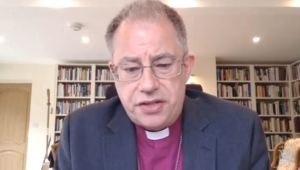 The Lord Bishop of Oxford [V]: My Lords, I declare my interests, particularly my membership as a board member of the Centre for Data Ethics and Innovation.
 The Church of England in Parliament
You must be logged in to post a comment.