
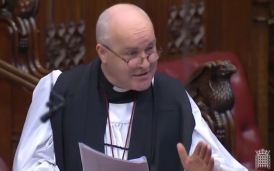
 On 12th June 2019 the House of Lords debated a report from the Communications Committee, “That this House takes note of the Report from the Communications Committee Regulating in a digital world (2nd Report, HL Paper 299).” The Bishop of Chelmsford, Rt Revd Stephen Cottrell, who served on the Committee, spoke in the debate.
The Lord Bishop of Chelmsford: My Lords, I too want to say what a great honour—and, indeed, an education—it has been to serve on the Communications Select Committee for this House, and to have had a small say in the production of this important report. It is always a great joy to follow the noble Lord, Lord Gordon, and, indeed, the noble Lord, Lord Gilbert, who has chaired our committee with such wit and patience.
The Government have already committed themselves to making the United Kingdom the safest place in the world to be online. The ideas in this report explain that this does not necessarily require more regulation, but a different approach to regulation. It is not an exaggeration to say that this is one of the big moral challenges of our day. We need to get it right, especially for our children, for there are no longer two worlds, the online and offline, but the one digital environment that we all inhabit and that needs a set of principles to govern not just its oversight but its future development.
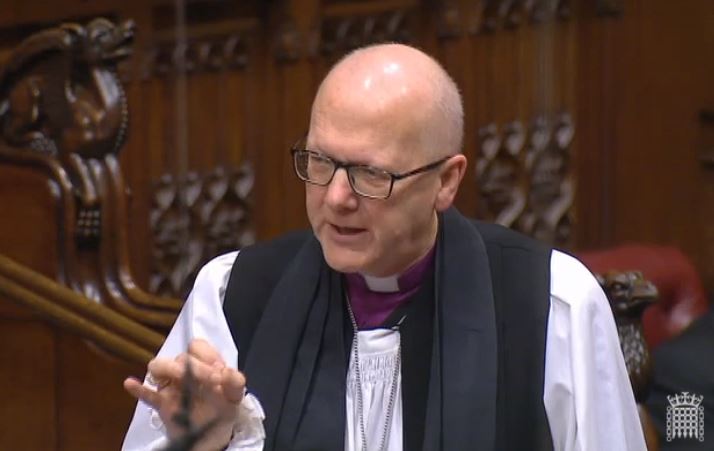 The Lord Bishop of St Albans: My Lords, this is a vast subject, and I will limit my comments to just a few areas.
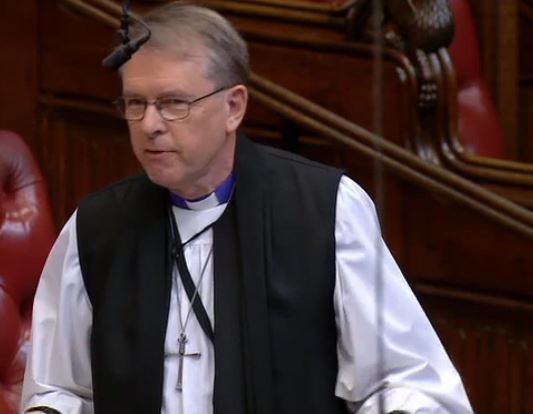 The Lord Bishop of Durham: My Lords, I also thank the noble Lord, Lord Gilbert of Panteg, and the committee for the report, which made for fascinating reading. My friend the right reverend Prelate the Bishop of Chelmsford sends his apologies for not being in his place today; he is elsewhere in the world with the most reverend Primate the Archbishop of Canterbury, and so asked me to address one or two matters. I take complete responsibility for what I say, although he said that I must talk about self-regulation.
 The Lord Bishop of London: My Lords, I add my voice to those of my friends, the right reverend Prelates who sit on these Benches, who have welcomed this White Paper as a first step. Many of the platforms that would fall under the proposed regulator are based overseas. I hope that the proposals set out in the White Paper will give sufficient power to any regulator to hold these and future international companies to account.
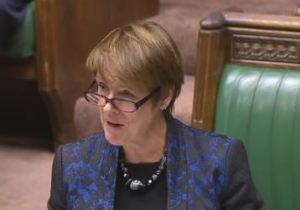 On 28th March 2019 the Second Church Estates Commissioner, Rt Hon Dame Caroline Spelman MP, answered questions from MPs on digital connectivity, the 25th anniversary of the ordination of women, and Easter church attendance.
 On 26th February 2019 Baroness Massey asked the Government a question about online safety. The Bishop of Chelmsford, the Rt Revd Stephen Cottrell asked a follow up question:
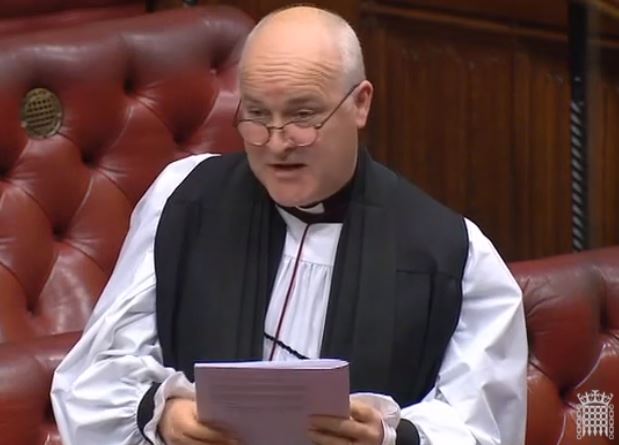 The Lord Bishop of Chelmsford: My Lords, an unregulated digital environment is causing moral decay. There is no time to reiterate the various harms that are being caused, but they are deep-seated, corrosive and pervasive. Just last week I was at a school in Essex talking to 7 to 11 year-olds about their use of a game called TikTok. All of them were using it. The lower age limit for using it is 13. As the noble Baroness, Lady Kidron, pointed out, the digital world assumes that all users are equal and all users are adults, whereas in fact one-third of users worldwide are children. Therefore, their health, well-being and development require us to ensure that the internet, and the many ways that children access it, are as safe as they can be. This has usually meant creating special safe places for children or safety options that can be activated.
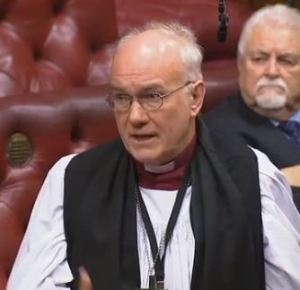 On 11th December 2018 the House of Lords considered a motion to approve the Online Pornography (Commercial Basis) Regulations 2018. During the debate the Bishop of Chester, Rt Revd Peter Forster, spoke:
 On Monday 3rd December 2018 Baroness Benjamin asked Her Majesty’s Government “what financial and other resources will be available to the UK Council for Internet Safety.” The Bishop of Chelmsford, Rt Revd Stephen Cottrell, asked a follow-up question:
 The Church of England in Parliament
You must be logged in to post a comment.