
 On 11th July 2017, Rt Rev. Alan Smith, the Bishop of St Albans, asked Her Majesty’s Government “what proportion of the Digital Infrastructure Investment Fund is expected to be available to support the provision of superfast broadband in hard to reach rural areas.” The full exchange is below, along with the follow-up questions asked by other Members:
The Lord Bishop of St Albanso ask Her Majesty’s Government what proportion of the Digital Infrastructure Investment Fund is expected to be available to support the provision of superfast broadband in hard to reach rural areas.
The Parliamentary Under-Secretary of State, Department for Digital, Culture, Media and Sport (Lord Ashton of Hyde) (Con): My Lords, the digital infrastructure investment fund aims to support industry investment in full fibre networks, which are the next generation of digital infrastructure. The Government are committing £400 million, which will be at least matched by private sector investments on the same terms. It will be up to the selected managers of the fund themselves to make investments.
Continue reading “Bishop of St Albans asks Government about broadband in rural areas”
 Lord Bishop of Leeds: My Lords, it seems odd in a society such as ours that we are even thinking about how to give access to violent pornography or trying to mitigate it in some way. It seems clear to me is that most of us sitting in this House probably have less idea of how online digital communications work than a five year-old. Children—my grandchildren’s generation—are very adept and almost intuit how to do this stuff.
  On 2nd March 2017 the Second Church Estates Commissioner, Dame Caroline Spelman MP, answered oral and written questions in the House of Commons, covering wi-fi in churches, art exhibitions in churches, the Anglican Church in South Sudan, the House of Bishops’ Report on Human Sexuality, and church building repairs. A full transcript follows: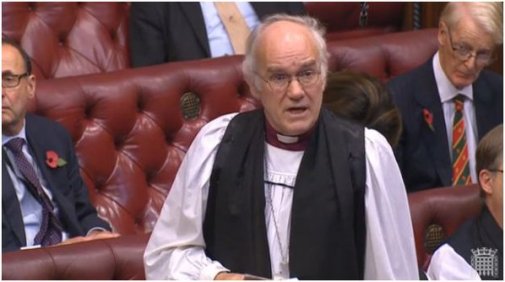
 On 1st December 2016, Baroness Howe of Idicote led a short debate in the Lords to ask the Government “what steps they are taking in order to achieve compliance with the new European Union net-neutrality Connected Continent requirements in such a way that United Kingdom adult content filtering regimes can be maintained in order to help keep children safe online.” The Rt Revd Dr Peter Forster, Bishop of Chester, took part in the debate.
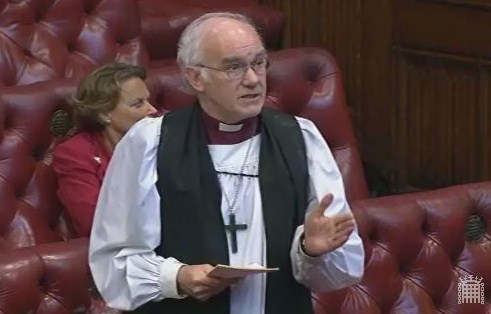
 On 17th October 2016, the House of Lords considered the Government’s Investigatory Powers Bill at Report Stage. The Bishop of Chester, Rt Revd Peter Forster, took part in the debate on an amendment from the Liberal Democrat Peer Lord Paddick on the retention of internet connection records. Introducing the amendment, Lord Paddick said: “the effect of Amendment 118A, tabled in my name and that of my noble friend Lady Hamwee, would be to remove internet connection records from any notice requiring the retention of communications data by telecommunications operators.”
 The Lord Bishop of St Albans: My Lords, the Minister has twice mentioned the changing nature of libraries. Of course, they are not just about books. Nowadays, they are a major and vital source for internet access, especially in poorer areas, where people need them to apply for jobs and where fewer households have broadband. Especially in rural areas where broadband coverage is much lower, they are a vital part of rural sustainability. The Government are rolling out broadband very quickly, and that is encouraging, but it does need time. What support are they giving to those vital online centres, many of which are closely related to libraries or in libraries, both for the sake of heritage but also for the sake of our economy?
 The Church of England in Parliament
You must be logged in to post a comment.