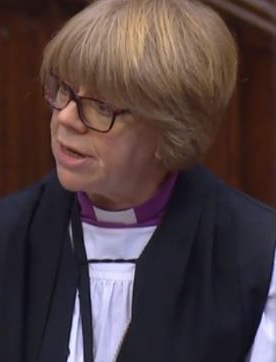
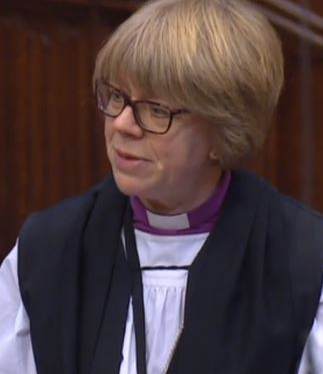
Bishop of London asks about Terminally Ill Adults (End of Life) Bill

The Bishop of London received the following written answer on 16th January 2025:

The Lord Bishop of London asked His Majesty’s Government whether they intend to produce an equalities impact assessment ahead of the coming stages of the Terminally Ill Adults (End of Life) Bill.

Continue reading “Bishop of London asks about Terminally Ill Adults (End of Life) Bill”

Asylum Support (Prescribed Period) Bill: Bishop of London supports bill

The Bishop of London spoke at the second reading of the Asylum Support (Prescribed Period) Bill on 13th December, supporting the bill and the need to make administration clearer in the asylum system:

The Lord Bishop of London: My Lords, I am glad to add my voice on the Second Reading of this Bill, and I pay tribute to the noble Baroness, Lady Lister, for bringing it forward.

As the Bishop of London, I see many churches which have stepped in to provide support to newly recognised refugees when the process of support just does not work as it should. Last year, I led a letter signed by 44 other faith and belief leaders in London to raise awareness of the high rates of homelessness for the newly recognised refugees. Many other faith groups and churches found themselves supporting newly recognised refugees who were street homeless. As part of the letter, we called for the Government to extend the support to 56 days. Following the letter, I had a very productive meeting with the noble Lord, Lord Sharpe of Epsom, when he was in his ministerial post, along with officials, and I pay tribute to him for his willingness to listen and, in fact, his willingness to respond.

Continue reading “Asylum Support (Prescribed Period) Bill: Bishop of London supports bill”

Bishop of London raises impact of COVID-19 pandemic and health inequalities on during debate on social cohesion

The Bishop of London spoke in the Archbishop of York’s debate on social cohesion on 6th December 2024, speaking on the impact of the COVID-19 pandemic and the effects of widespread health inequalities in the UK:

The Lord Bishop of London: My Lords, I declare my interests as set out in the register, particularly as a commissioner on the National Preparedness Commission. I am glad to be taking part in this debate today. It is a privilege to follow the noble Baroness, Lady Bottomley, and I look forward to the maiden speech of the noble Lord, Lord Sharma, who has much to offer this House. I have the privilege of being Bishop of London, and I can assure the noble Lord, Lord Lilley, that London is full of great diversity of political views. I extend an invitation to him to come and see where we wrestle with some of our Christian faith and politics.

The riots over the summer were a wake-up call to us all to prioritise community cohesion. There is much to be said about this, and I echo much of what my friend the most reverend Primate has already said. I am going to focus my remarks on two issues which are central to this topic but are particularly related to health, although they have a much wider application, and those two topics are trust and partnership.

First, on trust, as the most reverend Primate indicated, we have much to do to improve trust within the Church of England. Not least, we must ensure we have a greater survivor focus and introduce independent safeguarding and mandatory reporting. I join my friend the most reverend Primate in apologising for the shocking failures that the Makin report highlighted.

Continue reading “Bishop of London raises impact of COVID-19 pandemic and health inequalities on during debate on social cohesion”

Bishop of London speaks in debate on new healthcare roles

The Bishop of London took part in a debate on the upcoming review of the Physician and Anaesthetist Associate Roles on 5th December 2024, highlighting the need for clarity and trust in the healthcare system:

The Lord Bishop of London: My Lords, it is good to participate in this important debate and I am grateful to the noble Baroness, Lady Bennett, for having secured it. I declare my entry in the register of interests, specifically that I was formerly the Government’s Chief Nursing Officer.

This is clearly a complex issue, and I join other noble Lords in welcoming the Government’s recently announced review of the physician associates and anaesthetist associates. In building an NHS fit for the future, it is right that the right people with the right training and the right competence undertake the right roles. Over the last 20 years, we have seen an expanding of roles to release medical staff to do what only they can do; for example, the development of nurse-led assessment, advanced nurse practitioners and nurse prescribing, and the expansion of the role of pharmacists. In some sense, the development of physician associates and anaesthetist associates is part of this change. However, any change in role and the healthcare workforce needs to be carefully implemented and regulated. Therefore, I welcome the regulation of physician associates and anaesthetist associates, but I too question whether their regulation should take into account the outcome of this review, rather than moving ahead at present.

The main points I will make are around clarity and trust. Noble Lords will often hear me speak in this place about the essential commodity of trust in healthcare and the health of the nation. Research carried out by Healthwatch found that the public awareness of physician associate roles is mixed, particularly among older people, who are less likely to know the difference between a PA and a GP. Clear information needs to be given to people about the healthcare worker they are seeing, and they need to be reassured that they are competent and working to clear standards.

Continue reading “Bishop of London speaks in debate on new healthcare roles”

Bishop of London asks about leadership in heathcare

The Bishop of London asked a question on leadership and productivity in the healthcare service on 5th December 2024:

The Lord Bishop of London: My Lords, productivity is now often spoken of in relation to the National Health Service, which the Minister mentioned in his Answer to the Question. The Health Foundation looked at NHS productivity and identified maintaining morale and motivating the workforce as key to it. Alongside essential things such as targets, what effort are the Government making to continue softer leadership, including listening to the workforce and fostering good industrial relations?

Continue reading “Bishop of London asks about leadership in heathcare”

Bishop of London speaks in debate on the importance of fracture liaison services

The Bishop of London spoke in a debate on fracture liaison services on 4th December 2024, highlighting the importance of the service for vulnerable communities and as an early intervention:

The Lord Bishop of London: My Lords, it is very good to participate in this important debate on the fracture liaison service, especially since the issue of prevention in healthcare seems to be gathering pace. I thank the noble Lord, Lord Black, for having moved this debate.

We have heard that the fracture liaison service identifies people at risk of osteoporosis and reduces the risk of long-term fractures. Treatment provided by the fracture liaison service is often excellent, and often nurse-led. But, as we have heard, there are just not enough of them. Like many aspects of healthcare that we discuss in your Lordships’ House, provision varies by region, and there are also other inequalities of access to these services. We know that bone density decline can be accelerated by other factors, including smoking, diet and other illness.

Continue reading “Bishop of London speaks in debate on the importance of fracture liaison services”

Bishop of London asks about safeguarding in asylum processing

On 3rd December 2024, the Bishop of London asked a question on safeguarding practices for enforced return of asylum seekers whose claims have been found ineligible:

The Lord Bishop of London: My Lords, I welcome the action that the Government are taking to get on top of the asylum backlog and to process claims formerly deemed as inadmissible. I appreciate, therefore, that more individuals may be found ineligible for asylum and may need to return. Therefore, are the Government going to review the current safeguarding policies in place for enforced return and, if so, how?

Continue reading “Bishop of London asks about safeguarding in asylum processing”

Bishop of London asks about community consultation on NHS 10 year plan:

On 2nd December 2024, the Bishop of London tabled a question on community consultation on the NHS 10 Year Plan, and efforts to ensure the consultation reaches those who have least interaction with the health service

The Lord Bishop of London: To ask His Majesty’s Government what steps they are taking to ensure the consultation for the NHS 10 Year Plan reaches all communities, including those who have least interaction with the health service.

Continue reading “Bishop of London asks about community consultation on NHS 10 year plan:”

Mental Health Bill: Bishop of London raises issues of trust and accessibility for faith communities

The Bishop of London spoke at the second reading of the Mental Health Bill on 25th November 2024, raising the issues of trust and accessible care across different communities and faith traditions, and the need for investment in the mental health workforce:

My Lords, I am grateful to be able to participate in Second Reading of this important Bill. It is a privilege to follow the noble Baronesses, Lady Barker and Lady Watkins, who have a real breadth of experience in this field. I too welcome, along with many noble Lords, the reform of the Mental Health Act, which is long overdue.

The noble Earl, Lord Howe, highlighted the over-representation of minoritised communities detained under the Act but also placed on community treatment orders. Some groups are also more likely to be detained through contact with the criminal justice system or emergency departments. It is important to remember that we are speaking about these inequalities in the wider context of health inequalities; some groups present to health services far later, when their symptoms have worsened. The Royal College of Nursing notes in its briefing that mental health services are

“not seen as accessible to all communities”,

and that:

“Many black men have a first interaction with a service via the police during a crisis”.

Continue reading “Mental Health Bill: Bishop of London raises issues of trust and accessibility for faith communities”

Bishop of London asks about impact of diabetes on maternal mortality rate

On 19th November 2024, the Bishop of London asked a question on the impact of type 2 diabetes on the maternal mortality rate and the support available for women affected by this:

The Lord Bishop of London: My Lords, women with type 2 diabetes face a higher risk of miscarriage, stillbirth, neonatal deaths and birth defects. As we have heard, women who live in areas of high deprivation as well as women who come from black and minority ethnic groups are more likely to be impacted by type 2 diabetes. This compounds the existing inequalities in the maternal mortality rate. What steps are the Government taking to support integrated care boards to build relationships with these women who are most likely to experience these impacts, to ensure that they have the best maternity care and diabetic care, including ensuring they have access to continuous glucose monitoring where necessary?

Continue reading “Bishop of London asks about impact of diabetes on maternal mortality rate”