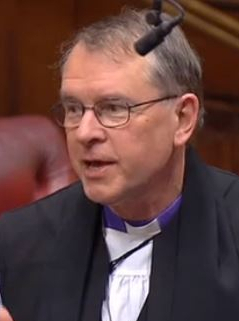
Bishop of St Albans asks about effects of smartphones on young people’s mental health

The Bishop of St Albans asked a question on the mental health of young people and the potential effects of social media and smartphones, during a discussion on health-related benefits claims on 5th November 2024:

The Lord Bishop of St Albans: My Lords, I pick up the Minister’s reference to mental health. Some estimates suggest that up to two-thirds of those claiming incapacity benefits are doing so on the basis of mental health-related issues. Can the Minister tell us whether a focus on young people, in particular their use of things such as smartphones and social media, is being both researched and fed into the Government’s early intervention strategy?

Continue reading “Bishop of St Albans asks about effects of smartphones on young people’s mental health”

Bishop of St Albans asks about support for children in local authority care

The Bishop of St Albans received the following written answers on 21st October 2024:

The Lord Bishop of St Albans asked His Majesty’s Government what steps they will take to develop the Children’s Social Care National Framework and outcomes further to include the voice of children and young people.

Continue reading “Bishop of St Albans asks about support for children in local authority care”

Bishop of St Albans asks about mental health of young people in the UK

The Bishop of St Albans received the following written answer on 15th April 2024:

The Lord Bishop of St Albans asked His Majesty’s Government what assessment they have made of the report by Gallup, the Oxford Wellbeing Research Centre and the UN Sustainable Development Solutions Network World Happiness Report, published on 20 March; in particular, the finding that the happiness of young people under the age of 30 in the UK has declined.

Continue reading “Bishop of St Albans asks about mental health of young people in the UK”

Schools (Mental Health Professionals) Bill: Bishop of Winchester applauds measures to address mental health issues in young people

The Bishop of Winchester spoke in a debate on the second reading of the Schools (Mental Health Professionals) Bill on 1st March 2024, pointing out the need for a consistent, universally applied policy to improve student mental health, and the need to address the causes of mental health issues at a root level:

The Lord Bishop of Winchester: My Lords, I am grateful to the noble Baroness for bringing this Bill to us for its Second Reading. We indeed face a crisis in this area and need to be aware of the long-term consequences of not addressing it.

The Bill would pave the way for just the kinds of interventions that are sorely needed. The NSPCC and our own Library briefing state that more than 20% of children and young people are living with poor mental health. CAMHS referrals are provided for only the most severe presenting issues, while early intervention, though widely recognised to be key to good long-term outcomes, is now a thing of distant memory. The sobering fact is that children are taking their own lives while they wait to be seen, and that is deeply shameful.

Last summer, the Church of England published the document Our Hope for a Flourishing Schools System, which makes specific mention of mental health, it being the issue school leaders most often raise with us. It states:

“Children’s mental health and wellbeing is prioritised and resourced generously by a society that invests in the long-term future of its nation by placing children first in funding and political direction. The fulfilling of a child’s potential should never be hindered, blocked or prevented by the system in which they find themselves”.

However, those words are, sadly, far from being the current reality.

Continue reading “Schools (Mental Health Professionals) Bill: Bishop of Winchester applauds measures to address mental health issues in young people”

Bishop of Worcester asks about need for specialised training to recognise mental health effects of financial strain for front line workers

The Bishop of Worcester asked a question on the need for training for front line workers in government and essential services to support and recognise the mental health effects of financial stress and strain on 7th December 2023, following a discussion on the Trussell Trust’s recommendation of an essentials guarantee for benefits claimants:

The Lord Bishop of Worcester: My Lords, thinking of the effects of poverty, the Mental Health Foundation has recommended that all front-line workers, including those who work in essential services and government, should be given training and support to know how to respond effectively to the mental health effects of financial stress and strain. Will the Minister agree that this training and support is both vital and necessary?

Continue reading “Bishop of Worcester asks about need for specialised training to recognise mental health effects of financial strain for front line workers”

Bishop of St Albans urges efforts to improve inpatient mental health care

The Bishop of St Albans made a speech following a motion to take note on the mental health of children and young people in the UK on 23rd November 2023, advocating for urgent reform of the Mental Health Act to address issues with inpatient mental health care, and raising the issue of problem gambling and its effects on mental health:

The Lord Bishop of St Albans: My Lords, I too congratulate the noble and learned Baroness, Lady Hale, on her excellent maiden speech, and the noble Earl, Lord Russell, on securing this debate on an area of huge importance for all of us. As has been noted by many noble Lords already, and raised in the Question asked in the House by the noble Lord, Lord Bradley, on Tuesday, the omission of the mental health Bill from the King’s Speech has caused a great deal of worry and concern. It seems that we have time to debate pedicabs but not the urgent need for this review of our mental health provision.

With the number of children and young people being referred to mental health services increasing, alongside increasing waiting times for treatment, it is clear how urgent and pressing the reform of the Mental Health Act is. The Government have said that the Bill would be published when parliamentary time allows. I would argue that this is of the highest priority. Improved mental health in our young people and children—and the rest of the population, more broadly—would not only decrease the huge levels of suffering and anguish but bring immense economic benefits, saving taxpayers’ money and bringing more people into the workforce.

Continue reading “Bishop of St Albans urges efforts to improve inpatient mental health care”

Bishop of London asks about mental health impact of the cost of living crisis

The Bishop of London asked a question on the impact the of cost of living crisis on people’s mental health on 26th October 2023:

The Lord Bishop of London: My Lords, as we have heard, our financial situation has a serious impact on our health and mental well-being. This is supported by recent polling commissioned by Christians Against Poverty. This issue is not just about more disease; it also includes malnutrition, mental health and failing to take time off when sick due to financial insecurity. What assessment have the Government made of the impact of the cost of living crisis on people’s mental health, particularly in our most deprived and vulnerable communities? What steps are the Government taking to reduce health inequalities, specifically those related to suicide?

Continue reading “Bishop of London asks about mental health impact of the cost of living crisis”

Bishop of Derby asks about mental health services for young people

The Bishop of Derby received the following written answer on 24th October 2023:

The Lord Bishop of Derby asked His Majesty’s Government, following the Children’s Society’s The Good Childhood Report 2023, published on 20 September, what steps the Department of Health and Social Care’s Major Conditions Strategy will take to prevent poor mental health and promote wellbeing in children and young people.

Continue reading “Bishop of Derby asks about mental health services for young people”

Bishop of St Albans asks about use of transcranial magnetic stimulation therapy treatments

The Bishop of St Albans received the following written answer on 4th September 2023:

The Lord Bishop of St Albans asked His Majesty’s Government what assessment they have made of the use of transcranial magnetic stimulation in treating (1) alcoholism, (2) problem gambling, (3) depression, and (4) substance disorders.

Continue reading “Bishop of St Albans asks about use of transcranial magnetic stimulation therapy treatments”

Bishop of Durham asks about links between absenteeism and mental health & wellbeing in young people

On 20th July 2023, the Bishop of Durham asked a question on connections between absences from school and mental health, wellbeing and special educational needs:

The Lord Bishop of Durham: My Lords, I declare my interest as chair of the National Society and thank the Minister for visiting the north-east recently. The Church of England has just published a flourishing schools document, which I know she has. Absenteeism appears to also be connected to mental health and well-being; there are particular issues around special educational needs. Could the Minister comment on the work that is being done to note the connection with mental health and well-being and improve that to help with absenteeism?

Continue reading “Bishop of Durham asks about links between absenteeism and mental health & wellbeing in young people”