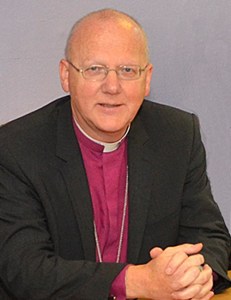
Nationality and Borders Bill 2022: Bishop of St Albans speaks in support of amendments on modern slavery

On 8th March 2022, the House of Lords debted the Nationality and Borders Bill in the 3rd day of the report stage. The Bishop of St Albans spoke in support of several amendments on modern slavery:

My Lords, I will speak to Amendments 67 and 68 in the name of the noble Lord, Lord Alton. I spoke to these amendments in Committee because I was concerned that Clause 59 was effectively raising the reasonable grounds threshold for identifying a victim of modern slavery. With respect to the Government, I confess that I remain unconvinced by their desire to alter reasonable grounds thresholds, and was not adequately assuaged in my fears that this could erect an unnecessary barrier to victims accessing the national referral mechanism.

The noble Lord, Lord Alton, made the argument in Committee that reasonable grounds decisions on the standard of “suspect but cannot prove” would allow the Modern Slavery Act to be more in line with ECAT. I am not a legal expert so this may well be the case. However, I made the point that since we currently use “maybe” as it exists within the Modern Slavery Act, as opposed to “is” or “are” as proposed by the Government —indeed, rather than “has been” as appears in ECAT—in supposedly bringing ourselves in line with ECAT we would effectively raise the threshold for access to the NRM.

Continue reading “Nationality and Borders Bill 2022: Bishop of St Albans speaks in support of amendments on modern slavery”
Nationality and Borders Bill 2022: Bishop of Bristol speaks in support of amendments on modern slavery and protection of overseas domestic workers

On 8th March 2022, the House of Lords debated the Nationality and Borders Bill in its report stage. The Bishop of Worcester spoke in support of amendments to the bill that would remove certain clauses relating to victims of modern slavery, and moved an amendment intended to protect overseas domestic workers:

The Lord Bishop of Bristol: My Lords, I support the amendments in the name of the noble Lord, Lord Coaker, to remove Clauses 57, 58 and 62 from the Bill, to which I have added my name. I too congratulate the noble Baroness, Lady Williams, on her appointment and give thanks for all the work she does, even when we do not always entirely agree across these Benches.

As we have heard, Clauses 57 and 58 would make it appreciably more difficult for people to be recognised as victims of modern slavery and receive support. In Committee, the Minister responded to my concerns about these clauses by saying that, far from deterring victims, this will

“encourage genuine victims to come forward”.—[Official Report, 10/2/22; col. 1843.]

Continue reading “Nationality and Borders Bill 2022: Bishop of Bristol speaks in support of amendments on modern slavery and protection of overseas domestic workers”

Votes: Nationality and Borders Bill

On 8th March 2022, the House of Lords debated amendments to the Nationality and Borders Bill in its third day of the Report stage. Votes were held on several amendments, in which Bishops took part.

Continue reading “Votes: Nationality and Borders Bill”

Nationality and Borders Bill: Bishop of Bristol supports amendments on modern slavery

On 10th February 2022, the House of Lords debated the Nationality and Borders Bill in the 5th day of Committee. The Bishop of Bristol spoke in favour of two amendments:

  • An amendment to remove Clause 57 of the bill. Clause 57 would establish a deadline for potential victims of modern slavery to disclose that information, and would penalise late disclosure.
  • An amendment to remove clause 62 from the bill. Clause 62 “excludes from the national referral mechanism persons who have committed criminal offences as well as other offences relating to terrorism [and those who] claimed to be victims of terrorism in bad faith.” Hansard

The Lord Bishop of Bristol: My Lords, I have added my name to those noble Lords who oppose Clause 57 standing part. I am very grateful to the noble Lord, Lord Coaker, and others, who have already so eloquently made the case about concerns for this part of the Bill. As the Church of England’s lead bishop for modern slavery, I have had the privilege to sit with and listen to many charities, agencies and survivors of modern slavery, so it seemed appropriate to bring those conversations from the grass roots to your Lordships’ attention.

This is a clause which resonates deeply with the Church. Through the Clewer initiative, the Church of England is working across England with many partners to raise awareness of all aspects of modern slavery and to help support victims and vulnerable groups. This includes running training courses on county lines, producing apps which allow for reporting of suspected modern slavery cases in car washes and the farming sector, and working with many churches to raise up and equip volunteers in this area.

Continue reading “Nationality and Borders Bill: Bishop of Bristol supports amendments on modern slavery”

Nationality and Borders Bill: Bishop of London speaks on modern slavery provisions

On 5th January 2022, the House of Lords debated the Nationality and Borders Bill in its second reading. The Bishop of London spoke in the debate, welcoming some provisions in the bill whilst expressing concerns that it might have a counterproductive effect on protections against modern slavery:

The Lord Bishop of London: My Lords, it is a pleasure to follow the many noble Lords in this House who bring such expertise to our deliberations and compassion to our scrutiny of this Bill. I wish to focus my remarks particularly on Part 5 of the Bill, on modern-day slavery. It has been said that the Modern Slavery Act was a pioneering piece of legislation. 

I would agree with that, but there is so much more work for us to do to confront this blight on our communities. Addressing modern-day slavery is close to the Church of England’s heart. Through the Clewer Initiative and other programmes, we have worked to raise awareness and to support survivors. This is a matter in which civil society, law enforcement and government share a joint responsibility to act.

Continue reading “Nationality and Borders Bill: Bishop of London speaks on modern slavery provisions”

Bishop of St Albans asks about links between discount fashion retailers and modern slavery

The Bishop of St Albans asked a question on forced labour, modern slavery, and child labour in production of goods for the discount fashion industry on 21st October 2021, during a debate on labour conditions in garment and material production:

The Lord Bishop of St Albans: My Lords, can the Government update the House on any ongoing conversations that they are having with discount fashion retailers about sourcing of goods in relation to forced labour, modern slavery and child labour, which is causing such anxiety in our country?

Continue reading “Bishop of St Albans asks about links between discount fashion retailers and modern slavery”

Bishop of St Albans asks if Uighur forced labour was used to produce UK PPE

On 10th December the Bishop of St Albans received a written answer to a question on whether Uighur forced labour had been used in production of PPE bought by Government for use in the UK:

The Lord Bishop of St Albans: To ask Her Majesty’s Government what assessment they have made of whether Uighur forced labour was used in the production of personal protective equipment purchased by the UK from Medwell Medical Products; and what plans they have to implement due diligence checks to ensure that items purchased by the UK have not been produced using such forced labour. [HL10106]
Continue reading “Bishop of St Albans asks if Uighur forced labour was used to produce UK PPE”

Bishop of Bristol asks Government about visas routes for those vulnerable to trafficking

On 28th July the Rt Revd Vivienne Faull, Bishop of Bristol, received written answers to three questions on overseas domestic workers, and seasonal  workers (both areas vulnerable to  modern slavery and human trafficking).

The Lord Bishop of Bristol: HL6880 To ask Her Majesty’s Government when they intend to publish further details about any changes to the routes of entry to the UK for overseas domestic workers.

Baroness Williams of Trafford: Our broad approach for January 2021 will be to maintain the existing provisions for overseas domestic workers, expanding this route to include EU citizens.

Continue reading “Bishop of Bristol asks Government about visas routes for those vulnerable to trafficking”

Bishops of Southwark and Bristol highlight concerns with Government’s Immigration Bill

On 22nd July the Government’s Immigration and Social Security (EU Withdrawal) Bill was debated at Sec0nd Reading in the House of Lords. The Rt Revd Christopher Chessun, Bishop of Southwark, and the Rt Revd Vivienne Faull, Bishop of Bristol, spoke in the debate, highlighting modern slavery, work eligibility, EU citizens, visas for ministers of religion, tariffs, and children’s welfare.

The Lord Bishop of Southwark: My Lords, the introduction of this Bill in another place is a signal opportunity for Her Majesty’s Government comprehensively to reset the legislative basis for immigration control in this country, to set out a vision for doing so, and to rationalise and streamline the more than 1,000 pages of immigration legislation under which we labour. It is surprising, therefore, that, as other speakers have pointed out, this Bill is so narrow in scope. Continue reading “Bishops of Southwark and Bristol highlight concerns with Government’s Immigration Bill”

Bishop of Bristol asks about Covid-19, modern slavery and agricultural workers

On 16th July 2020 the Bishop of Bristol, Rt Revd Vivienne Faull, asked a question she had tabled in the House of Lords about modern day slavery, COVID-19 and agricultural workers. The exchange and the follow-up questions of others, is below:

Covid-19: Human Trafficking

Question

Asked by The Lord Bishop of Bristol

To ask Her Majesty’s Government what assessment they have made of the impact of the Covid-19 pandemic on human trafficking in the United Kingdom.

Continue reading “Bishop of Bristol asks about Covid-19, modern slavery and agricultural workers”