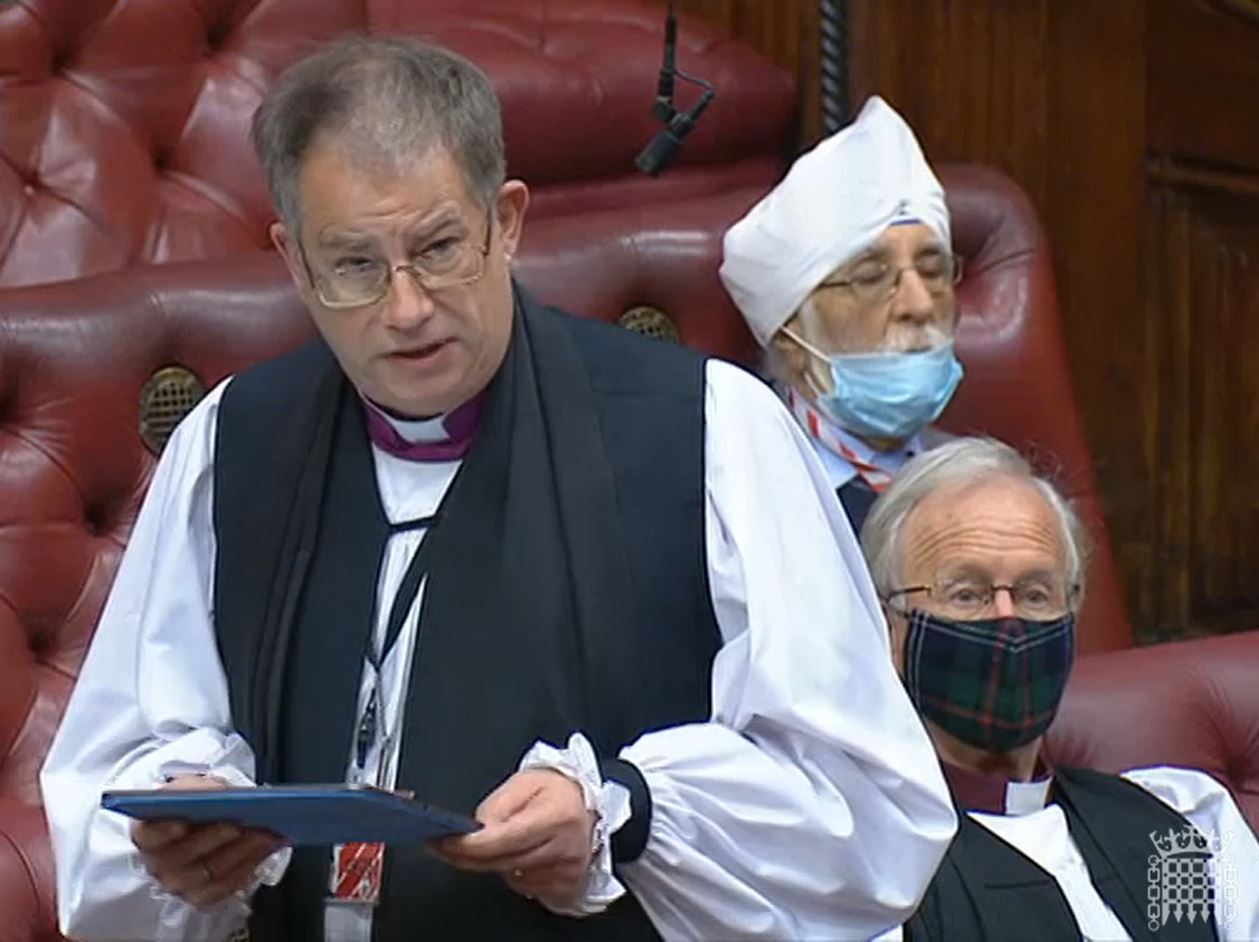
Online Safety Bill: Bishop of Oxford supports amendments on online harms

On 27th April 2023, the Bishop of Oxford spoke in committee in support of amendments to the Online Safety Bill that would expand the definition of online harms to children to cover a broader spectrum of potential risk:

The Lord Bishop of Oxford: My Lords, I support Amendments 20, 93 and 123, in my name and those of the noble Baroness, Lady Kidron, and the noble Lords, Lord Bethell and Lord Stevenson. I also support Amendment 74 in the name of the noble Baroness, Lady Kidron. I pay tribute to the courage of all noble Lords and their teams, and of the Minister and the Bill team, for their work on this part of the Bill. This work involves the courage to dare to look at some very difficult material that, sadly, shapes the everyday life of too many young people. This group of amendments is part of a package of measures to strengthen the protections for children in the Bill by introducing a new schedule of harms to children and plugging a chronological gap between Part 3 and Part 5 services, on when protection from pornography comes into effect.

Every so often in these debates, we have been reminded of the connection with real lives and people. Yesterday evening, I spent some time speaking on the telephone with Amanda and Stuart Stephens, the mum and dad of Olly Stephens, who lived in Reading, which is part of the diocese of Oxford. Noble Lords will remember that Olly was tragically murdered, aged 13, in a park near his home, by teenagers of a similar age. Social media played a significant part in the investigation and in the lives of Olly and his friends—specifically, social media posts normalising knife crime and violence, with such a deeply tragic outcome.

Continue reading “Online Safety Bill: Bishop of Oxford supports amendments on online harms”

Online Safety Bill: Bishop of Oxford supports amendments on preventing harms to children

On 25th April 2023, the House of Lords debated the Online Safety Bill in committee. The Bishop of Oxford spoke in the debate, in support of various amendments to the bill that would extend protections for children against online harms:

The Lord Bishop of Oxford: My Lords, it is a pleasure to follow the two noble Baronesses. I remind the Committee of my background as a board member of the Centre for Data Ethics and Innovation. I also declare an indirect interest, as my oldest son is the founder and studio head of Mediatonic, which is now part of Epic Games and is the maker of “Fall Guys”, which I am sure is familiar to your Lordships.

I speak today in support of Amendments 2 and 92 and the consequent amendments in this group. I also support the various app store amendments proposed by the noble Baroness, Lady Harding, but I will not address them directly in these remarks.

I was remarkably encouraged on Wednesday by the Minister’s reply to the debate on the purposes of the Bill, especially by the priority that he and the Government gave to the safety of children as its primary purpose. The Minister underlined this point in three different ways:

“The main purposes of the Bill are: to give the highest levels of protection to children … The Bill will require companies to take stringent measures to tackle illegal content and protect children, with the highest protections in the Bill devoted to protecting children … Children’s safety is prioritised throughout this Bill”.—[Official Report, 19/4/23; col. 724.]

Continue reading “Online Safety Bill: Bishop of Oxford supports amendments on preventing harms to children”

Bishop of Oxford and Bishop of Leeds support statements of purpose for Online Safety Bill

On 19th April 2023, the House of Lords debated the Online Safety Bill in its first day of the committee stage. The Bishop of Oxford and the Bishop of Leeds each spoke in support of an amendment to the bill tabled by Lord Stevenson of Balmacara, setting out seven main purposes of the bill:

The Lord Bishop of Oxford: My Lords, it is a pleasure to follow other noble Lords who have spoken. I too support this key first amendment. Clarity of purpose is essential in any endeavour. The amendment overall sets out the Bill’s aims and enhances what will be vital legislation for the world, I hope, as well as for the United Kingdom. The Government have the very welcome ambition of making Britain the safest country in the world to go online. The OSB is a giant step in that direction.

As has been said, there has been remarkable consensus across the Committee on what further measures may still be needed to improve the Bill and on this first amendment, setting out these seven key purposes. Noble Lords may be aware that in the Christian tradition the number seven is significant: in the medieval period the Church taught the dangers of the seven deadly sins, the merits of the seven virtues and the seven acts of mercy. Please speak to me later if a refresher course is needed.

Amendment 1 identifies seven deadly dangers—I think they are really deadly. They are key risks which we all acknowledge are unwelcome and destructive companions of the new technologies which bring so many benefits: risks to public health or national security; the risk of serious harm to children; the risk of new developments and technologies not currently in scope; the disproportionate risk to those who manifest one or more protected characteristics; risks that occur through poor design; risks to freedom of expression and privacy; and risks that come with low transparency and low accountability. Safety and security are surely one of the primary duties of government, especially the safety and security of children and the vulnerable. There is much that is good and helpful in new technology but much that can be oppressive and destructive. These seven risks are real and present dangers. The Bill is needed because of actual and devastating harm caused to people and communities.

Continue reading “Bishop of Oxford and Bishop of Leeds support statements of purpose for Online Safety Bill”

Bishop of Oxford asks about gas boilers in new build homes

The Bishop of Oxford asked a question on the government’s heat and buildings strategy, and whether the government planned to change the target date for banning the installation of gas boilers in new build homes, on 28th February 2023:

The Lord Bishop of Oxford: To ask His Majesty’s Government what assessment they have made of progress on their Heat and Buildings Strategy, published on 19 October 2021; and whether they have any plans to change the date of 2025 for banning the installation of gas boilers in new-build homes.

Continue reading “Bishop of Oxford asks about gas boilers in new build homes”

Online Safety Bill: Bishop of Oxford speaks on risks to vulnerable adults

On 1st February 2023, the House of Lords debated the Online Safety Bill in its second reading. The Bishop of Oxford spoke in the debate , raising the importance of risk assessments of harm to adults, the independence of Ofcom, and the dangers of technology facilitated crime & domestic abuse:

The Lord Bishop of Oxford: My Lords, it is an honour and privilege to follow the noble Baroness, Lady Campbell, and all those who have spoken in this debate. As a member of your Lordships’ Committee on Artificial Intelligence and a founding member of the Centre for Data Ethics and Innovation, I have followed the slow progress of this Bill since the original White Paper. We have seen increasing evidence that many social media platforms are unwilling to acknowledge, let alone prevent, harms of the kind this vital Bill addresses. We know that there is an all too porous frontier between the virtual world and the physical world. The resulting harms damage real lives, real families, and real children, as we have heard.

There is a growing list of priority harms and now there is concern, as well as excitement, over new AIs such as ChatGPT; they demonstrate yet again that technology has no inherent precautionary principles. Without systemic checks and balances, AI in every field develops faster than society can respond. We are and for ever will be catching up with the technology.

The Bill is very welcome, marking as it does a belated but important step towards rebalancing a complex but vital aspect of public life. I pay tribute to the Government and to civil servants for their patient efforts to address a complex set of ethical and practical issues in a proportionate way. But the job is not yet fully done.

Continue reading “Online Safety Bill: Bishop of Oxford speaks on risks to vulnerable adults”

Bishop of Oxford asks about pre-paid energy meters

The Bishop of Oxford received the following written answers on 26th October 2022:

The Lord Bishop of Oxford asked His Majesty’s Government what estimate they have made of the number of (1) forced prepay energy meter installs, and (2) forced prepay energy meter switches, that will take place this winter.

Lord Callanan (Con): The Government does not make an estimate of the number of prepayment meters installed or switched. The energy Regulator, Ofgem, has reported that the number of prepayment meters installed for debt under warrant in 2021 was 49,552.

Continue reading “Bishop of Oxford asks about pre-paid energy meters”

Bishop of Oxford speaks about child poverty

On 20th October 2022, the Bishop of Oxford spoke about child poverty during a debate on the cost of living and public wellbeing:

My Lords, I welcome this moving and timely debate and the opportunity to highlight the consequences of the rising cost of living and its impact on well-being. I particularly want to focus on the well-being of children.

Psalm 41 begins with the words, “Blessed are those who consider the poor”—a reminder, if we need one, that the well-being of the whole nation is enhanced or diminished by the way we respond to those most in need. This insight is shared by all the great faith traditions.

So let us consider the poor, especially children caught in poverty and the impact of that on their well-being. The Children’s Society published its Good Childhood Report a few weeks ago. The stats have been quoted already. Some 85% of parents and carers are concerned about how the cost of living crisis will affect their families; that is nearly everybody. A third of families reported that they are already struggling with the costs of school trips and uniforms over the next year. A recent Action for Children survey report found that nearly half of children worry about their family finances—but, of course, many children’s needs are much more basic.

Continue reading “Bishop of Oxford speaks about child poverty”

Bishop of Oxford asks about government support for behaviour change on the pathway to net-zero

The Bishop of Oxford tabled a question for short debate on 20th October 2022, concerning the pathway to net zero emissions:

The Lord Bishop of Oxford: To ask His Majesty’s Government what steps they will take to support behaviour change as part of the pathway to net zero emissions.

My Lords, I appreciate the time given to this debate, despite all that is happening elsewhere in Westminster today. We face many challenging issues as a country and a world, but none is more serious than climate change and the environmental crisis. The context of our debate is the real prospect of global heating of more than 1.5 degrees by the middle of the century, with escalating extreme weather events in the UK and across the world, rising sea levels, devastating fires and floods, significant loss of life and damage to infrastructure, wars over scarce resources, shifting patterns of harvest, an increase in zoonotic disease and a massive displacement of people as large parts of the earth become uninhabitable.

Your Lordships may well have seen the final episode this week of BBC documentary “Frozen Planet II”, detailing the effects of global warming on people and wildlife. The most sinister pictures for me were of the small bubbles of trapped methane being released in great quantities from the permafrost, with devastating consequences for the earth.

Continue reading “Bishop of Oxford asks about government support for behaviour change on the pathway to net-zero”

Bishop of Oxford asks about “compassionate conservatism”

On 18th October 2022, the Bishop of Oxford asked a question in response the new Chancellor of the Exchequer, Jeremy Hunt’s, speech on the economy:

The Lord Bishop of Oxford: My Lords, I welcome the new Chancellor, many of the measures announced yesterday, and the increased prospect of greater stability. I noticed that in his Statement yesterday he used the phrase “compassionate conservatism” several times. I wonder if the Minister would unpack that phrase a little, particularly on how the Chancellor will navigate to privilege the needs of the very poorest in society, perhaps especially in the outworking of the increase in benefits in line with price inflation, and in looking to see a decrease in the use of foodbanks in the coming years, which has escalated in major ways in the last decade.

Continue reading “Bishop of Oxford asks about “compassionate conservatism””

Bishop of Oxford speaks about ministerial changes

On 7th September 2022, the House of Lords discussed the recent ministerial changes, with particular reference to the new Leader of the House of Lords, Lord True, and the outgoing Leader, Baroness Evans of Bowes Park. The Bishop of Oxford made the following speech:

The Lord Bishop of Oxford: My Lords, it is a joy to listen to these tributes. I associate myself with them and, on behalf of the Lords spiritual, add our thanks and appreciation to the noble Baroness for her service over this last six years. It is a happy thing that so many of my colleagues are also here to join in that tribute. It has been my privilege to serve in this House through the whole of the noble Baroness’s tenure. I believe that she has brought the gifts of stability and acuity to her leadership and that the House has functioned well in that time. So far as I can judge, she has increased the respect in which this House is held in the wider nation and country.

Continue reading “Bishop of Oxford speaks about ministerial changes”