Safety of Rwanda (Immigration and Asylum) Bill: Bishop of Chelmsford moves amendment introducing sunset clause to bill

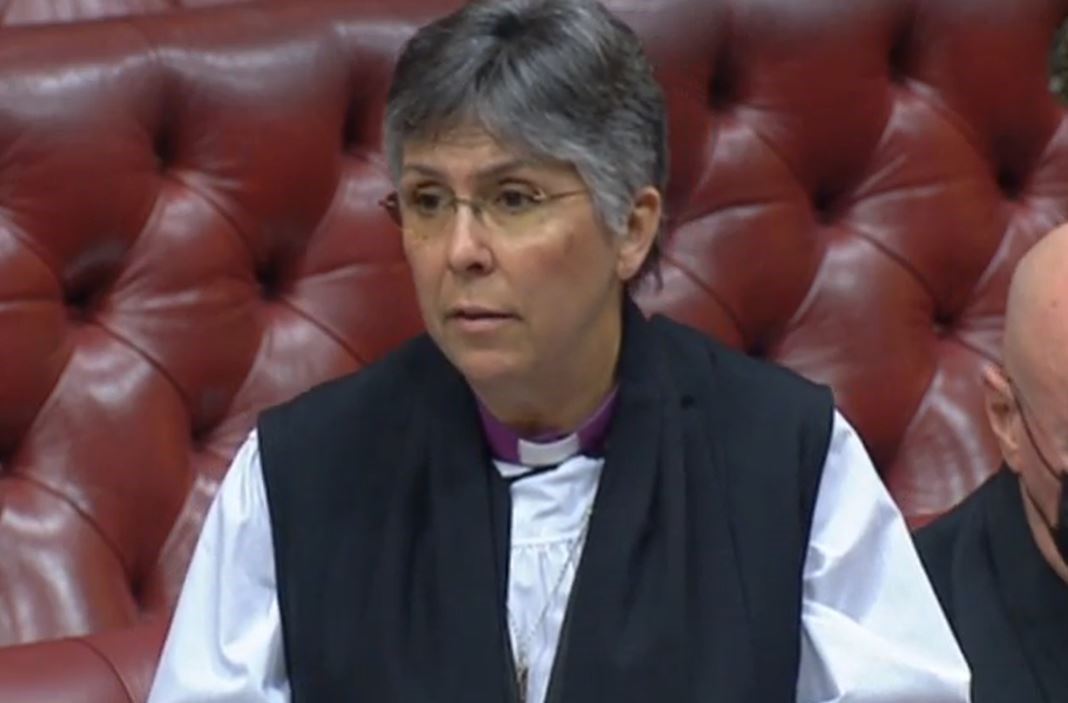
On 19th February 2024, the Bishop of Chelmsford tabled her her amendment 91 to the Safety of Rwanda (Immigration and Asylum) Bill, which would insert a sunset provision for the Bill to expire two years after commencement unless Parliament decides that it should remain in force and the Government has produced a report containing evidence that the Rwandan government is fulfilling its Treaty obligations:

The Lord Bishop of Chelmsford: My Lords, in moving Amendment 91 I am grateful to my friends the noble Lords, Lord Scriven and Lord Blunkett, for their support. The noble Lord, Lord Scriven, is in his seat and the noble Lord, Lord Blunkett, was in touch with me today to apologise for not being able to be here this evening.

I want to keep my comments as short as possible, given the hour and the fact that some of the issues have already been debated in Committee. However, there is merit in discussing the value of a sunset provision, now that each of the Bill’s clauses has been scrutinised.

The fundamental issue, which I fear has not yet been fully addressed by the Government Benches, is that we are being asked to make a permanent judgment on the safety of Rwanda on the basis of the yet to be implemented arrangements outlined in the treaty. This is, of course, against the opinion of our highest court. Furthermore, it is simply not arguable on any rational basis that Rwanda is safe at present, when, as the Minister himself has conceded, Rwanda is moving towards having the required protections in place.

Continue reading “Safety of Rwanda (Immigration and Asylum) Bill: Bishop of Chelmsford moves amendment introducing sunset clause to bill”

Illegal Migration Bill: Archbishop of Canterbury speaks on motion to ensure scrutiny of government migration policy

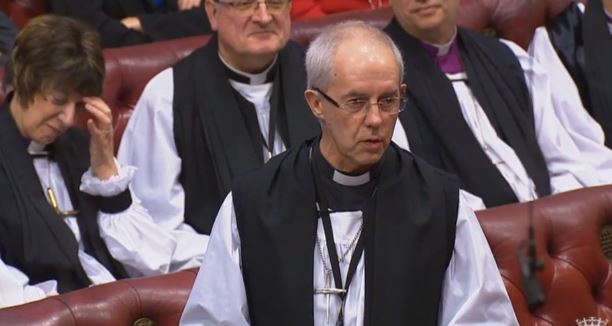
On 17th July 2023, during the final day of debate on the Illegal Migration Bill, the Archbishop of Canterbury spoke on his motion J1, which would aim to ensure that government policy on migration is considered and debated by the House of Commons and the House of Lords in the future. The motion was not taken to a vote:  

The Lord Archbishop of Canterbury: My Lords, I will speak very briefly to Motion J1. The amendment put forward under Motion J1 aims to ensure that, not only now but in the future, the Government’s policy is examined. As the Minister said, the current Government’s concentration is on international co-operation and working, although with some hesitation at times, with groups such as the UNHCR and others internationally. The amendment would ensure that that strategy—the way the Government are working—and the context in which migration is being considered are brought in front of both Houses, simply for a debate, with an analysis of the situation by the Government.

The Minister has said very clearly that he does not wish this to happen on the grounds that it is being done now, but this Bill is not about today. It will shortly be an Act, and when it is an Act it will last years—it may last many years. Who knows what will happen in elections in the future, whether they are next year, in 10 years or whenever? We cannot guarantee what kind of Government there will be at that time. That is why we have Acts of Parliament and a system of law which requires changes in the case that people wish to change the way in which this country operates.

Continue reading “Illegal Migration Bill: Archbishop of Canterbury speaks on motion to ensure scrutiny of government migration policy”

Votes: Retained EU Law (Revocation and Reform) Bill

On 20th June 2023, the House of Lords debated the Retained EU Law (Revocation and Reform) Bill. Votes were held on amendments to the bill, in which Bishops took part:

Continue reading “Votes: Retained EU Law (Revocation and Reform) Bill”

Votes: Public Order Act 1986 (Serious Disruption to the Life of the Community) Regulations 2023:

On 13th June 2023, the House of Lords debated a motion to approve the Public Order Act 1986 (Serious Disruption to the Life of the Community) Regulations 2023. A vote was held on an amendment to the motion, in which a Bishop took part:

Continue reading “Votes: Public Order Act 1986 (Serious Disruption to the Life of the Community) Regulations 2023:”

Votes: Retained EU Law Bill (Revocation and Reform)

On 6th June 2023, the House of Lords debated the Retained EU Law Bill following Commons amendments. Votes were held on motions to add additional amendments to the bill, in which a bishop took part:

Continue reading “Votes: Retained EU Law Bill (Revocation and Reform)”

Bishop of Lichfield makes maiden speech on parliamentary democracy

On 25th April 2023, The Bishop of Lichfield made his maiden speech in a debate on the strength of parliamentary democracy in the UK, speaking on the importance of freedom of faith and belief, and the benefits of interfaith relationships and communication:

The Lord Bishop of Lichfield: My Lords, I am very grateful for the opportunity to speak in this House for the first time. I promise that I will be brief. I thank all noble Lords for their warm welcome and all the parliamentary staff and officers for their kindness and patience in explaining to me the procedures, traditions and geography of this extraordinary place.

Throughout my ministry I have had the joy of living and working in places of cheerful diversity—in Leicester, in south London and now in the West Midlands—and it is in the context of a diverse society that the noble Baroness, Lady Jones of Moulsecoomb, has rightly asked this Question about the strength of our parliamentary democracy.

In 2010 the late Pope, His Holiness Benedict XVI, spoke about parliamentary democracy in an address here in Westminster. He pointed out that democracy is a process rather than a value in itself—a process whose vitality depends on its being open to people who are guided by the values and commitments that inform their conscience. He asked the question,

“where is the ethical foundation for political choices to be found?”.

Continue reading “Bishop of Lichfield makes maiden speech on parliamentary democracy”

Retained EU Law Bill: Bishop of Leeds speaks on parliamentary sovereignity

The Bishop of Leeds spoke briefly during a debate on the Retained EU Law Bill on 23rd February 2023, highlighting the need for clear definitions of governmental and parliamentary sovereignty:

The Lord Bishop of Leeds: My Lords, the reason these amendments and this debate are important is that one always explores the general by probing the specific to see if it holds water. I wonder if, in that respect, it might be helpful for the Minister and the Committee if he defined in his response parliamentary sovereignty as against executive sovereignty. If we understood that more clearly, we would understand the status and the rationale behind what is proposed in this Bill, which I personally see as unnecessary.

Continue reading “Retained EU Law Bill: Bishop of Leeds speaks on parliamentary sovereignity”

Church Commissioners Written Questions: Meetings with CofE groups, Tackling Antisemitism, Festivals and Special Occasions

Andrew Selous MP, representing the Church Commissioners, gave the following written answerto questions from MPs on 14th February 2023:

Mr Ben Bradshaw MP (Lab): To ask the Member for South West Bedfordshire, representing the Church Commissioners, what meetings he has held in his capacity as Second Church Estates Commissioner with (a) evangelical groups and (b) groups representing other traditions in the Church of England in the last 12 months.

Andrew Selous MP (Con): In the twelve month period since February 2022 I have met with representatives of the groups listed below. This is in addition to the large number of regular meetings I have held with the National Church Institutions boards, committees and officials, and with individual bishops, Government ministers, officials, and Members of Parliament.

Continue reading “Church Commissioners Written Questions: Meetings with CofE groups, Tackling Antisemitism, Festivals and Special Occasions”

“Democracy Denied” Report: Bishop of St Albans speaks in support of recommendations

On 12th January 2022, the House of Lords debated a report from the Delegated Powers and Regulatory Reform Committee: Democracy Denied? The urgent need to rebalance power between Parliament and the Executive. The Bishop of St Albans spoke in support of the report’s recommendations on legislation and regulatory powers:

The Lord Bishop of St Albans: My Lords, as has already been noted by other speakers in this debate, delegated legislation is indeed a necessary part of the process, but I echo the concerns about the increasing use of skeleton legislation, Henry VIII powers, disguised legislation and tertiary legislation. I support these two excellent reports that look at how we might limit the use of delegated legislation and address the culture that is now taking it for granted. Both committees highlighted very valid concern about the transfer of power from Parliament, with clear democratic oversight and public scrutiny, to instead ruling by Executive edict.

The past few years have been turbulent times, although probably if anybody looked back over any decade in the life of this nation they would see that there have always been turbulent things happening. Therefore, I guess it is easy to understand why the Executive may need to respond in unusual and challenging circumstances with delegated authority. However, it is absolutely crucial that this is done sparingly and in a transparent manner. The Government’s response to the pandemic is the classic example of this. Of course, there are times when a national emergency will demand that we fast-track legislation, or grant broad delegated powers, but those should be exceptional and rare cases. The Government must always recognise the importance and value of parliamentary scrutiny. What is concerning, as is brilliantly highlighted in these reports, is that the Government’s widening use of delegated legislation is not limited to emergencies but is now being used routinely.

Continue reading ““Democracy Denied” Report: Bishop of St Albans speaks in support of recommendations”

Bishop of Blackburn speaks in a debate on social security

On 23rd June, the House of Lords debated the Social Security (Additional Payments) Bill in its first reading. The Bishop of Blackburn asked a question in the debate:

The Lord Bishop of Blackburn: I support the provisions in the Bill that strengthen the right to free speech and the freedom to believe, and the expression of that belief.

Continue reading “Bishop of Blackburn speaks in a debate on social security”