On 11th March 2026, the House of Lords debated the Crime and Policing Bill. Votes were held on amendments to the bill, in which a Bishop took part:

On 11th March 2026, the House of Lords debated the Crime and Policing Bill. Votes were held on amendments to the bill, in which a Bishop took part:

The Bishop of Manchester asked a question on ensuring effective neighbourhood and community policing during a discussion on the Police Reform White Paper on 3rd February 2026:
The Lord Bishop of Manchester: My Lords, I note that when the original Statement was made in the other place, it began and ended with a reference to Sir Robert Peel. In my capacity as the co-chair of the National Police Ethics Committee for England and Wales, I probably talk more about the Peelian principles than I ever thought I was going to do in earlier life. One of those essential principles is that policing is a civilian force: it is people, the citizenry, policing themselves.
Continue reading “Bishop of Manchester asks about effective community policing”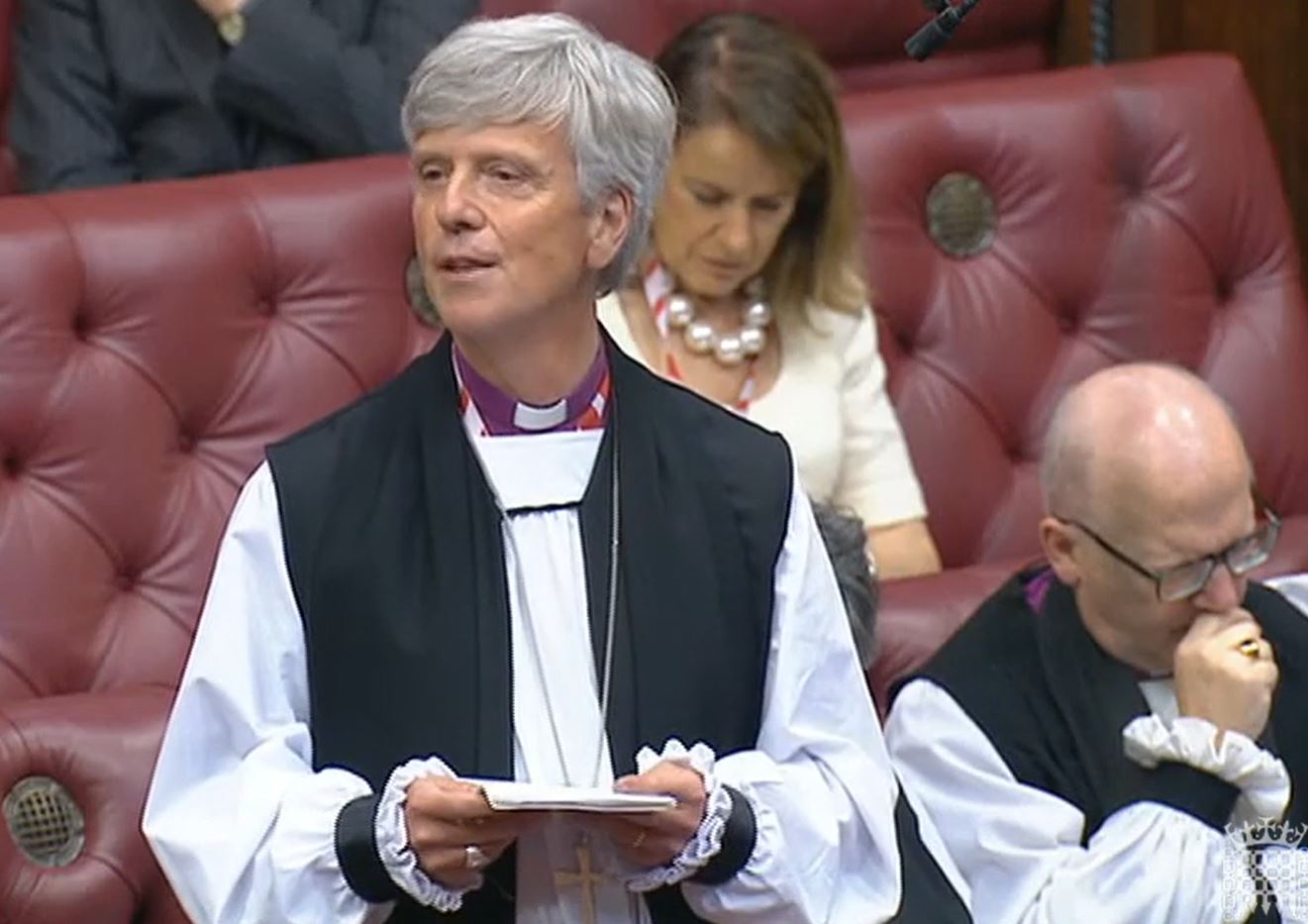
The Bishop of Guildford asked a question on local politics during a discussion on police reform on 18th November 2025:
The Lord Bishop of Guildford: My Lords, I welcome this Statement and agree with its direction of travel. Fellow bishops serving in more urban contexts where elected mayors now hold policing functions speak positively about the clarity and democratic accountability that the new approach has engendered. Other communities, such as my own, have had to work extremely hard to interest the electorate in voting for a police and crime commissioner. I think we have done slightly better than average in that regard, but even then the turnout is comparatively low. Will the new policing and crime boards lead to tensions in communities where so-called upper-tier leaders, who are often not used to working together, take very different perspectives on policing priorities? What might be done at this stage to lessen the potential of stalemate in such situations?
Continue reading “Bishop of Guildford asks about local community politics”The Bishop of Manchester spoke in response to a government statement on the Huntingdon Train Attack on 4th November 2025, asking about bias in surveillance technology and methods of deterrence for knife crime:
The Lord Bishop of Manchester: My Lords, these Benches pay tribute to the train crew and others who responded so heroically. Our thoughts and prayers remain with all those who have been impacted. The traumatic effects of being involved in an incident like that, in an enclosed space, do not just go away after a short period of time. I declare my unpaid role as co-chair of the national police ethics committee. I am grateful that information about the perpetrator was got out early, and not just the fact that it was not terrorism. Since Southport last year, we have known that releasing other information is vital to calming some of the public’s fears. That is something that my ethics committee has been discussing at length in recent times.
Like many noble Lords—I am looking at the noble Lord, Lord Goddard, who may want to intervene shortly—I travel a lot on trains that do not stop for quite a long distance and which have many carriages. I could have made some of the points that have already been made about this. It is about having enough first responders, who are equipped to respond effectively, on those trains throughout the journey.
My trains have CCTV in every carriage—it usually works. That helps. I think facial recognition technology has been referred to. That needs to be managed very carefully. Many of the models that I have seen still have an in-built ethnic bias, inherited from the fact that the original training of their algorithms is often based on the faces of white men such as me. These models sometimes struggle to distinguish people from other groups within society, leading to too many false positives and causing people who are entirely innocent to have their lives interrupted by being stopped and accused of an offence. If we are to increase stop and search, there is no problem with that as long as we ensure that the officers involved are trained in unconscious bias so that they are not carrying it out in a way that is unfair.
Finally, does the Minister agree that deterrence for knife crime and other crime is driven much more by fear of detection and arrest than by the theoretical length of a maximum sentence?
Continue reading “Bishop of Manchester responds to statement on Huntingdon Train Attack”
The Bishop of Derby spoke at the second reading of the Crime and Policing Bill on 16th October 2025, confirming that the Bishops Benches are committed to working proactively on the bill:
The Lord Bishop of Derby: My Lords, I commend this Government’s mission to achieve safer streets and applaud particularly the aim of halving both knife crime and violence against women and girls in a decade. The Bill touches on a wide range of complex and important issues, and I will raise just a few.
Reporting of child sexual abuse and the decriminalisation of abortion are of particular interest to my colleagues on these Benches. Indeed, noble Lords may have seen the Church’s statement in response to the debate in the other place on the decriminalisation of women seeking abortion.
Continue reading “Crime and Policing Bill: Bishop of Derby speaks at second reading”The Bishop of Manchester asked a question on the factor of poor police response to incidences of child sexual abuse on 18th June 2025, in response to a government statement on the Casey Report on child sexual exploitation and grooming gangs:
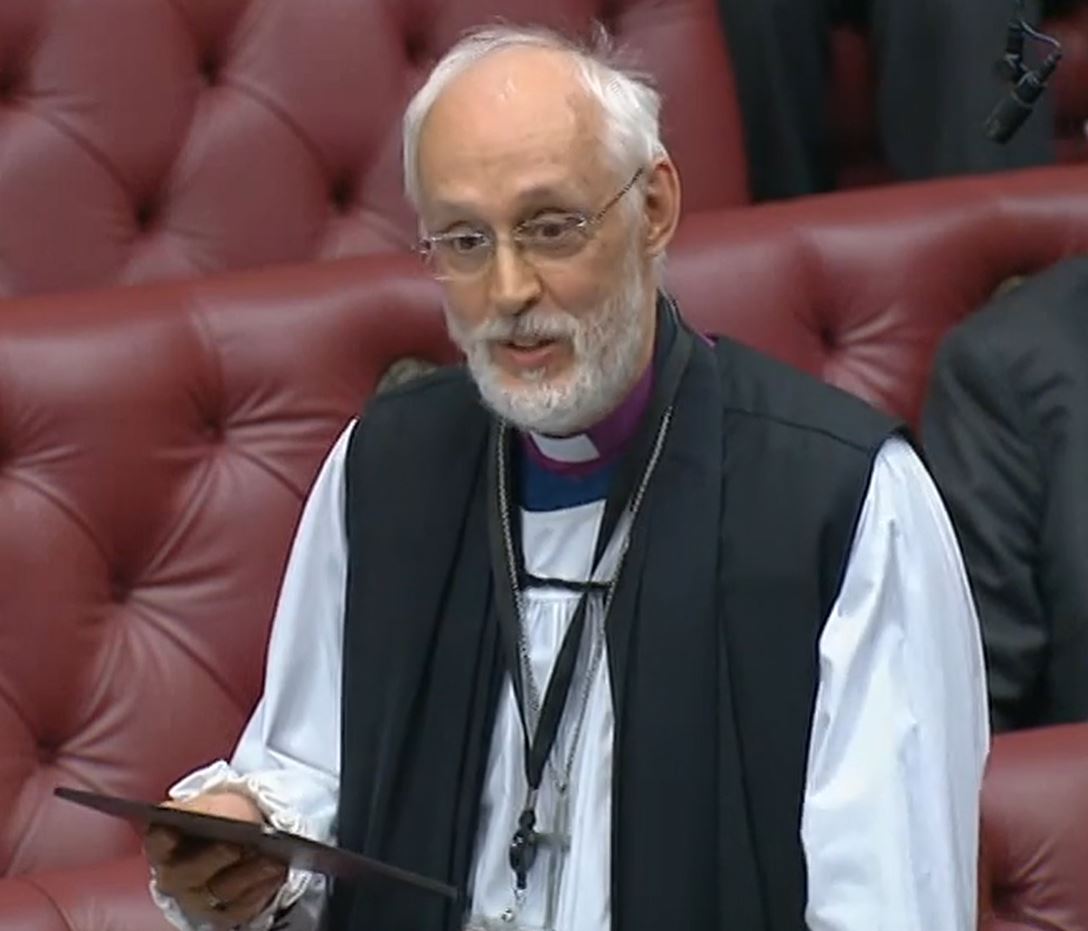
The Lord Bishop of Manchester: My Lords, I declare my interest as co-chair of the national police ethics committee. Despite the fact that the very first recommendation of the noble Baroness, Lady Casey, was that we must see children as children, it has really taken until tonight in this House for much of the conversation to move into that area. This was a point made by Sir Stephen Watson, the chief constable of Greater Manchester, at an event I attended earlier today. He has talked about how much of the failure to prosecute was down to police forces treating abused children not as victims but as somehow culpable in their own abuse. I thank the Minister for already confirming that we will have a victim-centred approach to this inquiry. Can he assure us that the inquiry will explore Sir Stephen’s point, including through the data it collects, so that we can determine to what extent it was a poor response by police forces to the victims of these serious multiple rapes that lies behind the failure to prosecute and convict? Does he agree with me that this is far better than just lazily assuming, as the media seem to be doing, that every single failure comes down to questions of the ethnicity of perpetrators?
Continue reading “Bishop of Manchester asks about police response to child sexual abuse”
The Bishop of St Albans received the following written answer on 1st April 2025:
The Lord Bishop of St Albans asked His Majesty’s Government, further to the Written Answer by Lord Hanson of Flint on 13 March (HL5375), whether the National County Lines Coordination Centre coordinates with the National Rural Crime Unit and dedicated rural crime taskforces.
Continue reading “Bishop of St Albans asks about drug policing”The Bishop of Norwich asked a question on police action in cases of institutional abuse on 8th January 2025:
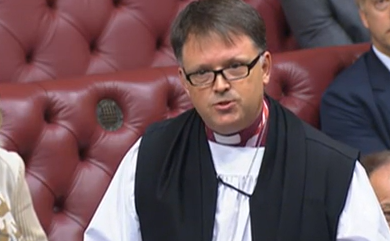
The Lord Bishop of Norwich: My Lords, recent events have rightly turned the spotlight on the Church of England’s record around safeguarding. Those of us on these Benches are highly committed to listening to survivors and bringing about the further institutional and cultural changes that need to be made, beyond the enormous progress that has been made over the past 10 years. What assurance can the Minister give that the police will act on information that they receive, which, it is alleged, was not the case in 2013, when the horrendous crimes of John Smyth were correctly reported to them?
Continue reading “Bishop of Norwich asks about police action in cases of institutional abuse”The Bishop of Manchester spoke on the topic of criminal justice during the King’s speech debate on 24th July 2024, welcoming the government’s focus on community policing and policies to introduce a duty of candour for public officials:
The Lord Bishop of Manchester: My Lords, it is always a pleasure to follow my former boss.
As a trustee of the Clink Charity, where we help prisoners build skills for employment in the catering industry, I too welcome the noble Lord, Lord Timpson, and congratulate him on a powerful and hopeful speech. He might wish to know that the Clink restaurant at Styal prison won the Cheshire Life restaurant of the year award earlier this week. If his team can draw my remarks to his attention, I hope he will accept an invitation to dine with me there later this year, so he can see for himself. However, as my right reverend friend the Bishop of Gloucester has spoken eloquently about prisons already, I will focus elsewhere.
Continue reading “King’s Speech Debate: Bishop of Manchester welcomes focus on communities and accountability”The Bishop of St Albans asked a question on the issue of illegal hare coursing during a discussion on rural crime on 9th May 2024:

The Lord Bishop of St Albans: My Lords, it is recognised that one niche area of rural crime by organised crime groups is laundering money through events such as illegal hare coursing, which is causing a huge problem. We were very grateful for the recent support of the Government in trying to bring an amendment to the Police, Crime, Sentencing and Courts Act, but is the Minister sure that the new police and crime commissioners not only understand the problem but have the right training in place so the law can be implemented?
Continue reading “Bishop of St Albans asks about illegal hare coursing” The Church of England in Parliament
You must be logged in to post a comment.