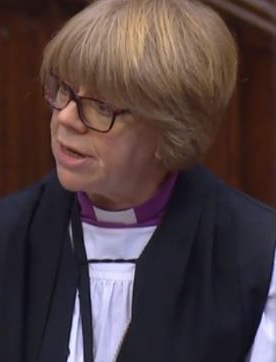
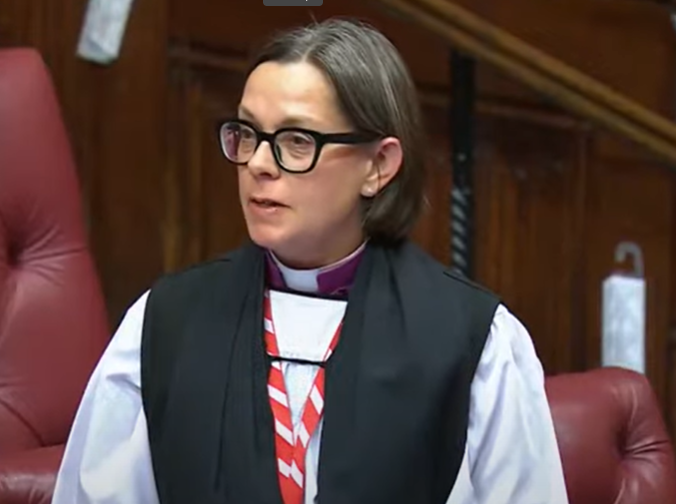
Mental Health Bill: Bishop of Manchester supports amendments on culturally appropriate care

On 22nd January 2025, the Bishop of Manchester spoke in support of amendments to the Mental Health Bill aiming to ensure culturally appropriate care in the mental health sector:

The Lord Bishop of Manchester: My Lords, I support all the amendments in this group. I also want to communicate the support of my right reverend friend the Bishop of London, who apologises that she cannot be in her place this evening.

Turning to the amendments led by the noble Baroness, Lady Whitaker, on culturally appropriate care, I appreciated the noble Baroness’s references to the Gypsy, Roma and Traveller community. I have worked with that community much over many years and very much enjoyed my interactions with it.

These amendments highlight issues that my right reverend friend has spent a lot of time considering, particularly from a faith perspective. I do not think we have heard that in the debate so far tonight. It is sometimes hard to grasp just how differently our health, especially our mental health, is culturally understood across different communities and faith groups. While our ability to discuss our own and others’ mental health may be generally improving—I think it is—it remains an extremely difficult discussion point for many cultures and many communities.

Continue reading “Mental Health Bill: Bishop of Manchester supports amendments on culturally appropriate care”
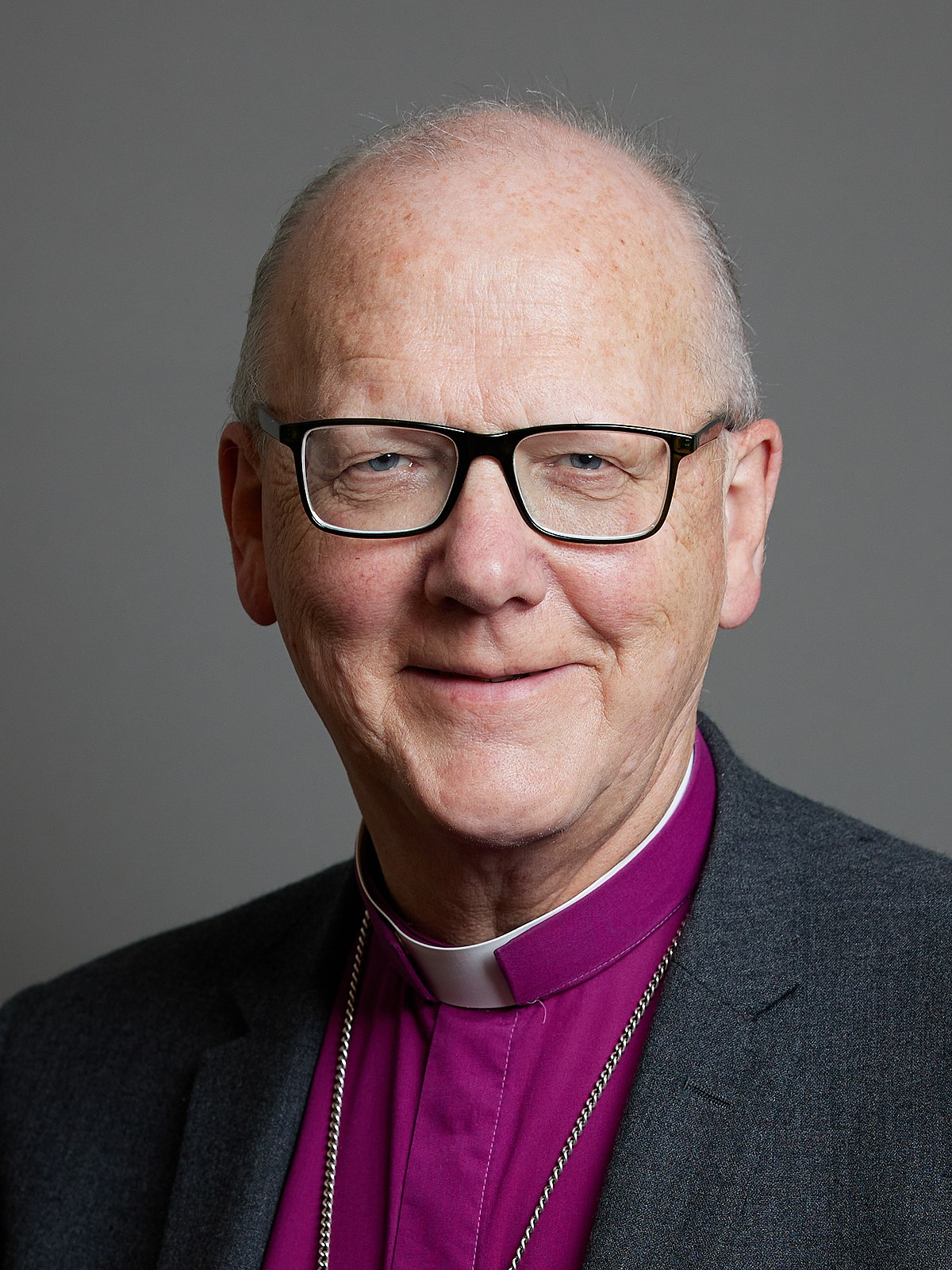
Bishop of St Albans asks about safety of non-surgical cosmetic procedures

The Bishop of St Albans received the following written answer on 16th January 2025:

The Lord Bishop of St Albans asked His Majesty’s Government, further to the Written Answer by Baroness Merron on 7 November 2024 (HL1998), what steps they intend to take to ensure the safety of the non-surgical cosmetics sector; and when they will set out their position on this subject.

Continue reading “Bishop of St Albans asks about safety of non-surgical cosmetic procedures”

Bishop of St Albans asks about air pollution and mental health

The Bishop of St Albans received the following written answer on 6th January 2025:

The Lord Bishop of St Albans asked His Majesty’s Government what assessment they have made of research led by Dr Mary Abed Al Ahad of the University of St Andrews showing that people exposed to high levels of pollution are more likely to suffer from depression, anxiety and psychosis; and whether they plan to reduce pollution in cities as a result.

Continue reading “Bishop of St Albans asks about air pollution and mental health”

Bishop of London raises impact of COVID-19 pandemic and health inequalities on during debate on social cohesion

The Bishop of London spoke in the Archbishop of York’s debate on social cohesion on 6th December 2024, speaking on the impact of the COVID-19 pandemic and the effects of widespread health inequalities in the UK:

The Lord Bishop of London: My Lords, I declare my interests as set out in the register, particularly as a commissioner on the National Preparedness Commission. I am glad to be taking part in this debate today. It is a privilege to follow the noble Baroness, Lady Bottomley, and I look forward to the maiden speech of the noble Lord, Lord Sharma, who has much to offer this House. I have the privilege of being Bishop of London, and I can assure the noble Lord, Lord Lilley, that London is full of great diversity of political views. I extend an invitation to him to come and see where we wrestle with some of our Christian faith and politics.

The riots over the summer were a wake-up call to us all to prioritise community cohesion. There is much to be said about this, and I echo much of what my friend the most reverend Primate has already said. I am going to focus my remarks on two issues which are central to this topic but are particularly related to health, although they have a much wider application, and those two topics are trust and partnership.

First, on trust, as the most reverend Primate indicated, we have much to do to improve trust within the Church of England. Not least, we must ensure we have a greater survivor focus and introduce independent safeguarding and mandatory reporting. I join my friend the most reverend Primate in apologising for the shocking failures that the Makin report highlighted.

Continue reading “Bishop of London raises impact of COVID-19 pandemic and health inequalities on during debate on social cohesion”

Bishop of London speaks in debate on the importance of fracture liaison services

The Bishop of London spoke in a debate on fracture liaison services on 4th December 2024, highlighting the importance of the service for vulnerable communities and as an early intervention:

The Lord Bishop of London: My Lords, it is very good to participate in this important debate on the fracture liaison service, especially since the issue of prevention in healthcare seems to be gathering pace. I thank the noble Lord, Lord Black, for having moved this debate.

We have heard that the fracture liaison service identifies people at risk of osteoporosis and reduces the risk of long-term fractures. Treatment provided by the fracture liaison service is often excellent, and often nurse-led. But, as we have heard, there are just not enough of them. Like many aspects of healthcare that we discuss in your Lordships’ House, provision varies by region, and there are also other inequalities of access to these services. We know that bone density decline can be accelerated by other factors, including smoking, diet and other illness.

Continue reading “Bishop of London speaks in debate on the importance of fracture liaison services”

Bishop of London asks about community consultation on NHS 10 year plan:

On 2nd December 2024, the Bishop of London tabled a question on community consultation on the NHS 10 Year Plan, and efforts to ensure the consultation reaches those who have least interaction with the health service

The Lord Bishop of London: To ask His Majesty’s Government what steps they are taking to ensure the consultation for the NHS 10 Year Plan reaches all communities, including those who have least interaction with the health service.

Continue reading “Bishop of London asks about community consultation on NHS 10 year plan:”

Bishop of Newcastle asks about increases in drug related deaths in England and Wales

On 26th November 2024, the Bishop of Newcastle tabled a question on increases in drug-related deaths in England and Wales during 2023, asking what steps the government would take to reduce the number of such deaths:

The Lord Bishop of Newcastle: To ask His Majesty’s Government what assessment they have made of data published by the Office for National Statistics on 23 October indicating that the number of drug-related deaths in England and Wales was higher in 2023 than in any other year since records began in 1993, and what steps they are taking to reduce the number of such deaths.

Continue reading “Bishop of Newcastle asks about increases in drug related deaths in England and Wales”

Bishop of Newcastle asks about oral health in the north-east of England

The Bishop of Newcastle asked a question on dental health among children in the north-east of England and government plans to introduce a national strategy for children’s oral health on 25th November 2024:

The Lord Bishop of Newcastle: My Lords, the Child of the North report, published in September, on the crisis in oral health in children, reported that 20% of children in the north-east have tooth decay in their permanent teeth. What plans do the Government have to implement one of the report’s recommendations—namely, to have a national strategy for children’s oral health, of which the establishment of new dental schools could be a part?

Continue reading “Bishop of Newcastle asks about oral health in the north-east of England”

Bishop of London asks about impact of diabetes on maternal mortality rate

On 19th November 2024, the Bishop of London asked a question on the impact of type 2 diabetes on the maternal mortality rate and the support available for women affected by this:

The Lord Bishop of London: My Lords, women with type 2 diabetes face a higher risk of miscarriage, stillbirth, neonatal deaths and birth defects. As we have heard, women who live in areas of high deprivation as well as women who come from black and minority ethnic groups are more likely to be impacted by type 2 diabetes. This compounds the existing inequalities in the maternal mortality rate. What steps are the Government taking to support integrated care boards to build relationships with these women who are most likely to experience these impacts, to ensure that they have the best maternity care and diabetic care, including ensuring they have access to continuous glucose monitoring where necessary?

Continue reading “Bishop of London asks about impact of diabetes on maternal mortality rate”

Bishop of London asks about access to healthy foods for low-income families

The Bishop of London asked a question on access to healthy and nutritious food for low-income families on 18th November 2024, during a discussion on the cost effectiveness of anti-obesity drugs:

The Lord Bishop of London: My Lords, Henry Dimbleby’s National Food Strategy independent review details the factors that impact on our ability to eat healthily. They include having the facilities at home to be able to prepare fresh food and having the time to do so; it is also about where you live. About 3.3 million people cannot reach any food store selling raw ingredients by public transport. When it comes to combating obesity, what steps are the Government taking to assist low-income families, in particular, with accessing healthy and nutritious meals?

Continue reading “Bishop of London asks about access to healthy foods for low-income families”