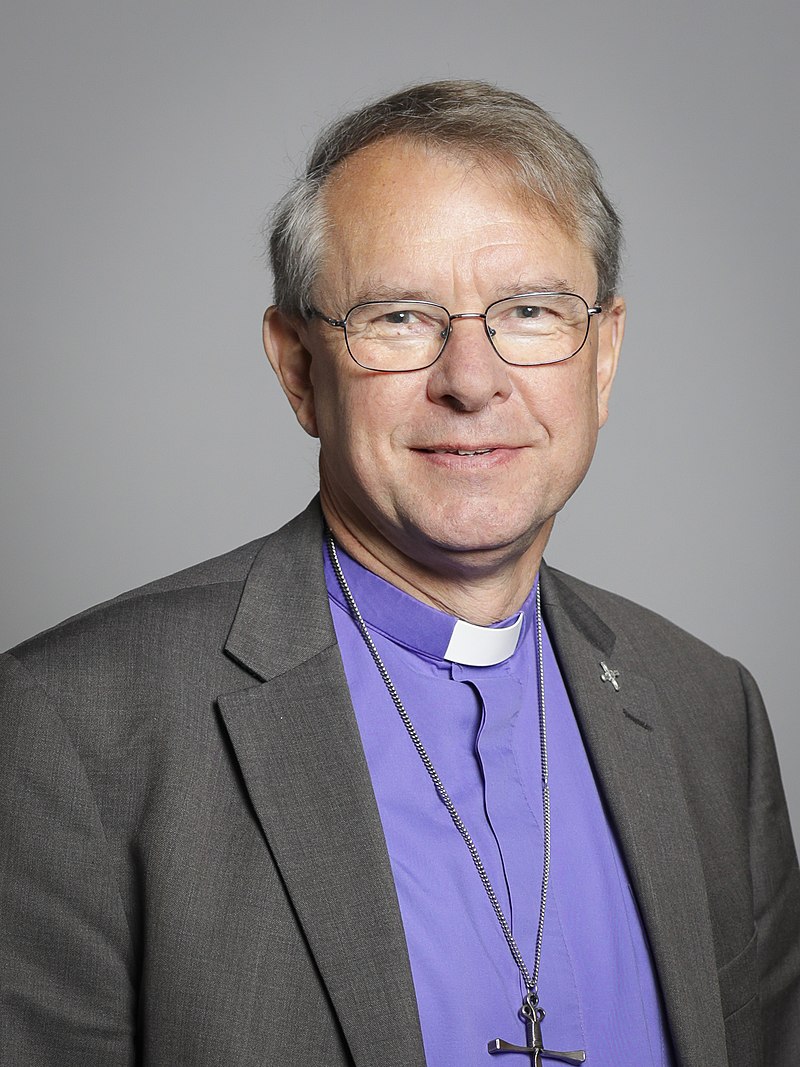
Nationality and Borders Bill: Bishop of Durham supports amendments around family reunion

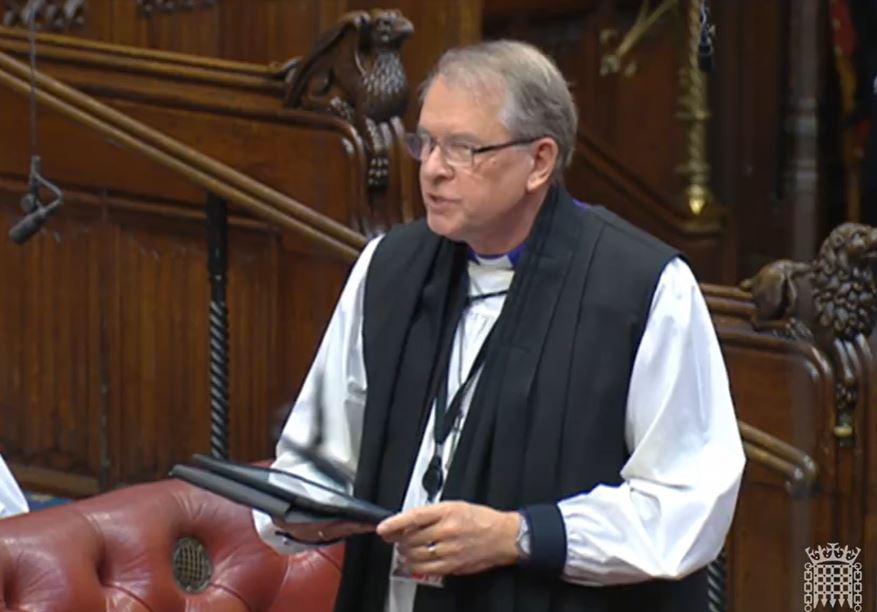
During a debate on amendments to the Nationality and Borders Bill in its fourth day of the Committee stage, on 8th February 2022, the Bishop of Durham spoke in support of amendments targeted towards ensuring family reunion for migrants, particularly refugees and unaccompanied minors:

The Lord Bishop of Durham: My Lords, I specifically support Amendment 117, to which I have added my name, but I support all these amendments around family reunion. I declare my interests in the register around RAMP and Reset as before.

Acknowledging that when people are forcibly displaced they end up in different places, often having lost family members, UNHCR research has shown that families often set out together but become separated along the way. Reconnecting those families, or, where some family members are lost, reconnecting people with other relatives, really matters. In seeking protection, those seeking asylum want to do so alongside the family that they have. This is better for individuals—their well-being and their future prospects—and for the community as a whole. It is therefore also better for social integration.

Continue reading “Nationality and Borders Bill: Bishop of Durham supports amendments around family reunion”

Nationality and Borders Bill: Bishop of Durham speaks in support of amendments on offshoring of asylum seekers

On 8th February 2022, the House of Lords debated the Nationality and Borders Bill in its fourth day of the Committee stage. The Bishop of Durham spoke in support of amendments 100 and 101, tabled by Lord Kirkhope of Harrogate, that would remove the powers in the bill to “offshore” asylum seekers before the consideration of their claims:

The Lord Bishop of Durham: My Lords, in rising to support Amendments 100 and 101, to which I have added my name, I declare my interests in relation to both the RAMP project and Reset, as set out in the register.

When people arrive on our shores seeking protection, we have a responsibility to treat them as we would wish to be treated if we had to flee for our lives. It is right that we have a process to determine who meets the criteria for refugee status, but while we determine this, we are responsible for people’s safety, welfare and care. If we move them to other countries for the processing of their asylum claims, I fear a blind eye will be turned to their treatment. How will we be sure that they are being treated humanely and fairly, and would our Government even give this much concern once they had left our shores? If we look to the experience of Australia and the refugees accommodated in Nauru, as the noble Lord, Lord Kirkhope, has just mentioned, we hear deeply shocking accounts of abuse, inhumane treatment and mental and physical ill-health.

As mentioned in relation to an earlier amendment, I visited Napier barracks last week to see improvements that have been made since the exposure of the disgraceful conditions at the beginning of last year. If what we have seen at Napier is permitted to happen in the UK, what can we expect overseas, where accountability and monitoring will be so much harder? The monitoring of asylum accommodation contractors in the UK is poor, which gives us some idea about the level of monitoring we could expect of offshore processing.

Continue reading “Nationality and Borders Bill: Bishop of Durham speaks in support of amendments on offshoring of asylum seekers”

Bishop of St Albans urges commitment to international responses to refugee displacement

On 6th January 2022, the House of Lords debated the issue of mass refugee displacement. The Bishop of St Albans spoke in the debate, stressing the importance of a global response to help refugees and displaced people and address the causes of displacement:

The Lord Bishop of St Albans: My Lords, I too thank the noble Lord, Lord Alton of Liverpool, for initiating this most important debate and for his excellent introduction, which has set the scene for us all.

We face not a static situation but one that is constantly changing. Since the start of 2020, we have seen the re-emergence of conflict in Nagorno-Karabakh, bringing back the displacement that characterised the conflicts in the 1980s and 1990s. Ethiopia’s ongoing civil conflict has left just over 2 million internally displaced people in Tigray and a further 250,000 in the region of Amhara, according to the UN. We have seen the military coup in Myanmar, which has done nothing to improve—indeed, it has made worse—any prospect of resettling the estimated 745,000 beleaguered Rohingya Muslims resident in Cox’s Bazar, now the world’s largest refugee camp.

Continue reading “Bishop of St Albans urges commitment to international responses to refugee displacement”

Bishop of Leeds speaks in debate on mass displacement of refugees

On 6th January 2022, the Bishop of Leeds spoke in a debate on refugee displacement, highlighting the role of climate change in displacement and the need for urgent action on the causes of refugee crises:

The Lord Bishop of Leeds: My Lords, I also congratulate the noble Lord, Lord Alton, on securing this debate. I am grateful to him for personifying the issue by naming individuals. I visited camps for internally displaced people in Iraqi Kurdistan several years ago. I am still haunted by the faces, not always the voices. When you are confronted with a 12 year-old boy who had not spoken since being forced to watch his father be beheaded outside his front door, then it is the faces, not the voices. They haunt me.

Continue reading “Bishop of Leeds speaks in debate on mass displacement of refugees”

Bishop of Durham asks about refugees returning to Burundi

The Bishop of Durham received the following written answers on 8th December 2021:

The Lord Bishop of Durham asked Her Majesty’s Government, following the announcement made by the United Nations High Commissioner for Refugees on 27 October that 60,000 refugees are voluntarily returning home to Burundi this year, what steps they will take to support (1) the UN, and (2) the refugees’ return, and (3) integration in that country.

Continue reading “Bishop of Durham asks about refugees returning to Burundi”

Bishop of Durham asks about the UK asylum system

The Bishop of Durham received the following written answers on 8th December 2021:

The Lord Bishop of Durham asked Her Majesty’s Government how many children are currently waiting for a decision on their asylum application and have waited for over six months.

Baroness Williams of Trafford (Con): The Home Office publishes data on asylum in the Immigration Statistics Quarterly Release, which can be found on go.uk. Data on the number of people awaiting a decision on an asylum application are published in table ASY_D03 of the ‘asylum and resettlement detailed datasets’, which can be found attached. Age breakdowns are not available in the published data.

Continue reading “Bishop of Durham asks about the UK asylum system”

Bishop of Durham asks about cases of missing child refugees

The Bishop of Durham received the following written answer on 7th December 2021:

The Lord Bishop of Durham asked Her Majesty’s Government:

  • how many missing persons cases of child refugees have been issued in 2021.
  • what records they keep of the number of child refugees who go missing in the UK.

Baroness Williams of Trafford: Safeguarding procedures are in place to ensure children in temporary accommodation are safe and supported until a permanent place can be found with a local authority.

Continue reading “Bishop of Durham asks about cases of missing child refugees”

Bishop of Gloucester asks about alternative detention pilot scheme

The Bishop of Gloucester received the following written answer on 3rd December 2021:

The Lord Bishop of Gloucester asked Her Majesty’s Government when they will
publish the evaluation of the ‘Action Access’ alternative detention pilot.

Baroness Williams of Trafford (Con): The United Nations High Commissioner for Refugees (UNHCR) have appointed the National Centre for Social Research (NatCen) to independently evaluate this pilot.

NatCen will be publishing the evaluation on their website the aim is for the evaluation to be published by the end of the year.

Hansard

Bishop of Durham asks about number of child refugees in local authority care in the UK

The Bishop of Durham received the following written answer on 2nd December 2021:

The Lord Bishop of Durham asked Her Majesty’s Government how many child refugees are currently in looked after care in the UK.

Baroness Barran (Con): The department does not collect data on all child refugees that are currently in care, but does collect data on the number of unaccompanied asylum-seeking children (UASC) who are looked after by local authorities in England. Of the 80,850 children looked after up to 31 March 2021, there were 4,070 UASC, down 20% from the previous year which was 5,060.

Continue reading “Bishop of Durham asks about number of child refugees in local authority care in the UK”

Bishop of Coventry – stopping people smugglers and dangerous channel crossings requires more than policy of deterrence

“a policy that does not go beyond deterrence is not sufficient”

On November 25th 2021 the House of Lords debated a motion from Baroness Hoey, “That this House takes note of the number of migrants arriving in the United Kingdom illegally by boat“.

The Lord Bishop of Coventry: My Lords, I too am grateful to the noble Baroness, Lady Hoey, for securing this debate, especially at this time. I was helped this morning by the “Thought for the Day” from my colleague, the right reverend Prelate the Bishop of Leeds, in which he said that this is a time to dig deeper into our emotions and face the grief we feel at the loss of humanity. It is that sense of grief, our common commitment to the preservation and dignity of life, as well as to a passion for justice for those suffering the ills and evils of the world, which unites us. The noble Baroness, Lady Hoey, demonstrated that.

Our shared grief is the proof we do not really need of the humanity and vulnerability that unites us. These common concerns, which underpin both our aim to stop migrants making dangerous journeys and our grief today, are the same concerns and moral instincts that require us to sit back and face the reality that a policy that does not go beyond deterrence is not sufficient.

Continue reading “Bishop of Coventry – stopping people smugglers and dangerous channel crossings requires more than policy of deterrence”