Levelling Up & Regeneration Bill: Bishop of St Edmundsbury & Ipswich supports amendments protecting ancient woodlands

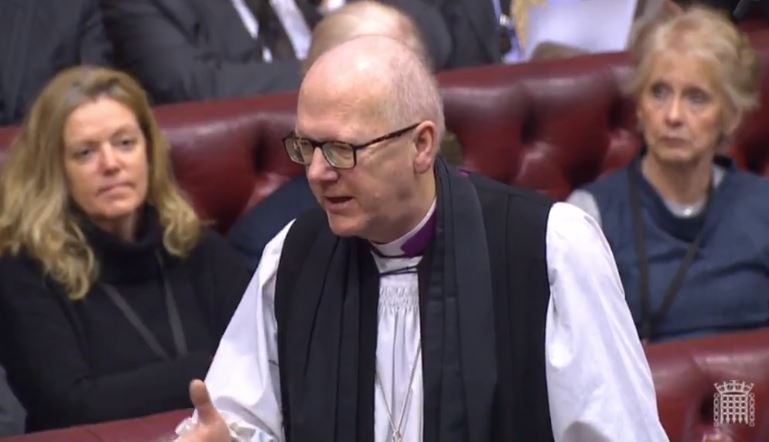
On 3rd May 2023, the House of Lords debated the Levelling Up & Regeneration Bill in committee. The Bishop of St Edmundsbury & Ipswich spoke in support of amendments to the bill tabled by Baroness Young of Old Scone which would require consultations to take place on developments affecting ancient woodlands:

The Lord Bishop of St Edmundsbury & Ipswich: My Lords, I too add my support for the amendment from the noble Baroness, Lady Young, and pay tribute to the work she has done in this area. I declare an interest as someone who grows trees and has contributed to the green canopy project in Suffolk. We managed to plant 1.3 million trees under that auspice, which was more than a third of the national total. We were completely committed through various networks of people to this and, indeed, to the preservation of ancient woodlands.

Continue reading “Levelling Up & Regeneration Bill: Bishop of St Edmundsbury & Ipswich supports amendments protecting ancient woodlands”

Bishop of St Albans supports improved public transport for rural communities

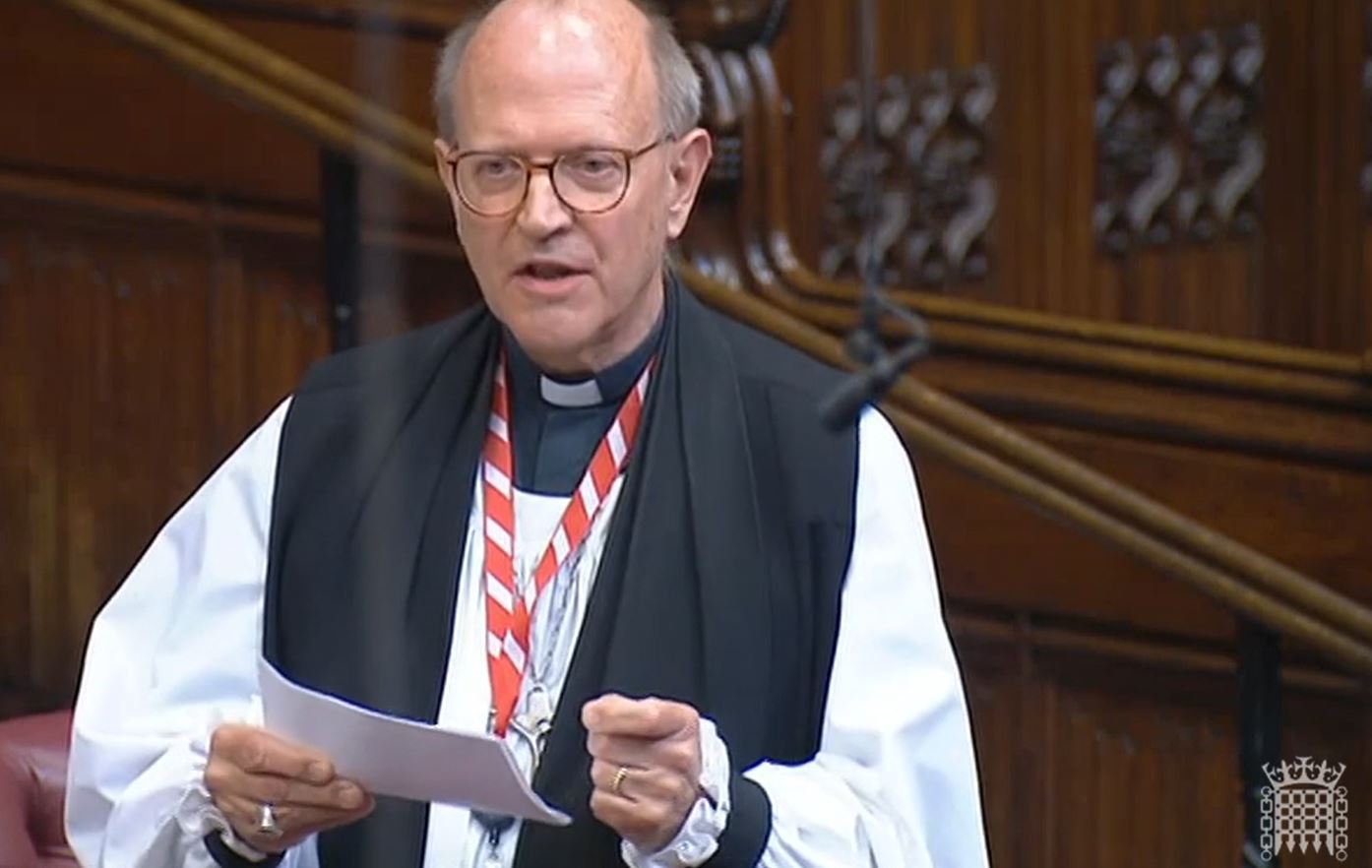
The Bishop of St Albans spoke in a debate on transport network investment on 30th March 2023, emphasising the need for better public transport routes in rural communities, particularly relating to funding for bus routes:

The Lord Bishop of St Albans: My Lords, I thank the noble Lord, Lord Berkeley, for securing this debate. It is a vital area for us. Those of us who live in the south-east of England are aware of the huge strains that are being put on ordinary people’s lives day by day, and on our businesses, through the problems with our transport system, not least with public transport.

I am also aware that this matter touches so many other areas of concern at the moment, such as our desire to work for a net-zero carbon future and the question of how we can get people off the roads as much as possible and on to good, fast, efficient public transport. I am aware that this means having a long-term policy on active transport; we need to work out how to get a sea change in what we expect and what we can offer. I was therefore pleased to hear the announcement by His Majesty’s Government of the provision of additional funding for transport in the recently published Statement. However, as has already been pointed out, it raises an awful lot of questions, not just about what was in it but what was not in it.

I declare my interest as president of the Rural Coalition. I want to focus my comments mainly on the rural dimension of public transport policy. Nearly 10 million of this country’s 67 million people live in rural areas—one in six of us. Sadly, there was little in the Government’s announcement to bring cheer to rural inhabitants. I and others who care about rurality and the long-term sustainability of the countryside entirely accept that we cannot expect anything like the levels of public transport and roads that our urban colleagues take for granted.

Continue reading “Bishop of St Albans supports improved public transport for rural communities”

Bishop of Exeter asks about broadband supply to rural and unconnected areas

The Bishop of Exeter received the following written answers on 24th March 2023:

The Lord Bishop of Exeter asked His Majesty’s Government what plans they have to ensure that the 500,000 properties currently unable to access a broadband service running at a minimum of 10Mbps via a fixed line will be able to access broadband.

Viscount Camrose (Con): The Government has set out its plan to deliver Project Gigabit, our £5 billion mission to deliver fast, reliable broadband across the UK, and we are making good progress. Our target is for 85% of UK premises to have access to gigabit-capable broadband by 2025, and over 99% by 2030. This will include some premises currently unable to access more than 10Mbps.

Continue reading “Bishop of Exeter asks about broadband supply to rural and unconnected areas”

Bishop of St Albans asks about avian influenza compensation, farmers incomes, and plant biosecurity

The Bishop of St Albans received the following written answers on 22nd March 2023:

The Lord Bishop of St Albans asked His Majesty’s Government, further to the Written Answer by Lord Benyon on 8 March (HL5863), how much they paid to farmers in 2022 as part of the Avian Influenza Compensation scheme.

Lord Benyon (Con): In 2022, a total of £41.0 million was paid in compensation to bird keepers whose flocks were culled for avian influenza disease control purposes.

Continue reading “Bishop of St Albans asks about avian influenza compensation, farmers incomes, and plant biosecurity”

Church Commissioners Written Questions: Church Repairs & Maintenance, Rural Areas, and Vandalism of Cemeteries in Jerusalem

Andrew Selous MP, representing the Church Commissioners, gave the following written answerto questions from MPs on 10th March 2023:

Jerome Mayhew MP (Con): To ask the Member for South West Bedfordshire, representing the Church Commissioners, if he will make an assessment of the adequacy of local authority grant funding available to parish churches to upgrade their facilities.

Andrew Selous MP (Con): It is the view of the National Church Institutions that Local Authority and Parish Council grant funding is not being made available to parish churches on a consistent basis, due to a lack of clarity in interpretation of existing law, specifically the Local Government Acts 1894, 1972 and the Localism Act 2011.

Continue reading “Church Commissioners Written Questions: Church Repairs & Maintenance, Rural Areas, and Vandalism of Cemeteries in Jerusalem”

Financial Services and Markets Bill: Bishop of St Albans highlights issues in rural communities

The Bishop of St Albans spoke during the debate on the Financial Services and Markets Bill on Tuesday 7th March 2023, raising concerns on access to cash and the lack of digital connectivity in rural communities, and the impact on businesses and individuals:

The Lord Bishop of St Albans: My Lords, I will not detain the Committee for very long but perhaps I could say one or two things. Briefly, I come at this by thinking about rural sustainability and rural business. I declare my interest as president of the Rural Coalition.

Before I say anything on that, a month ago I had my wallet stolen on my way into Parliament and I learned a lesson: do not keep all your cards in your wallet but have some different ones. I was, to use a theological term, absolutely stuffed that morning. Fortunately, I had a member of staff at home. I went back and cancelled the cards then phoned up my bank, which said, “Yes, come up—we can give you some cash”. When I got up there, I was told, “No, the system’s got it wrong and we aren’t able to give you cash here”. I then had to get someone to take me six miles to get some cash. When I eventually got into London for some meetings, I went to four places before I could find somewhere to buy lunch because I had only cash. This is actually quite a complex thing.

Continue reading “Financial Services and Markets Bill: Bishop of St Albans highlights issues in rural communities”

Bishop of St Albans speaks in debate on healthcare in rural areas

The Bishop of St Albans took part in a debate on healthcare in rural areas on 23rd February 2023, highlighting issues of age, access and infrastructure:

The Lord Bishop of St Albans: My Lords, I thank the noble Baroness, Lady McIntosh, for obtaining this debate. She is a powerful champion for these issues; we are grateful that she continues to raise them. I also add my thanks to and appreciation of all those who work on the front line in our rural areas. They often have to drive huge distances, sometimes along quite difficult roads; it is not always easy and is certainly not always as wonderful as our memories of remote rural areas from our holidays. I declare my interest as president of the Rural Coalition.

Although many people in this country dream of retreating to the rural idyll that is deeply embedded in the English psyche, they do not always realise that, if their dream comes true, they may face many challenges in living in rural areas: poor access to banks and cash; patchy broadband; sporadic mobile signal; virtually non-existent public transport; and little childcare. Then, of course, there is the topic we are exploring today: the stresses on the healthcare system, which is primarily and unsurprisingly designed for an urban context. Rurality faces a unique challenge in the delivery of healthcare, demanding that the Government adopt a clear strategy for improvement. I welcome His Majesty’s Government’s promise to rural-proof our healthcare system; my hope is that that promise will be able to deliver what is needed.

Continue reading “Bishop of St Albans speaks in debate on healthcare in rural areas”

Bishop of St Albans asks about access to phones and broadband in rural areas

The Bishop of St Albans received the following written answer on 9th Febraury 2023:

The Lord Bishop of St Albans asked His Majesty’s Government what estimate they have made of how many people in rural areas do not have access to (1) landline phones, (2) mobile telephone coverage, (3) wireless coverage, (4) broadband, and (5) satellite internet.

Lord Parkinson of Whitley Bay (Con): Ofcom collects coverage as part of its reporting requirements, most recently in its Connected Nations Report, with data for the period to September 2022.

Ofcom reports that 96% of rural premises have indoor 4G coverage from at least one operator, rising to 99% for outdoor coverage. This equates to c.195,000 rural premises not having 4G indoor coverage, with c.26,500 not having outdoor 4G coverage.

Continue reading “Bishop of St Albans asks about access to phones and broadband in rural areas”

Church Commissioners Written Questions: Church Buildings, Heritage Protection, LGBT+ People, Religious Freedom, Funding for Rural Churches, and the Coronation of King Charles III

Andrew Selous MP, representing the Church Commissioners, gave the following written answerto questions from MPs on 31st January 2023:

Ben Bradshaw MP (Lab): To ask the Member for South West Bedfordshire, representing the Church Commissioners, what the cost of legal support provided by (a) dioceses and (b) the Church Commissioners to incumbents and PCCs of parishes affected by pastoral reorganisation making a representation at an oral hearing of the Mission, Pastoral and Church Property Committee was in each of the last five years.

Continue reading “Church Commissioners Written Questions: Church Buildings, Heritage Protection, LGBT+ People, Religious Freedom, Funding for Rural Churches, and the Coronation of King Charles III”

Bishop of St Albans asks about access to cash in rural areas

The Bishop of St Albans received the following written answer on 21st December 2022:

The Lord Bishop of St Albans asked His Majesty’s Government:

  • what steps they are taking to ensure that cash access remains viable in the most remote parts of the UK.
  • further to the introduction of shared banking hubs in larger towns in the UK, what assessment they have made of level of cash access those in the most rural areas can expect to have in the future.
  • what steps they are taking to support people who rely solely on cash to (1) access cash, and (2) access digital banking alternatives to cash.

Lord Harlech (Con): The government recognises that while the transition towards digital banking and payments brings many opportunities, cash continues to be used by millions of people across the UK, including those who may be in vulnerable groups.

The government is currently taking legislation to protect access to cash across the UK through Parliament as part of the Financial Services and Markets Bill 2022. The legislation will establish the Financial Conduct Authority (FCA) as the lead regulator for access to cash with responsibility and powers to seek to ensure reasonable provision of withdrawal and deposit facilities.

Continue reading “Bishop of St Albans asks about access to cash in rural areas”