Bishop of St Albans asks about access to cash in rural areas

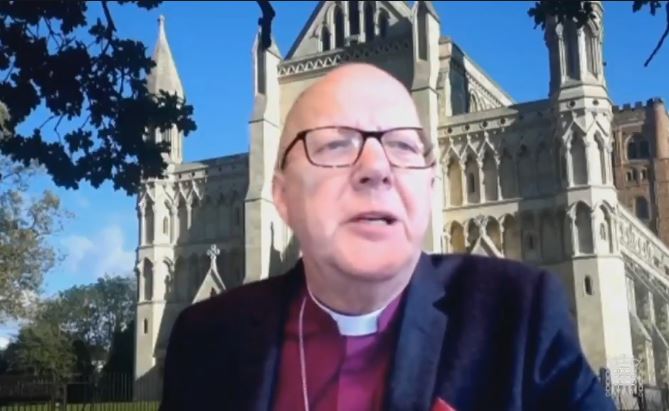
The Bishop of St Albans asked whether the government would ensure that any decision made about the use of cash as legal tender would take into account difficulties specific to rural areas, during a debate on the future acceptance of cash on 15th December 2022:

The Lord Bishop of St Albans: My Lords, this is a problem that particularly affects rural areas, where there are far fewer cash-dispensing machines. Also, there are many parts of rural areas where there is no internet, so even if you want to pay by BACS or direct transfer, you just cannot do it. Will the Minister assure us that the Government will properly rural-proof this discussion so that we are able to ensure that rural areas can still function effectively?

Continue reading “Bishop of St Albans asks about access to cash in rural areas”
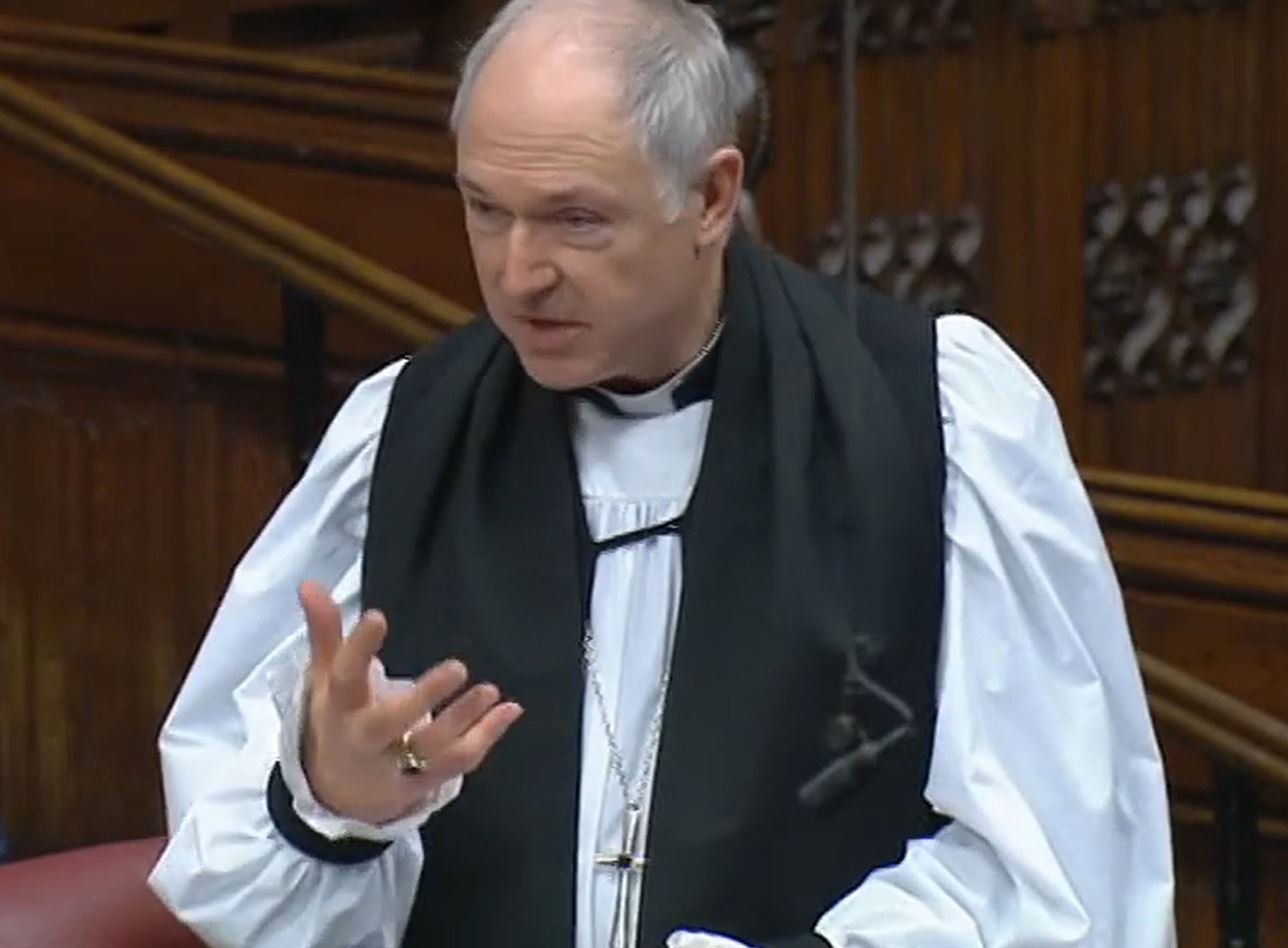
Bishop of Exeter speaks in a debate on the effects of long Covid

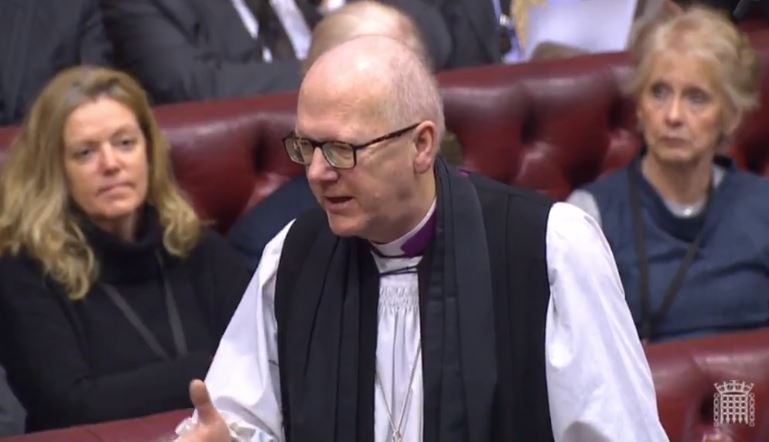
The Bishop of Exeter spoke in a debate on the effects of long covid on 17th November 2022, focusing on the impact on rural communities:

The Lord Bishop of Exeter: My Lords, I too thank the noble Baroness, Lady Thornton, for securing this important and timely debate.

I will focus my remarks on the rural dimension of long Covid, which is having an impact on many people in Devon where I am privileged to serve. I am concerned about rural sustainability and the need to ensure that the Government’s levelling-up agenda is not focused exclusively on urban deprivation. Rural poverty may not show up on government statistics because it is dispersed in pockets, but it is just as real. Research suggests that structural inequalities, including poverty, are important in the development and course of Covid-19 and may form an important context for long Covid.

As far as Devon is concerned, the picture postcard view of my county beloved by holidaymakers is only half the story. The best information we have is that there are currently around 16,000 people living with long Covid in Devon and, as I am sure the noble Baroness, Lady Watkins of Tavistock, will corroborate, it is impacting on the economic life of our county.

Continue reading “Bishop of Exeter speaks in a debate on the effects of long Covid”

Church Commissioners Written Answers: Ukraine, parish ministry, support for those in need

Andrew Selous MP, representing the Church Commissioners, gave the following written answerto questions from MPs on 10th November 2022:

Jim Shannon MP (DUP): To ask the Member for South West Bedfordshire, representing the Church Commissioners, if the Church of England will make an assessment of the potential merits of allowing the use of parish halls free of charge for (a) English classes for Ukrainian refugees and (b) community hubs for rurally based Ukrainians to meet.

Continue reading “Church Commissioners Written Answers: Ukraine, parish ministry, support for those in need”

Bishop of Gloucester asks about heating in rural areas

The Bishop of Gloucester received the following written answer on 5th September 2022:

The Lord Bishop of Gloucester asked Her Majesty’s Government whether they have plans to help households in rural communities move away from higher cost fuel sources for heating.

Continue reading “Bishop of Gloucester asks about heating in rural areas”

Bishop of St Albans asks about agricultural workers

The Bishop of St Albans received the following written answer on 26th April 2022:

The Lord Bishop of St Albans asked Her Majesty’s Government what plans they have to address the shortfall of workers in the agricultural sector.

Lord Benyon (Con): Defra continues to work closely with industry and other Government departments to understand labour supply and demand, including both permanent and seasonal workforce requirements, and to ensure there is a long-term strategy for the food and farming workforce.

Continue reading “Bishop of St Albans asks about agricultural workers”

Bishop of Exeter asks about access to dental service in rural communities

The Bishop of Exeter asked a question on access to dental services for rural communities on 31st January 2022, during a debate on issues in NHS dental care:

The Lord Bishop of Exeter: My Lords, the report of Healthwatch England states that, of all the areas in the country with lack of access to NHS dentistry,

“the worst affected is Devon, as there are currently no practices showing as taking on adult or child patients.”

Can the Minister assure the House that, as part of the Government’s levelling-up policy, rural communities in Devon and elsewhere will not be further disadvantaged and will have access to NHS dental services?

Continue reading “Bishop of Exeter asks about access to dental service in rural communities”

Health & Care Bill: Bishop of St Albans tables amendments on health and social care in rural areas

During a debate on the Health & Care Bill on 13th January 2022, the Bishop of St Albans tabled two amendments on health inequalities in rural areas:

The Lord Bishop of St Albans: My Lords, Amendments 68 and 95 are in my name. I declare my role as president of the Rural Coalition. I support the broad drift of these amendments, which engage with the important issue of reducing inequalities.

Rural health and social care has often presented challenges in terms of proximity to services, the types of services available within a local area and the demographics of rural areas. It is complicated. Rural areas have a higher proportion of older residents, which is always a greater burden on healthcare services compared with areas with younger populations.

Continue reading “Health & Care Bill: Bishop of St Albans tables amendments on health and social care in rural areas”

Police, Crime, Sentencing and Courts Bill: Bishop of St Albans moves amendments on poaching and illegal hare coursing

On 3rd November 2021, the House of Lords debated the Police, Crime, Sentencing and Courts Bill in committee. The Bishop of St Albans moved two amendments to the bill which would broaden the powers of the police and courts to pursue those engaged in illegal hare coursing and poaching of game:

The Lord Bishop of St Albans: My Lords, I declare my interest as president of the Rural Coalition. In moving Amendment 124, I will speak also to Amendment 128 in my name. These amendments seek to strengthen police powers to deal with illegal hare coursing and, more generally, the illegal poaching of game.

Amendment 124 would amend the Game Laws (Amendment) Act 1960 to broaden the police’s powers to remove or arrest an individual trespassing on land where there is clear intent to trespass in pursuit of game, as defined by Section 9 of the Night Poaching Act 1828 and Section 30 of the Game Act 1831. It would also allow the police to seize any vehicles or animals used for the killing or taking of game found in the possession of the trespasser, and would allow the court to order

“the offender to reimburse any expenses incurred by the police in connection with the keeping of any animal seized”.

Further, the amendment seeks to broaden the court’s ability to limit repeated violations by issuing disqualification orders for those individuals convicted under the Night Poaching Act or Game Act for having custody of a dog or dogs.

Continue reading “Police, Crime, Sentencing and Courts Bill: Bishop of St Albans moves amendments on poaching and illegal hare coursing”

Bishop of St Albans asks about alleviating rural poverty

The Bishop of St Albans tabled a question on efforts to alleviate in-work poverty in rural areas on 25th October 2021:

The Lord Bishop of St Albans: To ask Her Majesty’s Government, further to the report by the Rural Services Network Towards the UK Shared Prosperity Fund, published in June, what plans they have accurately to reflect in-work rural poverty in future funding allocation mechanisms.

Continue reading “Bishop of St Albans asks about alleviating rural poverty”

Bishop of St Albans asks about access to broadband in rural areas

The Bishop of St Albans received the following written answer on 22nd July 2021:

The Lord Bishop of St Albans asked Her Majesty’s Government what assessment they have made of the effectiveness and cost-effectiveness of OpenRAN (1) as part of their gigabit capable broad rollout, (2) in increasing connectivity to rural communities, and (3) in extending connectivity to rural ‘notspots’.

Continue reading “Bishop of St Albans asks about access to broadband in rural areas”