On 6th July 2023, Andrew Selous MP, representing the Church Commissioners, gave the following written answers to questions from MPs:
Clergy: Homosexuality
Mr Ben Bradshaw MP (Lab, Exeter): To ask the Member for South West Bedfordshire, representing the Church Commissioners, what recent discussions he has had with the Church of England General Synod on its expected timetable for bringing forward proposals on (a) blessings, (b) marriages and (c) rules for clergy in same-sex relationships.
Andrew Selous MP (Con, South West Bedfordshire): In February 2023 the General Synod agreed proposals that would enable same-sex couples to come to church after a civil marriage or civil partnership to give thanks, dedicate their relationship to God and receive God’s blessing.
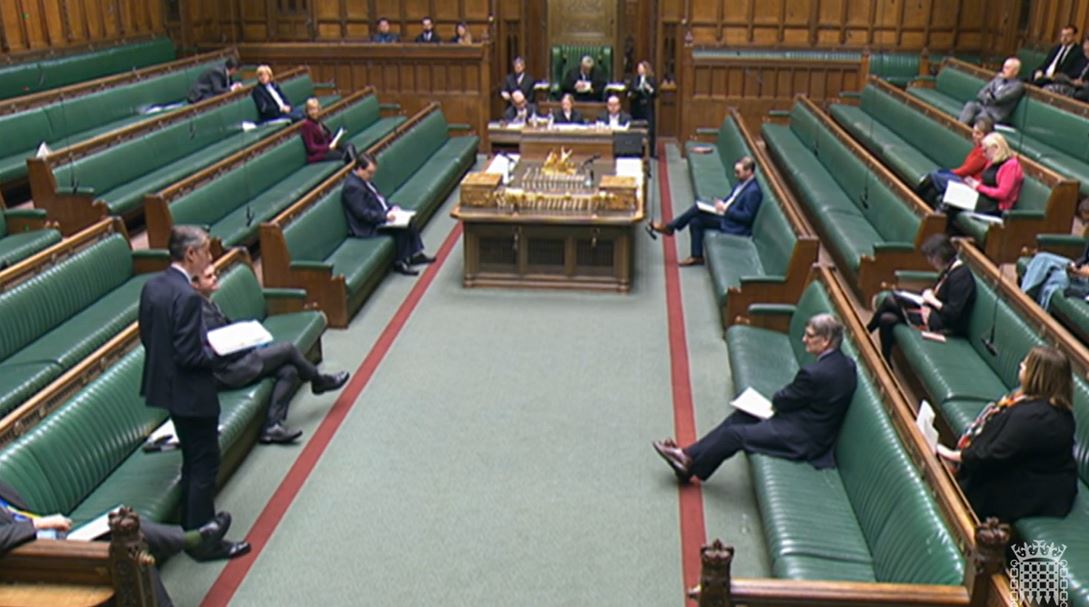
On 21st March 2023 Rt Hon Ben Bradshaw MP spoke to a Motion he had tabled in the House of Commons, for leave to bring in a Bill on same sex marriages in the Church of England. The Second Church Estates Commissioner, Andrew Selous MP, responded.
SAME SEX MARRIAGE (CHURCH OF ENGLAND): TEN MINUTE RULE MOTION
Mr Ben Bradshaw: That leave be given to bring in a Bill to enable clergy of the Church of England to conduct same sex marriages on Church of England premises in certain circumstances; and for connected purposes.
Ben Bradshaw introduces his Ten Minute Rule Bill and Andrew Selous responds
A transcript of the response from Andrew Selous is below:
Mr Andrew Selous MP (Second Church Estates Commissioner): Thank you very much Mr Deputy Mr Speaker. I do not intend to divide the House, but it is necessary to respond to the Bill in my capacity as Second Church Estates Commissioner, because it seeks to usurp the role of the democratically elected General Synod of the Church of England, as well as to remove the freedom of the Church of England to decide its own doctrine, a freedom which Members on all sides of this House champion for religions and beliefs all over the world, and one that we should therefore apply equally to the Church of England.
There are passionately held and differing views about same sex marriage on all sides of this House and I am also acutely aware of the personal pain and hurt that this issue causes for so many people. But it is for the democratically elected assembly of the Church of England, the General Synod, to decide matters of doctrine rather than Parliament. And this has been the settled convention for nearly fifty years, since the 1974 Worship and Doctrine Measure was approved by Parliament.
At the General Synod last month, it was agreed that the Prayers of Love and Faith proposed by the bishops would be finalised, that the pastoral guidance for clergy would be produced, and that a welcoming culture towards LGBTQI+ people would be embedded throughout the Church. It was also agreed not to change the doctrine of marriage. And that Motion was passed by a clear majority in all three Houses of the Synod. Amendments to require the bishops to bring forward proposals for same-sex marriage to the next meeting of Synod and to revisit the issue within the next two years, were rejected by the House of Bishops, the House of Clergy and the House of Laity.
The Right Honourable Gentleman’s Bill proposes that the decision of the Synod, arrived at prayerfully and democratically, should simply be set aside.
In this House, we do not all agree with each other, but we do respect everyone’s right to be here because we have all been given our mandate through the same black boxes on election night. I would ask that the Members of this democratically elected House show the same respect to the democratically elected members of the General Synod.
Directing the Church of England on doctrine is not the job of Parliament. It would infringe on settled principles of religious freedom, which we argue for our sisters and brothers overseas, and it would call into question the rights and protections of conscience for other denominations and faiths as well. Several Catholic members of this House came up to me after the Urgent Question on the 24th of January and told me how grateful they were that Parliament was not telling their church what to do!
The Bill is also unnecessary as should Synod decide to change the doctrine of marriage in the future, it could do so. It would produce a Measure, which would come before Parliament and amend the 2013 Marriage Act. There is no need therefore for Parliament to act independently to change the Act.
Although the Bill is intended to be permissive and not to compel any member of the clergy to solemnise same-sex marriage, it is just not possible to leave it to individual clergy to choose to do things that are clearly contrary to the doctrine of the church. Doctrine is not determined by local decision, varying by parish or diocese, but is decided centrally, not by a small group of bishops, but through the prayerful deliberation and decision of the democratically elected Synod. If the Church lost its ability to require compliance with its doctrine, this would be a breach of the Human Rights Convention as it would be contrary to article 9, read with article 11, for the State to interfere with a religious organisation’s ability to require compliance with its own doctrine.
The Bill’s attempt to give individual freedom and choice would be unworkable and would breach the longstanding convention that Parliament does not legislate for the internal affairs of the Church of England without its consent.
I honoured my commitment to tell the General Synod the views of Parliament as expressed in the Urgent Question on the 24th of January, and I know that the General Synod will continue to listen carefully and respectfully to the views of this House, just as I would ask Parliament to be respectful to the views of the Synod.
Note: The Motion was not opposed in a vote and the Bill was presented, though it will be unlikely to progress any further due to lack of time in the parliamentary session.
On 9th March 2023 MPs put questions to the Second Church Estates Commissioner, Andrew Selous MP, during his monthly question time in the House of Commons.
On 26th January 2023, MPs put questions in the House of Commons to the Second Church Estates Commissioner, Andrew Selous MP:
Parish Churches: Family Attendance
Kevin Foster MP (Torbay, Con), asked:
What recent steps the Church of England has taken to encourage families to attend events at parish churches.
Andrew Selous MP: There are Church of England churches that provide breakfast and lunch clubs, as well as youth, children’s and toddler activities, including messy church and much more besides. A vibrant children’s and youth ministry is often a key component of church growth.
On 24th January 2023 the Speaker of the House of Commons granted an urgent question to Ben Bradshaw MP, to the Second Church Estates Commissioner, Andrew Selous MP. A rare event, this was only the second time such an urgent question to the Church Commissioners had been granted in the House of Commons, the first being in November 2012.
Mr Ben Bradshaw (Exeter) (Lab) (Urgent Question): To ask the Second Church Estates Commissioner if he will make a statement on the outcome of the meeting of Church of England bishops on equal marriage in the Church of England.
The Second Church Estates Commissioner (Andrew Selous) Mr Speaker, as you know, I offered to make a statement to the House yesterday but was advised that a response to an urgent question would be preferable.
Last Friday, the bishops of the Church of England published a pastoral letter and draft resources that will enable same-sex couples to come to a Church of England church to give thanks for their civil marriage or civil partnership, and to have a service in which there would be prayers of dedication, thanksgiving and blessing for the couple. The bishops also apologised for the rejection, exclusion and hostility that LGBTQI+ people have faced in some of our churches. The bishops are united in condemning homophobia, and urged churches to welcome same-sex couples “unreservedly and joyfully”. I am pleased to speak for a Church that has the humility to apologise and admit when it has behaved badly.
On 1st March 2019 the House of Lords considered the Civil Partnerships, Marriages and Deaths (Registration etc) Bill at its Report Stage. Lord Faulkner of Worcester tabled an amendment to the Bill similar to that which he had tabled in Committee on the process by which the Church of England and Church in Wales might opt-in to conduct same-sex marriages. The Bishop of Oxford responded to the amendment, explaining that it was not necessary as there were already legal mechanisms in place for both Churches to opt-in should they choose to. The Minister also emphasised these points in her response and the amendment was not put to a vote. The Bishop’s speech is below, and the whole debate on the amendment is reproduced underneath.
The Lord Bishop of Oxford: My Lords, those were extremely moving speeches. I thank the noble Lords, Lord Faulkner, Lord Collins and Lord Cashman, and the noble Baroness, Lady Brinton, for the contributions they have made in the Chamber today and the moving way in which they have spoken. I thank them for sharing their personal experiences so movingly, and for the important and necessary articulation of the views they have heard within the broader Church of England in favour of movement and inclusion. I deeply regret the language used in writing to the noble Lord, Lord Collins, and others; it has no place in the contemporary Church.
The Church is committed to listening carefully to the wisdom of the nation, to the wisdom in our continued debate in this Chamber and to the voices of LGBTI people at all levels in the life of the church. We are committed in our public statements to the inclusion and welcome of all.
On 1st February 2019 the House of Lords considered in Committee a Private Member’s Bill, the Civil Partnership, Marriage and Deaths (Registration etc) Bill. This Bill incorporated provisions on marriage registration that the Bishop of St Albans had successfully piloted through the Lords in his own Private Member’s Bill in 2018. It included extra provision relating to registration of stillborn children, and civil partnerships for opposite sex couples.
The Bishop of Chelmsford spoke during debate on two amendments to the Bill. The first, briefly, on an amendment from the Bill’s sponsor Lady Hodgson, to enable the conversion of civil partnerships to marriage, and vice-versa, through the introduction of Regulations that could amend primary legislation, including Church of England Measures. The amendment was passed after debate.
The second on a probing amendment from Labour Peers, which was withdrawn after debate, to remove the provisions in the Marriage (Same Sex Couples) Act 2013 that give legal security to the Church of England and Church in Wales in setting and maintaining their doctrinal position on marriage. The Bishop’s speech on that, and the responses of other Members including the Government front bench, the Bill’s sponsor and the amendment’s sponsor are below:Continue reading “Civil Partnership, Marriage and Deaths (Registration etc.) Bill – Bishop of Chelmsford responds to amendments on marriage”
On 29th June 2018 the House of Lords considered in Committee the Registration of Marriage Bill [HL], a Private Member’s Bill introduced by the Bishop of St Albans, Rt Revd Alan Smith. The Bishop moved a number of amendments to the Bill in response to points raised by Peers at an earlier stage. Being content with the amendments, the House passed them and the Bill completed its Committee Stage. A full transcript is below:
On 7th June 2018 Dame Caroline Spelman MP, representing the Church Commissioners, answered questions in the House of Commons from MPs on modern slavery, Middle East peace, Church of Scotland relations, LGBTQ community, bell ringing, Nigerian Christians, religious literacy, overseas orphanages, affordable housing, and gay conversion therapy. A transcript is below:
On 26th October 2017 the Second Church Estates Commissioner, Rt Hon Dame Caroline Spelman MP, answered questions from MPs on income inequality, the Heritage Lottery Fund, clergy vocations, the oppression of Christians overseas and same-sex marriage.



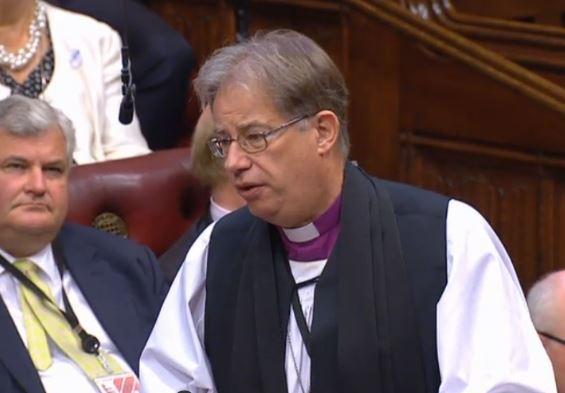 The Lord Bishop of Oxford: My Lords, those were extremely moving speeches. I thank the noble Lords, Lord Faulkner, Lord Collins and Lord Cashman, and the noble Baroness, Lady Brinton, for the contributions they have made in the Chamber today and the moving way in which they have spoken. I thank them for sharing their personal experiences so movingly, and for the important and necessary articulation of the views they have heard within the broader Church of England in favour of movement and inclusion. I deeply regret the language used in writing to the noble Lord, Lord Collins, and others; it has no place in the contemporary Church.
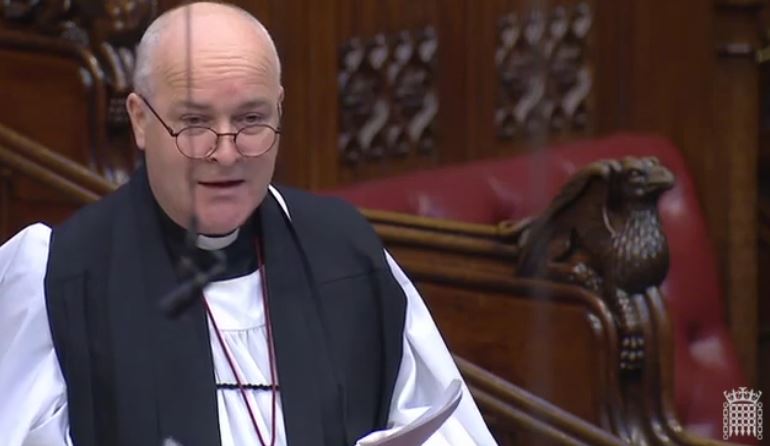 The Bishop of Chelmsford spoke during debate on two amendments to the Bill. The first, briefly, on an amendment from the Bill’s sponsor Lady Hodgson, to enable the conversion of civil partnerships to marriage, and vice-versa, through the introduction of Regulations that could amend primary legislation, including Church of England Measures. The amendment was passed after debate.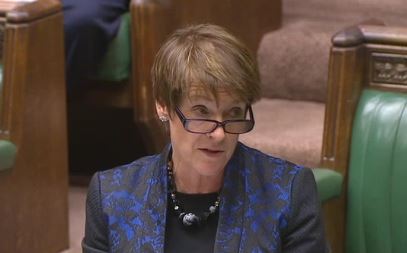

 The Church of England in Parliament
You must be logged in to post a comment.