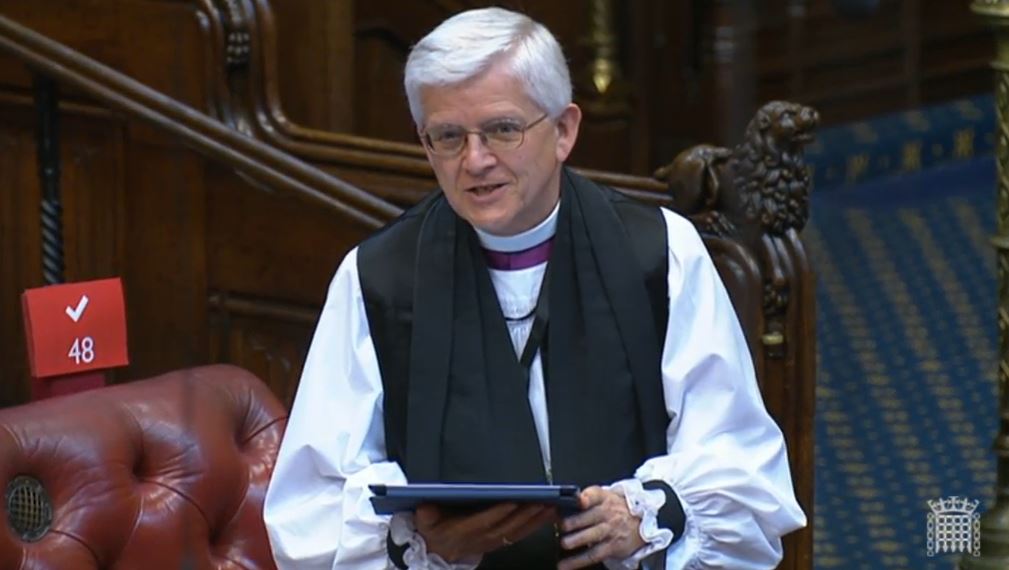
Bishop of St Albans asks about school breakfast programmes

The Bishop of St Albans received the following written answer on 9th January 2022:

The Lord Bishop of St Albans asked His Majesty’s Government what plans they have to expand the National School Breakfast Programme.

Baroness Barran (Con): The government is committed to continuing support for school breakfasts and has extended the National School Breakfast Programme (NSBP) for an additional year in November. We are investing up to £30 million in our national school breakfast programme until the end of the summer term in 2024. This funding will support up to 2,500 schools in disadvantaged areas, meaning that thousands of children from low-income families will be offered free nutritious breakfasts to better support their attainment and wellbeing.

Hansard

Bishop of Gloucester asks about localising the School Fruit and Vegetable Scheme

The Bishop of Gloucester received the following written answer on 7th November 2022:

The Lord Bishop of Gloucester asked His Majesty’s Government:

  • what assessment they have made of the potential merits of enabling local or regional authorities to influence or control the allocation of School Fruit and Vegetable Scheme budgets for their area.
  • what consideration they have given to reforming the School Fruit and Vegetable scheme (1) to strengthen local procurement strategies, and (2) to enhance the supply of (a) seasonal, or (b) organic, produce to schools.
  • what consideration they have given to enabling local authorities to have a role, on an initial pilot basis, in allocating funding from the School Fruit and Vegetable Scheme in their area.
Continue reading “Bishop of Gloucester asks about localising the School Fruit and Vegetable Scheme”

Bishop of Durham speaks in a debate on GCSE and A-Level Results: Attainment Gap

On 8th September 2022, the Bishop of Durham spoke in a debate on the attainment gap in exam results, regarding children in North East England:

The Lord Bishop of Durham: My Lords, I begin by expressing, on behalf of these Benches, our concern for Her Majesty, and the assurance of our thoughts and prayers for her and the Royal Family.

I am grateful to the noble Baroness for securing this debate and pay tribute to the way she has stood up for the young people of the north-east throughout her distinguished career. I declare my interests as chair of the National Society and the Durham Diocesan Board of Finance.

I begin by celebrating the success of our young people and their teachers, particularly those of the north-east, in the recent A-level and GCSE examination results in both schools and further education colleges. However, we cannot hide away from the gap between the north and the south of England—the stats have already been quoted, so I will not repeat them. The most recent figures continue to show that disadvantaged communities in the north continue to be hit hardest by the Covid pandemic and its impact on learning. Poverty is in every north-east postcode and is set to worsen. Headlines include, for example:

“In 2020/21, the North East overtook London to have the highest rate of child poverty in the UK, at 38%”.

Continue reading “Bishop of Durham speaks in a debate on GCSE and A-Level Results: Attainment Gap”

Schools Bill: Bishop of Durham speaks and votes on amendments at report stage

The House of Lords considered the Government’s Schools Bill at Report Stage on 12th July 2022. The Bishop of Durham spoke in the debate on numerous amendments, several of which were put to a vote. His speeches and contributions from other peers are below:

The Lord Bishop of Durham: My Lords, I agree with the noble Lord, Lord Storey, that there are many maintained and voluntary-aided stand-alone schools that have turned themselves around incredibly well through good leadership and high-quality teaching, so academisation is not the simple answer. Local leadership and governance undoubtedly need to be got right. I declare my interest as chair of the National Society and would like to highlight the importance here, in the church sector, of the diocesan boards of education as key local engagers. We will come to that in a later group.

Local knowledge of schools is crucial in ensuring that their flourishing is provided for. However, I am going to disappoint the noble Lord, Lord Storey, because I find the amendment overly mandatory and restrictive, giving too much power to a local body to trigger a school leaving an academy trust; I am not sure that that is right. The principle of local governance needs to be got right. I am not convinced that this amendment as proposed is quite the right way to do it. As was said in Committee, it is important to have proper local engagement, but it must not be too detailed in how it is mandated.

Continue reading “Schools Bill: Bishop of Durham speaks and votes on amendments at report stage”

Bishop of Gloucester asks a question about teaching cookery skills in England

The Bishop of Gloucester received the following written answer on 11th July 2022:

The Lord Bishop of Gloucester asked Her Majesty’s Government what plans they have (1) to teach cookery skills at (a) primary, and (b) secondary, schools in England, and (2) to introduce a model curriculum which covers a basic range of cookery skills.

Baroness Barran (Con): Cooking and nutrition are part of the national curriculum for design and technology, which is mandatory in state-maintained schools from key stages 1 to 3. The curriculum aims to teach children how to cook, with an emphasis on savoury dishes, and how to apply the principles of healthy eating and nutrition. It recognises that cooking is an important life skill that will help children to feed themselves, and others, healthy and affordable food.

Continue reading “Bishop of Gloucester asks a question about teaching cookery skills in England”

Bishop of St Albans asks a question on teaching British values in schools

The Bishop of St Albans received the following written answer on 11th July 2022:

The Lord Bishop of St Albans asked Her Majesty’s Government what plans they have, if any, to ensure that the teaching of British values in schools respects protected characteristics, freedom of speech, and the freedom of conscience.

Baroness Barran (Con): All schools must offer a curriculum which is balanced and broad, and which promotes the spiritual, moral, cultural, mental, and physical development of pupils and prepares them for the opportunities, responsibilities, and experiences of later life. The department expects all schools to promote the fundamental British values of democracy, the rule of law, individual liberty, and mutual respect and tolerance.

Continue reading “Bishop of St Albans asks a question on teaching British values in schools”

Bishop of Blackburn speaks on amendments to the Schools Bill

On 22nd June 2022, the House of Lords debated amendments to the Schools Bill (HL) in committee. The Bishop of Blackburn spoke in the debate:

The Lord Bishop of Blackburn: My Lords, I will speak briefly to the amendments in this group, of which Amendments 115, 117 and 119 were originally tabled by my right reverend friend the Bishop of St Albans, who is unable to be present in the Chamber today.

As he is absent, I will focus on the amendments tabled by the noble Baroness, Lady Garden, and the noble Lord, Lord Lucas, which also extend the relevant period in which a parent must comply with registration and provide information, as requested from a local authority, from 15 days to 28 days, 30 days or 30 school days respectively. I know my right reverend friend the Bishop of St Albans would have been happy to support these amendments, as do I, given their shared principle that giving parents sufficient breathing space to comply is helpful.

Continue reading “Bishop of Blackburn speaks on amendments to the Schools Bill”

Bishop of St Albans speaks in a debate on the Schools Bill (HL)

On 20th June 2022, the House of Lords debated amendments to the Schools Bill in committee. The Bishop of St Albans spoke in the debate:

The Lord Bishop of St Albans: My Lords, I rise to speak to six amendments standing in my name. Amendment 101 removes from the register any requirement to record the means by which a child is being educated—something that ought to be discretionary on the parents. It replaces it with a less intrusive requirement to record only those details that demonstrate that the child is receiving a suitable education in accordance with the existing duty on parents to secure compulsory education for their child or children.

Amendment 105 curbs the local authorities’ proposed power to contain within the register

“any other information that may be prescribed”—

it is very broad and open to abuse—solely to instances where the safeguarding of the child is a concern. Surely that is the point.

Continue reading “Bishop of St Albans speaks in a debate on the Schools Bill (HL)”

Bishop of Durham speaks in a debate on the Schools Bill (HL)

On 20th June 2022, the House of Lords debated amendments to the Schools Bill (HL). The Bishop of Durham spoke in the debate:

The Lord Bishop of Durham: My Lords, having said to the Minister that I would be quiet today, I had forgotten that this group did not get debated last week when I was away. I support all these amendments. It is a privilege to follow the noble Lord, Lord Hodgson of Astley Abbotts. He and I do not always agree, but on this occasion I want first to thank him for his incredibly helpful contribution on primary and secondary legislation. It was astoundingly clear and helpful. I thank him very much and hope it will be heeded by Her Majesty’s Government. Secondly, I agree with him on Amendment 168, but I will come back to that in a moment.

Continue reading “Bishop of Durham speaks in a debate on the Schools Bill (HL)”

Bishop of Durham asks about special educational needs

The Bishop of Durham asked the following question on 20th June 2022:

The Lord Bishop of Durham: My Lords, I recently visited a school in County Durham—not a church school in this instance—where 25% of the children had special educational needs. The head teacher pointed out to me the significance of not only the teachers but the teaching assistants, and the training that they too required, and said that there was pressure on her budget to sustain that level of staffing with some specialism. Can the Minister comment on that?

Continue reading “Bishop of Durham asks about special educational needs”