Skills and Post 16 Education Bill: Bishop of Leeds speaks in debate

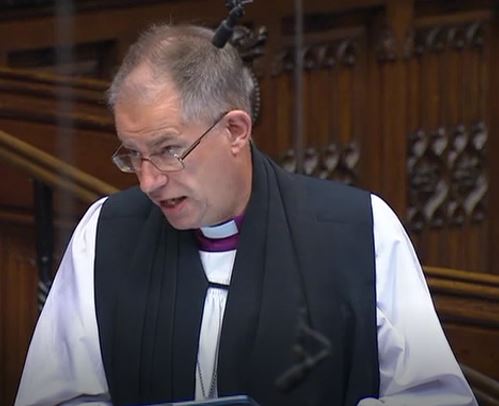
On 24th March 2022, the House of Lords debated commons amendments to the Skills and Post 16 Education Bill. The Bishop of Leeds spoke on behalf of the Bishop of Durham regarding provision for universal credit claimants:
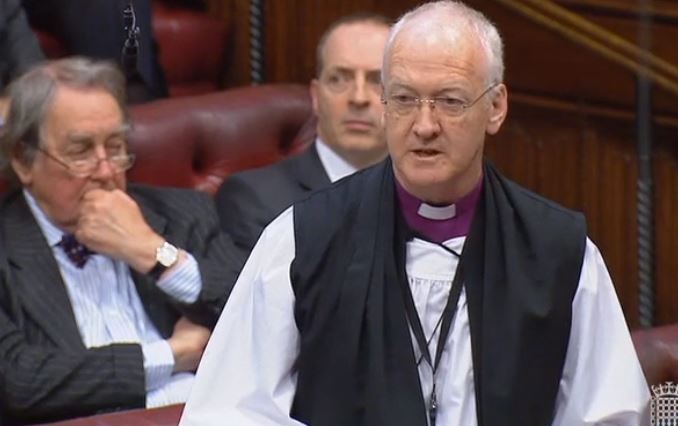
The Lord Bishop of Leeds: My Lords, this House carried an amendment in the name of the right reverend Prelate the Bishop of Durham, who cannot be in his place today, concerning universal credit conditionality—this has been referred to several times—but it was not accepted when the Bill was considered in the other place.

If the Government are to achieve their levelling-up ambitions and enable individuals to secure better-paid employment with improved prospects, then it is essential to achieve greater integration of the support provided for skills development and training by the Department for Education and the Department for Work and Pensions.

Continue reading “Skills and Post 16 Education Bill: Bishop of Leeds speaks in debate”
Votes: Post 16 Skills and Education Boll

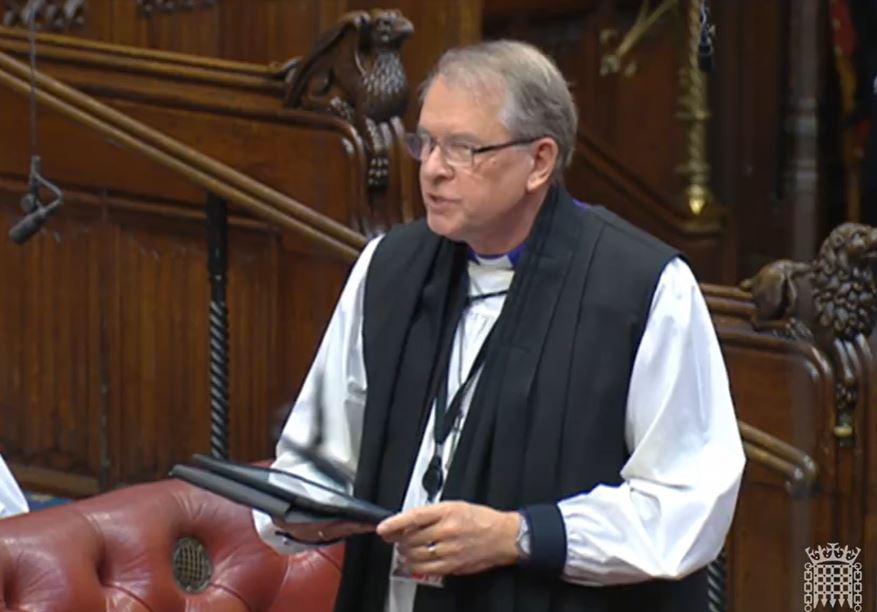
On 24th March 2022, the House of Lords debated commons amendments to the Post 16 Skills and Education Bill. Votes were held on amendments, in which a Bishop took part.

Continue reading “Votes: Post 16 Skills and Education Boll”

Skills and Post-16 Education Bill: Bishop of Durham moves amendment on universal credit conditions for students

On 21st October 2021, the House of Lords debated the Skills and Post 16 Education Bill in the second day of the report stage. The Bishop of Durham spoke in the debate, supporting amendments on special educational needs, and moving his amendment on providing flexibility for universal credit recipients seeking further education:

The Lord Bishop of Durham: My Lords, this is my first opportunity to welcome the Minister to her new role, and, indeed, the noble Baroness, Lady Chisholm, to hers. In my own role as chair of the National Society—which I declare as an interest—I look forward to working with them both on many matters relating to education and the Church of England’s place as a major provider.

Turning to Amendments 44 and 46, which I was pleased to add my name to, I thank both noble Baronesses for the time they gave us recently to discuss them. The need for specific provision to be made to better meet the needs of students with specific learning needs and disabilities at all levels has been made—not for the first time—with great expertise by the noble Lord, Lord Addington, and I wholeheartedly support these amendments. Given the range and varied nature of the learning needs among FE students, their lecturers, tutors, assessors and other staff must have the skills to recognise those needs to be able to adapt their own approach to teaching, learning and assessment, and to be able to promptly and appropriately refer students for more specialised or intensive support.

Continue reading “Skills and Post-16 Education Bill: Bishop of Durham moves amendment on universal credit conditions for students”

Votes: Skills and Post-16 Education Bill

On 21st October 2021, the House of Lords debated the Skills and Post-16 Education Bill in the report stage. Votes were held on amendments to the bill, in which Bishops took part:

Continue reading “Votes: Skills and Post-16 Education Bill”

Votes: Skills and Post-16 Education Bill

On 12th October 2021, the House of Lords debated the Skills and Post-16 Education Bill in the report stage. Votes were held on amendments to the bill, in which a Bishop took part:

Continue reading “Votes: Skills and Post-16 Education Bill”

Skills and Post-16 Education Bill: Bishop of Oxford speaks to Bishop of Durham’s amendments on improving SEND provision in higher education

On 12th October 2021, the House of Lords debated the Skills and Post-16 Education Bill in the first day of the report stage. On behalf of the Bishop of Durham, the Bishop of Oxford spoke to three amendments to the bill aimed at improving provision of higher and further education to people with special educational needs and disabilities:

The Lord Bishop of Oxford: My Lords, I shall speak to Amendments 13, 16 and 19, tabled by the right reverend Prelate the Bishop of Durham, who is unable to be present because of his other engagements. Along with others, I welcome the Minister to her new role and join others in offering appreciation to her predecessor, the noble Baroness, Lady Berridge. I should also say, as a member of your Lordships’ Select Committee on the Environment and Climate Change, how much I welcome government Amendment 6, and I add my support to Amendment 64.

The context of my remarks is a general welcome for the Bill and recognition of its role in helping to meet the Government’s ambition on FE and skills. However, there is almost no specific reference to SEND provision in the Bill, despite the significant role that FE plays in provision for students with additional needs or disabilities. Noble Lords will know that around 202,000 students have special educational needs in further education, of whom 90% attend general FE colleges and make up almost one in six of all enrolments. Within those, almost a quarter of students are aged 16 to 18. In contrast to the school sector, there is a small number of specialist institutions. That situation makes a profound difference to the scale and range of support needed in general FE and sixth-form colleges.

Continue reading “Skills and Post-16 Education Bill: Bishop of Oxford speaks to Bishop of Durham’s amendments on improving SEND provision in higher education”

Skills and Post-16 Education Bill: Bishop of Durham speaks in favour of amendment to standardise funding for students with specific learning difficulties and disabilities

The Bishop of Durham spoke in favour of an amendment to the Skills and Post-16 Education Bill which would aim to remove discrepancies in funding offered to people with specific learning difficulties and disabilities in further education:

The Lord Bishop of Durham: My Lords, as the right reverend Prelate the Bishop of Leeds observed at Second Reading, colleges play a vital role in providing for students with specific learning difficulties and disabilities—the term widely used in further education as being broader than the “special educational needs” used elsewhere. This amendment seeks to address the discrepancy between the range and funding available to younger students with specific learning difficulties or disabilities, principally those in school settings or specialist institutions, and those applicable to students in FE. It seeks also to harmonise best practice across the FE and HE sectors, as the noble Lord, Lord Addington, outlined a few moments ago. It connects with the earlier Amendments 41 and 43 to 46, especially the requirement to review how well the education and training provided by an institution meet the needs of those with special educational needs in its area, and with Amendment 99, which places a specific duty on the Secretary of State to this end.

Continue reading “Skills and Post-16 Education Bill: Bishop of Durham speaks in favour of amendment to standardise funding for students with specific learning difficulties and disabilities”

Skills and Post-16 Education Bill: Bishop of Durham tables amendment removing restriction on claiming universal credit for those in education

On 21st July 2021, the House of Lords debated the Skills and Post-16 Education Bill in the fourth day of the committee stage. The Bishop of Durham tabled a probing amendment to the bill which would remove restrictions on claiming universal credit from those receiving education:

The Lord Bishop of Durham:

90A: After Clause 25, insert the following new Clause—

“Universal credit conditions: receiving education

(1) In section 4 of the Welfare Reform Act 2012—(a) in subsection (1) omit paragraph (d), and(b) omit subsection (6).(2) The Secretary of State may by regulations made by statutory instrument make consequential provision.(3) A statutory instrument containing regulations under this section is subject to annulment in pursuance of a resolution of either House of Parliament.”Member’s explanatory statement

This amendment would remove the restriction that those “receiving education” cannot claim Universal Credit, which at present may impede some of the most disadvantaged from benefitting from learning opportunities. It is intended to probe how the Government plans to incentivise take-up of training programmes, and to elicit how cross-departmental working can be made more effective in transforming learning and skills.

Continue reading “Skills and Post-16 Education Bill: Bishop of Durham tables amendment removing restriction on claiming universal credit for those in education”

Skills and Post-16 Education Bill: Bishop of Durham backs amendments on mental health support for students

On 15th July 2021, the Bishop of Durham spoke in a debate on the Skills & Post-16 Education Bill, expressing his support for amendments focused on supporting students’ mental health:

The Lord Bishop of Durham: My Lords, I particularly want to support Amendment 63, but also the others in the group. Just last month, in June 2021, the DfE itself published a report, Student Mental Health and Wellbeing, based on research done before the pandemic. It points out that 96% of institutions ask their students about their mental health but only 41% ask them about their general well-being. It also notes that only 52% of universities would say that they have a “dedicated strategy” for the mental health and well-being of their students. So the DfE’s own report, from last month, highlights that there is plenty of work to be done on universities having proper, dedicated strategies around mental health and well-being—particularly on the well-being side.

Continue reading “Skills and Post-16 Education Bill: Bishop of Durham backs amendments on mental health support for students”

Skills and Post-16 Education Bill: Bishop of Durham speaks in favour of amendments on SEND provision in further education

On 15th July 2021, the House of Lords debated amendments to the Skills and Post-16 Education Bill in the second day of the committee stage. The Bishop of Durham spoke in favour of amendments 41 & 43, which would clarify language around provision for special educational needs & disabilities and require that further education settings regularly review their SEND offer:

The Lord Bishop of Durham: My Lords, I first need to declare my interest as chair of the National Society. I should also apologise that I was unable to take part in Second Reading because of other engagements; my noble friend the Bishop of Leeds spoke in my stead. I also need to apologise for a complete error on my part in not being available to speak to Amendment 11, to which my name was added, during day one of Committee; that was entirely an administrative error at my end.

However, I now enter into the debate on a very small matter, on Amendment 41, on which I simply want to endorse the comments made by the noble Lord, Lord Addington, about the phrase “from time to time”. The language seems too loose. The word “regularly” implies something more frequent without expressing exactly what that regularity is. Put simply, regular review that connects with potential changing local needs makes good sense. The amendment simply tightens this up.

Continue reading “Skills and Post-16 Education Bill: Bishop of Durham speaks in favour of amendments on SEND provision in further education”