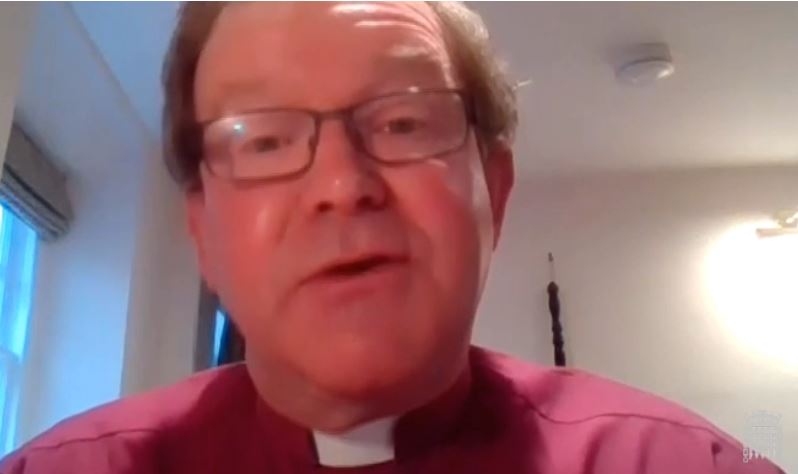
Bishop of Carlisle raises need for proper support for paid and unpaid carers

The Bishop of Carlisle spoke in a debate on social care in the UK on 24th June 2021, raising the issue of staff retention in the paid care sector, and the need for recognition and support of unpaid carers:

The Lord Bishop of Carlisle: I congratulate the noble Baroness, Lady Jolly, on securing this timely debate. I should declare an interest as co-chair of a newly formed archbishops’ commission on reimagining social care. Understandably, much of the current discussion of social care involves the issue of funding. That is fundamentally important, but I believe the time has also come for a radical—in the sense of going to its roots—reappraisal of the values and principles underlying social care, not only for the elderly but for those with disabilities and severe mental illnesses. It has been clear for many years that we need an inspiring, cross-party, long-term vision for social care which involves rethinking how we want it to be understood as well as delivered, with those in need of care valued for who they are rather than simply regarded as an inconvenient burden. It has also been clear that that should include reference to some of the underlying societal conditions that contribute to the overall need, such as deprivation, lack of family support and loneliness.

Continue reading “Bishop of Carlisle raises need for proper support for paid and unpaid carers”

Bishop of Carlisle asks about support for young carers

On 10th June 2021, during a discussion on support for carers, the Bishop of Carlisle raised the issue of young carers and the impact of caring responsibilities on education:

The Lord Bishop of Carlisle: My Lords, I declare an interest as co-chair of the Archbishops’ commission on social care. Given that there are 750,000 young carers in England and that some 27% of them regularly miss school because of their caring responsibilities, can the Minister tell us whether Her Majesty’s Government have any plans to identify these children and offer them extra support, not least in the wake of the added disruption to their education that has been caused by the pandemic?

Continue reading “Bishop of Carlisle asks about support for young carers”

Bishop of Portsmouth responds to budget on issues of tax, benefits, and social care

On 12th March 2021, the Bishop of Portsmouth spoke in a debate on the state of the economy, following the delivery of the new Budget by the Chancellor:

The Lord Bishop of Portsmouth [V]: My Lords, I welcome from the Bishops’ Bench the noble Lords, Lord Beynon, Lord Cruddas and Lord Khan of Burnley, and congratulate them on their speeches. I am looking forward to hearing them. I also welcome the noble Lord, Lord Bellingham, and my namesake, the noble Baroness, Lady Foster of Oxton.

Every Budget has consequences in every community, including those I serve as Bishop of Portsmouth. In these last comments that I shall make on a Budget Statement, I have four points on how this Budget is likely to make the sharp end sharper still for many, with little slack, even in better times. A decade on from the Dilnot report, there is still no proposal to address the social care challenge, even though apparently the Government have a package ready. We should have bitten this bullet years ago. We must bite it now.

Continue reading “Bishop of Portsmouth responds to budget on issues of tax, benefits, and social care”

Bishop of Carlisle speaks in debate on report from the Economic Affairs Committee

On 28th January 2021, the Bishop of Carlisle took part in a debate on a report from the Economic Affairs Committee, focusing on the need for health and social care reform:

The Lord Bishop of Carlisle [V]: My Lords, I add my own expression of gratitude to the Economic Affairs Committee for such a clear and coherent report, based as it is on such careful research and presenting us with such direct and forthright conclusions. Its basic principles for reform are eminently sensible. Like others, I applaud the emphasis, pace Dilnot, on a partnership approach to the funding of social care, and the principles of free personal care, with a cap on accommodation costs, and increased funding enabled by general taxation. I will focus my brief contribution on principle (j), which reads:

“Invest in the social care workforce and ensure a more joined up approach to workforce planning with the National Health Service.”

If that is ignored, any increase in funding will run the risk of being wasted.

Continue reading “Bishop of Carlisle speaks in debate on report from the Economic Affairs Committee”

Bishop of Portsmouth asks Government about establishing a royal commission on social care

On 20th May 2020 a Government statement was given in the virtual House of Lords regarding care homes during the COVID-19 pandemic. The Bishop of Portsmouth, Rt Revd Christopher Foster, asked a follow up question:

The Lord Bishop of Portsmouth: My Lords, we know how crucial the social care sector is, and the huge challenges it faced even before Covid-19, with 120,000 care assistant vacancies. Can the Minister therefore respond to the excellent suggestion from the most reverend Primate the Archbishop of Canterbury that we establish a royal commission on social care, not to blame but to learn, so that we have the right information to make the right decisions and provide the right services for these most vulnerable people?

Continue reading “Bishop of Portsmouth asks Government about establishing a royal commission on social care”

Bishop of Rochester responds to Chancellor’s Budget Statement

On 18th March 2020 the House of Lords debated the Budget Statement made the previous week by the Chancellor of the Exchequer. The Bishop of Rochester, Rt Revd James Langstaff, spoke in the debate:
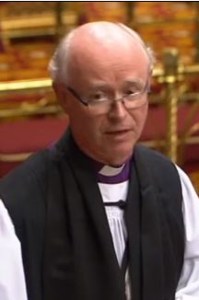
The Lord Bishop of Rochester:  My Lords, as many have already observed, this Budget comes in extraordinarily unusual circumstances, and in relation to the issues around Covid-19, subsequent to the Budget announcement, the Chancellor has brought forward a number of measures which have been largely well received, and no doubt others will need to follow. While voluntary action in our communities will form much of the day-to-day response to those who are the most vulnerable and potentially isolated across our nation, the sustaining of public services and of businesses is vital for both our social and economic well-being; other speakers have already begun to address some of those issues.​

Following the most reverend Primate the Archbishop of Canterbury is always a risky business, and other noble Lords have already spoken with considerable knowledge of these matters, so I shall focus my remarks on one or two specific issues and areas which were already matters of concern, and where that concern is perhaps greater because of the circumstances in which we now find ourselves.

On children and young people, I hugely welcome the long-overdue extension of higher-rate housing benefit for care leavers until the age of 25, thus giving stability in their accommodation beyond their 22nd birthday. This is something that the Church of England organisation the Children’s Society and other charities have campaigned for over some time, and it is most welcome. Also welcome is the £2.5 million for research on family hubs. However, what is not in the provisions of the Budget or subsequent provisions is sufficient funding to address the urgent need for every child to achieve a good start in life, and that is becoming more urgent in the light of the current circumstances. Continue reading “Bishop of Rochester responds to Chancellor’s Budget Statement”

Bishop of London asks about funding for nurses and midwives’ professional development

On the 15th January 2020 Baroness Watkins of Tavistock asked Her Majesty’s Government “how they intend to ensure safe staffing in social care and the National Health Service in this Parliament.” The Bishop of London, Rt Revd Sarah Mullally, asked a follow-up question.

The Lord Bishop of London: My Lords, I am sure the Minister knows that safety is about not just numbers but the continuing development and supervision of nurses and midwives. Can she comment on what the Government are doing to ensure that both nurses and midwives are funded properly for clinical supervision and professional development?

Continue reading “Bishop of London asks about funding for nurses and midwives’ professional development”

Bishop of London responds to Queen’s Speech – health and social care

On 9th January 2020 the House of Lords debated the Queen’s Speech for the fourth day. The Bishop of London, Rt Revd Sarah Mullally, contributed:

The Lord Bishop of London: My Lords, I am grateful for the opportunity to speak during this debate on Her Majesty’s gracious Speech. I note my interests, which I have declared, and I will limit my comments purely to health and social care.

I welcome Her Majesty’s Government’s focus on the NHS: health, social care and the workforce. I also welcome the additional funding. However, we must not be misled into thinking that this is a funding bonanza; it will serve only to stabilise NHS services. Continue reading “Bishop of London responds to Queen’s Speech – health and social care”

Bishop of London highlights role of church and community groups in improving health and social care

London1On 22nd October 2019 Parliament continued to debate the Queen’s Speech, including scrutiny of measures relating to Health and Social Care. The Bishop of London, Rt Revd Sarah Mullally (and formerly Chief Nursing Officer for England), contributed to the debate:

Lord Bishop of London: My Lords, many noble Lords will know that I have a background in health, and I continue to be a great supporter of the National Health Service, so they will not be surprised when I address my comments to health and social care. In doing so, I recognise the contribution of the noble Baroness, Lady Emerton, to nursing and to this House.

I thank the Government for their work to support and strengthen the National Health Service, its workforce and its resources. However, increased investment and reform does not guarantee getting to the root of the problem. Our health and social care issue is what you might call a “village problem”. Our flourishing, mentally, physically and emotionally, occurs best in community. More than that, as Sir Michael Marmot’s research from the Institute of Health Equity indicated, our economic, social and emotional circumstances all play a part in our health and well-being.

Continue reading “Bishop of London highlights role of church and community groups in improving health and social care”

Bishop of Durham asks about EU Settlement Scheme, vulnerable groups and children

19.04.24 DurhamOn 30th July 2019 the Bishop of Durham, Rt Revd Paul Butler, received a written answer from Government, in reply to three questions about children and vulnerable EU nationals and the EU Settlement Scheme:

The Lord Bishop of Durham: (i) HL17344 To ask Her Majesty’s Government what is the status of the guidance issued on 3 April to all local authorities and health and social care trusts in regard to the EU Settlement Scheme and looked-after children and care leavers; and whether it is mandatory for local authorities to follow that guidance.

(ii) HL17345 To ask Her Majesty’s Government what evidence was collected on the children who were non-UK European nationals accommodated under section 20 of the Children Act 1989, their family situations and possible vulnerabilities, before drafting the guidance on EU Settlement Scheme and looked-after children and care leavers issued on 3 April.

(iii) HL17346 To ask Her Majesty’s Government what plans they have to evaluate the impact of the funding of support and its provision to vulnerable groups, including analysis of what future work is needed to ensure that vulnerable groups are able to apply to the EU Settlement Scheme after funding ends in March 2020. Continue reading “Bishop of Durham asks about EU Settlement Scheme, vulnerable groups and children”