
Bishop of St Albans: Energy Meters (Written Answers)

On 18th August 2014, the Bishop of St Albans, the Rt Revd Alan Smith, received answers to two written question on energy meters for lower income households.
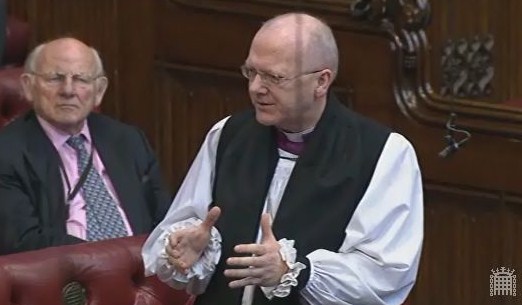
Bishop of St AlbansThe Lord Bishop of St Albans: To ask Her Majesty’s Government what assessment they have made of the impact of the use of prepayment meters on the ability of lower income households to pay their energy bills.

Baroness Northover: Since 2010, all major suppliers have voluntarily equalised tariffs between prepayment customers and standard credit customers but the price differential between customers using pre-payment meters (PPM) and those paying by direct debit can be more than £100 for a dual-fuel customer.

Whilst paying by PPM is more common among fuel poor than non-fuel poor households, a majority of fuel poor customer pay by other payment methods.

Of households who were fuel poor in England in 2012, around 27% paid for their electricity and 22% paid for their gas through PPM. Continue reading “Bishop of St Albans: Energy Meters (Written Answers)”

Bishop of St Albans – food security in Angola (Written Answer)

On 11th August 2014 the Bishop of St Albans, the Rt Revd Alan Smith, received an answer to a question on food security in Angola.

Bishop of St AlbansThe Lord Bishop of St Albans: To ask Her Majesty’s Government what discussions they have had with the government of Angola regarding food insecurity in that country; and whether they have encouraged that government to undertake an assessment of the situation.

Baroness Northover (LD): Poor seasonal rainfall early in 2014 in parts of Western Angola has affected the harvest and food availability there. However, throughout most of the country production is considered to be good and expected to be higher than normal. This has helped to maintain reasonable food prices for urban populations.

The Government has not had recent bilateral discussions with the Government of Angola regarding the food situation. The Government of Angola is leading the food assistance programme and is best placed to prepare for and lead such a response with the support of UN partners. The Government of Angola has set up an Inter-ministerial Commission to tackle the drought. The Government of Angola is also embarking on infrastructure projects, such as water supply projects, to mitigate drought impact in the future.

(via Parliament.uk)

Bishop of St Albans – Public Forest Estate oversight (Written Answer)

On 4th August 2014 the Bishop of St Albans, the Rt Revd Alan Smith, received an answer to a written question on the oversight of the Public Forest Estate.

Bishop of St AlbansThe Lord Bishop of St Albans: To ask Her Majesty’s Government when they intend to bring forward legislation to establish a new public body to hold the Public Forest Estate to account.

The Parliamentary Under-Secretary of State, Department for Environment, Food and Rural Affairs (Lord De Mauley): The Government’s policy on the future of the Public Forest Estate is set out in its Forestry and Woodlands Policy Statement of January 2013. The Government is committed to maintaining the Public Forest Estate in public ownership and to establishing a new operationally independent public body to manage the estate for the long-term benefit of people, nature and the economy.

There were many proposals competing for the limited space within the Fourth Session programme and the proposed forestry measures could not be accommodated. However, the Government stands by its commitment to establish the new public body as soon as parliamentary time allows.

(via Parliament.uk)

Bishop of St Albans raises human rights abuses in South Sudan

On 30th July 2014 the Bishop of St Albans, Rt Rev Alan Smith, received a written reply from Foreign Office Minister Baroness Warsi to a question about human rights in South Sudan.

Bishop of St AlbansThe Lord Bishop of St Albans: To ask Her Majesty’s Government what discussions they are having to ensure that allegations raised in the United Nations Mission in the Republic of South Sudan human rights report of 8 May are being addressed.[HL1307] Continue reading “Bishop of St Albans raises human rights abuses in South Sudan”

Bishop of St Albans asks Government about impact of the under-occupancy charge on household debt and child poverty

On 30th July 2014, the Bishop of St Albans, Rt Rev Alan Smith, received answers to two written questions on the impact of the under-occupancy charge, on household debt and child poverty.

The questions and answers are reproduced in full below:

Bishop of St Albans

The Lord Bishop of St Albans: To ask Her Majesty’s Government what plans they have to mitigate the impact of the under-occupancy charge on household debt.[HL1588]

The Parliamentary Under-Secretary of State, Department for Work and Pensions (Lord Freud) (Con): The removal of the spare room subsidy was a necessary change in order to get the housing benefit bill under control, return fairness to the system and make better use of social housing stock. Continue reading “Bishop of St Albans asks Government about impact of the under-occupancy charge on household debt and child poverty”

Bishop of St Albans calls for Living Wage to help improve youth employment

On 30th July 2014 Baroness Sherlock asks Her Majesty’s Government what action they are taking to reduce levels of youth unemployment following the recent closure of the youth employment contract incentive scheme. The Bishop of St Albans, the Rt Revd Alan Smith, asked a supplementary question:

Bishop of St AlbansThe Lord Bishop of St Albans: My Lords, a significant part of the problem is that there are some posts suitable for young people, but they are often in parts of the country where accommodation is prohibitively expensive or the cost of commuting simply precludes them from taking those jobs. In the light of that, have Her Majesty’s Government considered embracing the concept of the living wage for all people of working age?

Lord Freud: Obviously we have looked at the living wage. If the figure suggested for the living wage were to be adopted, we would have to consider the impact on unemployment and the particular impact on youngsters, who would be hit worst. The NIESR estimated that adopting the living wage as opposed to the minimum wage would knock 300,000 youngsters out of work.

(via Parliament.uk)

Bishop of St Albans Receives Answers to Questions on Social Housing

On 30th July 2014, the Bishop of St Albans, the Rt Revd Dr Alan Smith, received answers to two written questions on the social impacts of the under-occupancy charge from the Minister for Welfare Reform, Lord Freud.

Bishop of St AlbansThe Lord Bishop of St Albans: To ask Her Majesty’s Government what plans they have to mitigate the impact of the under-occupancy charge on household debt.[HL1588] 

Lord Freud: The removal of the spare room subsidy was a necessary change in order to get the housing benefit bill under control, return fairness to the system and make better use of social housing stock.

For those that are vulnerable and who may require more time to make the transition to change, the Discretionary Housing Payment scheme administered by local authorities is available. Money management and budgeting and debt advice is also provided by many local authorities and social sector landlords. Continue reading “Bishop of St Albans Receives Answers to Questions on Social Housing”

Bishop of St Albans asks Government about its humanitarian assistance to South Sudan (Written Answer)

On 29th July 2014, the Bishop of St Albans, the Rt Revd Alan Smith, received an answer to a written question on humanitarian assistance in South Sudan.

Bishop of St AlbansThe Lord Bishop of St Albans: To ask Her Majesty’s Government how they are supporting the role of churches and other civil society groups in the peace and reconciliation process in South Sudan, and in the delivery of humanitarian assistance.

Baroness Northover: The UK is one of six donors funding the United Nations Development Programme (UNDP) Community Security and Arms Control (CSAC) Project, which includes provision of technical support for national and community-level community reconciliation process, including working with faith-based partners. Furthermore, under the Africa Conflict Pool Programmes, the UK is funding civil society organisations to build the capacity of local populations to identify and resolve conflicts that affect them.

Through the Common Humanitarian Fund (CHF), the UK has supported work by national civil society to provide health, education, food security and livelihood, water and sanitation and mine awareness services for the most vulnerable. In addition, some United Nations agencies supported by the UK (such as the Food and Agriculture Organisation (FAO) and the World Food Programme (WFP)) work in close collaboration with local partners. To improve basic services the UK funded Girls Education South Sudan (GESS) project is working through Episcopal Church of Sudan (ECS) in two of South Sudan’s 10 States, and the UK-led Health Pooled Fund (HPF) will support faith-based county hospitals as well as government ones.

(via Parliament.uk)

Bishop of St Albans asks Government about UK involvement in South Sudan peace settlement

On 28th July 2014, Conservative Peer Baroness Hodgson of Abinger asked Her Majesty’s Government what steps they are taking to ensure that any future peace settlement in South Sudan is inclusive. The Bishop of St Albans, the Rt Revd Alan Smith, asked a supplementary question:

Bishop of St AlbansThe Lord Bishop of St Albans: My Lords, it is evident that the long-term process of finding an inclusive Sudanese-led reconciliation can begin only once hostilities cease and a political settlement and resolution is reached. This is why international diplomacy is so vital. Will the noble Lord tell the House what plans the Government have to address the current understaffing of the UK Sudan unit, which has a role in this?

Lord Wallace of Saltaire: My Lords, the number of staff in the UK Sudan unit has fluctuated over the past few months; my understanding is that it is now rather larger than it was two or three months ago. I do not think that we can wait until the fighting stops to begin negotiations; local fighting is likely to continue for some considerable time and we have to start to move to construct at least the basis of some form of government now.

(via Parliament.uk)

Bishop of St Albans asks Government for update on ‘smart meter’ policy and efforts to tackle fuel poverty

On 17th July 2014, Lord Ezra asked Her Majesty’s Government whether, in the light of the recently published statistical report on fuel poverty indicating a rising trend in 2014, they intend to expedite the announcement of their policy for dealing with the matter. The Bishop of St Albans, the Rt Revd Alan Smith, asked a supplementary question.

Bishop of St AlbansThe Lord Bishop of St Albans: My Lords, those who keep a close eye on this area point out that issues of fuel poverty depend on which groups you look at. Clearly, in some groups this is a growing area. Indeed, they assert that there is a connection between the increase in fuel poverty of certain groups and the increase in the number of pre-paid meters that have been installed, partly because it is believed that they are the most expensive way to pay for fuel. In the light of that, can my noble friend tell us what consideration Her Majesty’s Government have given to promoting the five principles on the use of pre-paid meters which were agreed between Consumer Focus and the big six energy companies back in March 2011, to ensure consistency in their installation and use?

Baroness Verma: I am extremely grateful to the right reverend Prelate for his question, which enables me to reassure him and the House that we have looked very seriously at the pre-paid meter issue. We think that people on very low incomes must be among the greater beneficiaries of this policy, which is why we will make sure that through smart meters they are able to top up their meter as if they are topping up a mobile phone, so they have no chance of being cut off when they need their electricity the most.

(via Parliament.uk)