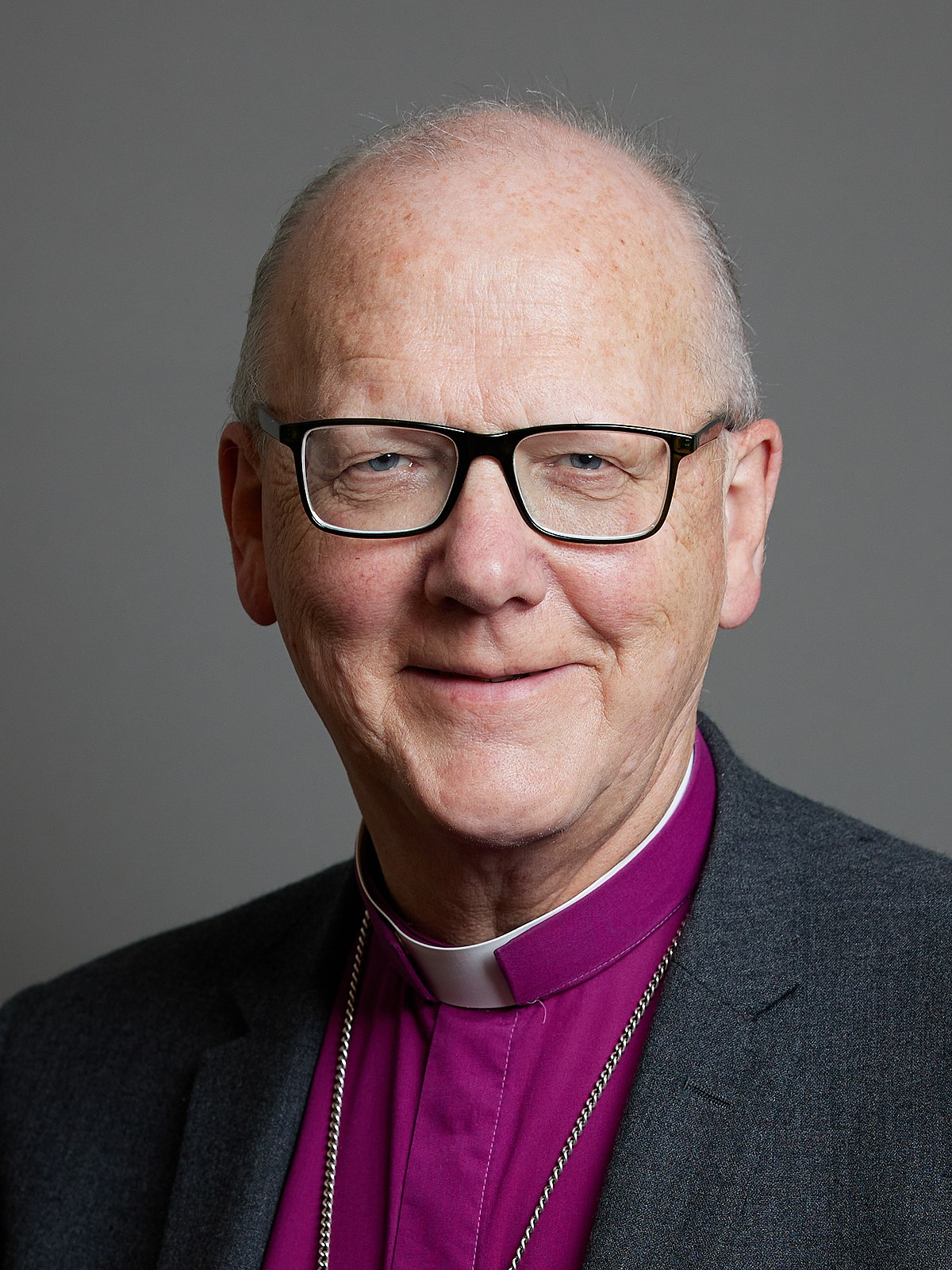
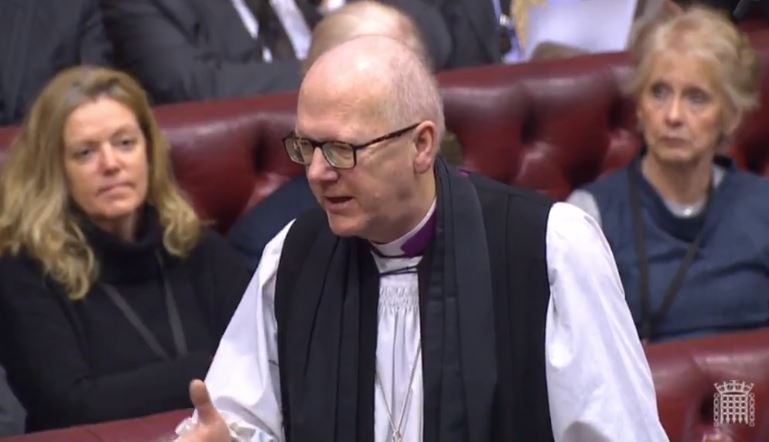
Bishop of St Albans asks about fire safety and prevention in residential buildings

The Bishop of St Albans received the following written answers on 28th June 2021:

The Lord Bishop of St Albans asked Her Majesty’s Government what plans they have to give residents, tenants and leaseholders the right to access their building’s fire risk assessment.

Lord Greenhalgh (Con): The Building Safety Bill seeks to provide residents, tenants and leaseholders of high rise buildings with further and more detailed information about the safety measures in their building upon request. This information may include full, current and historical fire risk assessments: further detail will be set out in due course.

Continue reading “Bishop of St Albans asks about fire safety and prevention in residential buildings”

Bishop of St Albans warns against increased use of Magnitsky sanctions

The Bishop of St Albans spoke in a Grand Commitee debate on the effectiveness of the Magnitsky sanctions on 24th June 2021, arguing for better cooperation with international partners and support for international law, and warning of the danger of overreliance on sanctions in global affairs:

The Lord Bishop of St Albans: My Lords, I too agree that there are occasions when these Magnitsky sanctions may be the best available option to us. However, the increased use of such sanctions is a worrying sign that the organs of international arbitration such as the UN or the ICJ may be losing their effectiveness. These were the very institutions established in response to the tit-for-tat foreign policy that defined the 19th and early 20th centuries, with all their resulting catastrophes.

Our Government are a big advocate of the concept of “Global Britain”, an ambiguous phrase that sometimes means leading as a force for good in the world but at other times is simply a declaration that Britain is open for international business. My concern is that these conflicting visions of global Britain are sometimes mutually exclusive, and that when dealing with human rights abuses there may be a tendency to take the route of least domestic economic disruption.

Continue reading “Bishop of St Albans warns against increased use of Magnitsky sanctions”

Bishop of St Albans asks about issues of freedom of religion and belief relating to vaccination

The Bishop of St Albans asked a question on the issue of strongly held religious beliefs against vaccination on 23rd June 2021, during a discussion on a Commons Urgent Question on the COVID-19 Events Research Programme:

The Lord Bishop of St Albans: My Lords, the Church of England has adopted a clear policy on encouraging people to be vaccinated. However, at the same time, like many organisations, we cater for a variety of people, some with strongly held ethical convictions and objections to the vaccine, covering issues from animal testing to the use of aborted foetal cells. What plans do Her Majesty’s Government have to uphold freedom of religion and belief and offer an alternative to vaccine certification for religious events?

Continue reading “Bishop of St Albans asks about issues of freedom of religion and belief relating to vaccination”

Bishop of St Albans asks about increasing transparency for tax liability

The Bishop of St Albans received the following written answer on 23rd June 2021:

The Lord Bishop of St Albans asked Her Majesty’s Government, further to the recent G7 global taxation agreement, what plans they have to require (1) public country-by-country reporting for UK based multinationals, and (2) enhanced tax reporting, to increase transparency and better ascertain the tax liabilities of UK multinationals.

Lord Agnew of Oulton (Con, Treasury): The Government is delighted to have secured G7 backing for the two-pillar solution being developed by the OECD to reform the international tax framework and the Government’s focus is on reaching final agreement with the G20 and OECD Inclusive Framework. A final agreement, when implemented, would help deal with the root of concerns about the taxation of multinationals, both as to where these corporations are taxed and as to the level at which they pay tax.

Continue reading “Bishop of St Albans asks about increasing transparency for tax liability”

Bishop of St Albans asks about child trust funds

The Bishop of St Albans asked a question on regulations surrounding child trust funds for children with learning disabilities on 22nd June 2021:

The Lord Bishop of St Albans: My Lords, may I press the Minister a little further? What plans do the Government have to work with the providers of child trust funds to develop a proactive strategy to advertise the need for parents of children with learning disabilities to apply to the Court of Protection in advance of the young adult’s child trust fund maturing? This is a really urgent matter, and we need the Government to be on the front foot.

Continue reading “Bishop of St Albans asks about child trust funds”

Bishop of St Albans asks about plans for gambling awareness during upcoming UEFA tournament

The Bishop of St Albans received the following written answer on 21st June 2021:

The Lord Bishop of St Albans asked Her Majesty’s Government, further to the announcement that the Belgium Gambling Commission will be running a gambling awareness campaign during this summer’s UEFA European Football Championship, what plans they have to advertise gambling support services during the tournament.

Continue reading “Bishop of St Albans asks about plans for gambling awareness during upcoming UEFA tournament”

Bishop of St Albans asks about progress of global vaccine equity

The Bishop of St Albans received the following written answer on 21st June 2021:

The Lord Bishop of St Albans asked Her Majesty’s Government what plans they have to raise the issue of global vaccine equity at the upcoming G7 meeting in Falmouth.

Lord Ahmad of Wimbledon (Con, Foreign Office): The UK is committed to rapid, equitable access to safe and effective vaccines. We are among the largest donors to the COVAX Advance Market Commitment (AMC), committing £548 million, which through match-funding leveraged $1 billion from other donors in 2020. This support to COVAX has been critical to it supplying COVID-19 vaccines to over 125 countries and economies. The UK’s investment in developing the Oxford-AstraZeneca vaccine also represents a critical contribution to global vaccination efforts, with 450 million doses having been delivered globally at cost so far.

The UK’s G7 Presidency is also championing equitable access to vaccines, therapeutics, and diagnostics to help the world fight and build back better from this pandemic. The UK has committed to sharing 100 million vaccine doses by June 2022, with the majority going to OVAX. We welcome the commitments made by our G7 partners to this shared goal, and look forward to discussing how we can work together to progress this agenda further.

Hansard


The Lord Bishop of St Albans asked Her Majesty’s Government, further to the WHO Director-General’s remarks on 9 April that bi-lateral vaccine donations exacerbated global vaccine inequality, how many vaccines they have donated (1) to individual nations, and (2) to the COVAX programme; and what plans they have to support to the COVAX initiative further.

Lord Ahmad of Wimbledon: The UK remains committed to equitable access to safe and effective vaccines, and the Prime Minister has called on G7 leaders to vaccinate the world by the end of next year. As the multilateral mechanism set up to support international cooperation on vaccines, COVAX remains best-placed in allocating vaccines fairly and effectively.

The UK was one of the earliest and largest donors to COVAX, donating £548 million to the COVAX Advance Market Commitment. Our early funding gave COVAX the purchase power it needed to secure deals with manufacturers to supply internationally-approved vaccines for up to 92 low and middle income countries. So far, COVAX has helped deliver over 81 million doses to 129 countries and territories. The UK is also among the largest donors to the ACT-Accelerator, committing up to £813 million of UK aid to partners for the development and distribution of vaccines, treatments, and tests in developing countries, including £250 million of core funding to the Coalition for Pandemic Preparedness (CEPI) in 2020 to support its work to accelerate the development of, and access to vaccines. We will continue to discuss this issue with our G7 partners, and will issue details of the quantities and timeframe for UK sharing of vaccine doses soon.

Hansard

Bishop of St Albans asks about plans to build accessible homes

The Bishop of St Albans asked a question on government plans to build accessible homes on 17th June 2021:

The Lord Bishop of St Albans: My Lords, there is a real risk that the proposed changes to the planning process could mean that fewer accessible homes are built for older and disabled people. Research from the housing association Habinteg reveals that more than half of all local plans make no requirements for new homes to meet any accessible housing standard. Fewer accessible houses are being planned now compared with 2019. What plans do Her Majesty’s Government have to ensure that more homes are built to accessible and adaptable standards?

Continue reading “Bishop of St Albans asks about plans to build accessible homes”

Bishop of St Albans asks about alleged use of white phosphorus on civilians during conflict in Tigray

The Bishop of St Albans asked a question on allegations that white phosphorus had been used on civilians in Tigray, Ethiopia during a discussion on the ongoing conflict in the region on 15th June 2021:

The Lord Bishop of St Albans: I wonder if the Minister would comment on whether Her Majesty’s Government have been able to validate allegations that white phosphorus was used against civilians in Tigray, despite the categorical denial of the Ethiopian Government.

Continue reading “Bishop of St Albans asks about alleged use of white phosphorus on civilians during conflict in Tigray”

Bishop of St Albans asks for survey of gambling habits in former members of the Armed Forces

The Bishop of St Albans asked a question on the impact of problem gambling in the Armed Forces on 15th June 2021, during a debate on support for members of the Armed Forces in their transition to Civilian Life:

The Lord Bishop of St Albans: My Lords, in the UK it is estimated that former Armed Forces personnel are eight times more likely to develop gambling problems than civilians. They suffer from higher rates of mental health issues and alcohol problems, factors which may feed into the higher rate of problem gambling. Will Her Majesty’s Government commit to surveying the gambling habits of serving personnel so that we can better provide for our military as they transition to civilian life?

Continue reading “Bishop of St Albans asks for survey of gambling habits in former members of the Armed Forces”