
On 8th December 2017 the Archbishop of Canterbury, Most Revd and Rt Hon Justin Welby, led a debate in the House of Lords, ‘That the House takes note of the role of education in building a flourishing and skilled society.’ The Bishop of Oxford, Rt Revd Steven Croft, spoke in the debate and his speech is below. The Archbishop’s opening and closing speeches can be seen here.
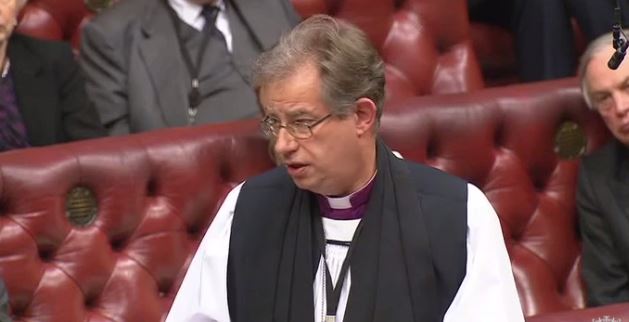 The Lord Bishop of Oxford: My Lords, like other speakers, I am grateful to the most reverend Primate the Archbishop of Canterbury for his leadership in this debate and in much else.
I speak this afternoon from three perspectives: as the bishop of a diocese with more than 280 church schools, both primary and secondary, and that number is rising; as a member of your Lordships’ Select Committee on artificial intelligence, which has been a fascinating enterprise; and as a grandfather with three, as yet unsuspecting, grandsons who will enter the education system in the next year or so. The eldest is two and a half and the youngest is just three months. Those grandsons will grow up in a different world. They will probably never drive or own cars; they will interact with screens and machines from an early age, something which is already happening; they will need to know how to set boundaries around their online lives; and their working life and their leisure will be more different from mine than my own is from my grandfather’s. Continue reading “Education debate: Bishop of Oxford says digital technology learning should be in ethics as well as skills”
 The Lord Bishop of Gloucester: I too thank the most reverend Primate for bringing forward today’s debate, and indeed for naming the recently established Church of England Foundation for Educational Leadership, of which I am privileged to be a trustee.
 The Lord Bishop of Ely: My Lords, as the lead Bishop for education in this House, I am grateful to my most reverend friend for the opportunity to address the crucial place of education in providing value and enabling every member of our society to contribute and flourish. We must continue to develop the curriculum to suit our developing industrial and commercial needs. This means that we must work to nurture and support our children and young people so that they may be employable on the grounds of their skills and their rich and steadfast character, and give them the support and foundations for good mental health that will be necessary throughout their lives, as we have already heard.
 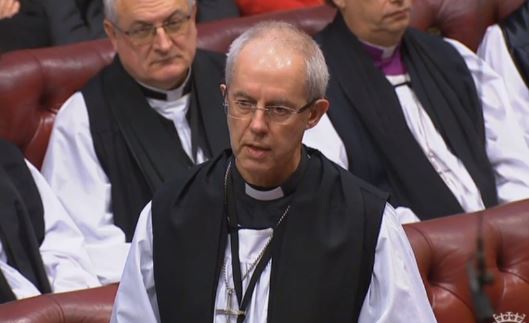 The Archbishop of Canterbury: My Lords, I am grateful to the usual channels for making time once again for me to lead a debate in your Lordships’ House. It is now something of a tradition for an Archbishop’s debate to be held in early December. Though a little later and less well established than the John Lewis advert, the appearance of an Archbishop on the order paper is a sure sign that Christmas is just around the comer.
 The Lord Bishop of Southwark: My Lords, I have come to your Lordships’ House today from Lambeth Palace, where I have been chairing the Zimbabwe round table. Also present at that meeting was the Bishop of Harare, the right reverend Dr Chad Gandiya, who is staying with me on his brief visit to this country. Yesterday Bishop Chad met with Rory Stewart, the Africa Minister. My conversations with Bishop Chad have further informed my own thinking on Zimbabwe—a country with which I have a long association, particularly through close links between my diocese and four of the five Anglican dioceses in Zimbabwe.
  The Lord Bishop of St Albans: My Lords, we have heard a great deal about urban areas in cities and the capital, but what about rural areas? What are Her Majesty’s Government doing to address the issue of homelessness in the countryside, where there has been a 52% increase in rough sleeping in our rural areas?
  The Second Church Estates Commissioner (Dame Caroline Spelman): I have had many recent discussions with Departments, particularly the Home Office, not least because of my Registration of Marriage (No. 2) Bill, which is in train. There is an identical Bill before the House of Lords that would achieve the same purpose of allowing mothers to sign marriage certificates. I am not precious about which Bill gets to the finishing line first—we just need to do it.
  The Lord Bishop of Coventry:
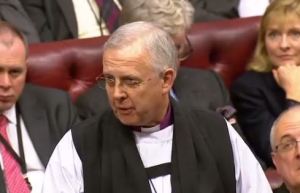 The Lord Bishop of Peterborough: My Lords, from these Benches I very much welcome the Statement and the sentiments in it, particularly its focus on the direct victims. However, there are also indirect victims of such attacks—those who are made to feel more afraid simply to go about their daily lives. That includes a lot of people, not least many in our Muslim communities. Does the noble Earl agree that, as a result of these attacks, it is very important to do all we can to increase the feeling of safety among those in Muslim communities, seeing them not just as people who must be targeted for information but as people who are part of our wider community and whom we must cherish and care for, helping them to feel safe and welcome? This includes not just community policing but many other areas of work with them, and it includes a very strong focus on dealing with right-wing extremism, which would threaten those communities.
  The Church of England in Parliament
You must be logged in to post a comment.