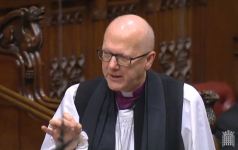
Bishop of Southwark asks Government about visas for ministers of religion

On 23rd March 2020 the Bishop of Southwark, Rt Revd Christopher Chessun, received a written answer to a question on visas for ministers of religion:
The Lord Bishop of Southwark: HL2370 To ask Her Majesty’s Government, further to the UK’s points-based immigration system: policy statement, published on 19 February, what changes, if any, they plan to make to the existing Tier 2 Minister of Religion Category.

Continue reading “Bishop of Southwark asks Government about visas for ministers of religion”

Week in Westminster, 16th-20th March 2020

This week in Parliament the Archbishop of Canterbury spoke in response to Government statements on the coronavirus pandemic, the Budget and the Windrush Lessons Learned Review. He also asked  about plans to build communities and affordable housing.

The Bishop of Rochester spoke in a debate on the Chancellor’s Budget statement, and the Bishop of Carlisle supported two amendments to the Government’s Divorce, Dissolution and Separation Bill.

The Bishop of St Albans asked a question on the humanitarian situation in Yemen and received written answers to questions on a review of the Gambling Act, and rural connectivity. The Bishop of Winchester received a written answer to a question about further education college mergers, and the Bishop of Salisbury received a written answer to a question on climate change and migration.

In the House of Commons the Second Church Estates Commissioner, Andrew Selous MP, answered questions  on church closures, coronavirus, persecution of Christians, and marriage support.

He also answered seven written questions from Jim Shannon MP, on carbon reduction, cashless donations, South Sudan, Uganda, lead theft and graveyard records, and a written question from Sir Desmond Swayne MP on marriages. Continue reading “Week in Westminster, 16th-20th March 2020”

Archbishop of Canterbury responds to Home Office Windrush Lessons Report

On 19th March 2020 the Home Secretary made a statement on the publication of the Windrush Lessons Learned Review. The statement was repeated in the House of Lords and the Archbishop of Canterbury, Most Revd Justin Welby, responded:

The Archbishop of Canterbury: My Lords, the publication of this Statement is very welcome indeed. The heartfelt nature of the apology was notable.​

I have a couple of questions about the recommendations to put to the noble Baroness. First, one of the historic failures of the Church of England—in many ways as bad as the hostile environment—was the terrible reception that we gave the Windrush generation, the vast majority of whom were Anglicans, when they came here. They were often turned away from Church of England churches, or were given a very weak welcome or no welcome at all. As a result, they went off and formed their own churches, which have flourished much better than ours. We would be so much stronger had we behaved correctly. I have apologised for that, and I continue to do so and see the wickedness of our actions. Continue reading “Archbishop of Canterbury responds to Home Office Windrush Lessons Report”

Archbishop responds to Government statement on coronavirus school closures

On 19th March 2020 the Archbishop of Canterbury, Most Revd Justin Welby, responded to the Government statement on school closures in light of the coronavirus crisis:

The Archbishop of Canterbury: My Lords, clearly the educational world is working extraordinarily hard—one welcomes that—in its determination to deal with an extraordinarily difficult situation very quickly and under huge pressure. If we follow the Imperial College analysis model that was recently published, we can see in certain circumstances the repeated waves of Covid-19 going on for 18 to 24 months. At what point will we begin to move towards a longer-term view of what needs to happen? Clearly, schools cannot be closed for two years. I wonder whether the Government have in their mind the planning for the eventuality of longer-term infectious prevalence in this country. Continue reading “Archbishop responds to Government statement on coronavirus school closures”

Bishop of St Albans asks about humanitarian situation in Yemen

On Thursday 19th March 2020 the Bishop of St Albans, Rt Revd Alan Smith, asked a question in the House of Lords that he had tabled on the humanitarian situation in Yemen.

The Lord Bishop of St Albans:

To ask Her Majesty’s Government what action they are taking to tackle the humanitarian situation in Yemen.

The Minister of State, Foreign and Commonwealth Office and Department for International Development (Lord Ahmad of Wimbledon) (Con):  My Lords, the humanitarian situation in Yemen remains the worst in the world. Some 80% of the population require humanitarian assistance. Alongside our diplomatic efforts to end the conflict, we have provided over £200 million in aid this current financial year. This has met the immediate food needs of more than 1 million Yemenis each month during the year. However, we are clear that the only way to address the humanitarian crisis is through a political settlement.

The Lord Bishop of St Albans: I thank the Minister for his reply and for the hard work that I know he and his colleagues are putting into this situation. However, Yemen is now also suffering terrible outbreaks of cholera and diphtheria, and now Covid-19 has come along as well. So the airports have been closed. What are Her Majesty’s Government able to do to ensure that food supplies, aid and medicines are still actually getting into the country and getting where they are needed? Continue reading “Bishop of St Albans asks about humanitarian situation in Yemen”

Church Commissioner Questions – Church closures, coronavirus, persecuted Christians, marriage support

On 19th March 2020 the Second Church Estates Commissioner, Andrew Selous MP, answered questions in the House of Commons on church closures, coronavirus, persecution of Christians, and marriage support. A transcript is below:

Church Commissioners

The hon. Member for South West Bedfordshire, representing the Church Commissioners was asked—

Church Closure and Use

Bob Blackman (Harrow East) (Con):

  1. To ask the hon. Member for South West Bedfordshire, representing the Church Commissioners, what criteria the Church of England uses to decide when to close a church and offer the building to other denominations and traditions. [901629]

The Second Church Estates Commissioner (Andrew Selous): I am pleased to be able to tell my hon. Friend that the Church opens as many, if not more churches than it closes each year. Parishes may want to focus their mission elsewhere, if the church in question is in a very remote rural location or if there is a very high repair bill. Use for worship by other Christian bodies is generally considered the best use, but there are many other suitable uses.

Continue reading “Church Commissioner Questions – Church closures, coronavirus, persecuted Christians, marriage support”

Bishop of Winchester asks about further education college mergers

On 19th March 2020 the Bishop of Winchester received a written answer to a question about further education college mergers:

The Lord Bishop of Winchester: HL2306 To ask Her Majesty’s Government what steps they are taking to facilitate local college mergers which (1) are in the interests of learners, (2) build financial resilience, and (3) ensure that provision serves local communities, especially in areas of disadvantage. Continue reading “Bishop of Winchester asks about further education college mergers”

Bishop of St Albans asks Government about rural connectivity

On 19th March 2020 the Bishop of St Albans received a written answer to two question to Government on rural connectivity:

 The Lord Bishop of St Albans: HL2563 To ask Her Majesty’s Government, following the announcement about the delivery of 4G mobile signal to 95 per cent of the country on 25 October 2019, how many full ‘not-spot’ communities in England will benefit from the Government’s investment in the Single Rural Network.

The Lord Bishop of St Albans: HL2564 To ask Her Majesty’s Government, following the announcement about the delivery of 4G mobile signal to 95 per cent of the country on 25 October 2019, what assessment they have made of the proportion of the population that live in full ‘not-spot’ communities that will benefit from that delivery. Continue reading “Bishop of St Albans asks Government about rural connectivity”

Bishop of Rochester responds to Chancellor’s Budget Statement

On 18th March 2020 the House of Lords debated the Budget Statement made the previous week by the Chancellor of the Exchequer. The Bishop of Rochester, Rt Revd James Langstaff, spoke in the debate:
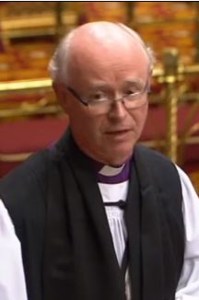
The Lord Bishop of Rochester:  My Lords, as many have already observed, this Budget comes in extraordinarily unusual circumstances, and in relation to the issues around Covid-19, subsequent to the Budget announcement, the Chancellor has brought forward a number of measures which have been largely well received, and no doubt others will need to follow. While voluntary action in our communities will form much of the day-to-day response to those who are the most vulnerable and potentially isolated across our nation, the sustaining of public services and of businesses is vital for both our social and economic well-being; other speakers have already begun to address some of those issues.​

Following the most reverend Primate the Archbishop of Canterbury is always a risky business, and other noble Lords have already spoken with considerable knowledge of these matters, so I shall focus my remarks on one or two specific issues and areas which were already matters of concern, and where that concern is perhaps greater because of the circumstances in which we now find ourselves.

On children and young people, I hugely welcome the long-overdue extension of higher-rate housing benefit for care leavers until the age of 25, thus giving stability in their accommodation beyond their 22nd birthday. This is something that the Church of England organisation the Children’s Society and other charities have campaigned for over some time, and it is most welcome. Also welcome is the £2.5 million for research on family hubs. However, what is not in the provisions of the Budget or subsequent provisions is sufficient funding to address the urgent need for every child to achieve a good start in life, and that is becoming more urgent in the light of the current circumstances. Continue reading “Bishop of Rochester responds to Chancellor’s Budget Statement”

Archbishop of Canterbury calls for vision of a ‘we’ society, alongside spending in response to coronavirus budget measures

On 18th March 2020 the House of Lords debated the Budget Statement made the previous week by the Chancellor of the Exchequer. The Archbishop of Canterbury, Most Revd Justin Welby, spoke in the debate:

The Archbishop of Canterbury: My Lords, a Budget is social morality in numbers. Whatever we say we believe about the dignity of human beings and about the existence or otherwise of society, the reality of our belief is demonstrated by the way we act, and especially by the way we act with money. The crisis through which we are passing will change this nation in deep and unpredictable ways, as the noble Lord, Lord Oates, has just said. Like a nuclear explosion, the initial impact is colossal, but the fallout lasts for years and will shape us in ways we cannot even begin to predict at the moment.

The Budget and the extra package announced yesterday must be both adequate in amount and sufficient in their aims to ensure that this country emerges confident from overcoming the virus—positively better than before it began. We will overcome the virus. The noble Lord, Lord Tunnicliffe, commented that small groups all over the country are showing fresh signs of community spirit and collaboration, and it is from those small groups, through to the large-scale government measures, that things will change.

Continue reading “Archbishop of Canterbury calls for vision of a ‘we’ society, alongside spending in response to coronavirus budget measures”