
During a meeting of the House of Lords on 18th August 2021 to discuss the situation in Afghanistan following withdrawal of international troops and the Taliban entering Kabul, the Archbishop of Canterbury paid tribute to the people of Afghanistan and urged that the government policy towards refugees be guided by morality rather than numbers:
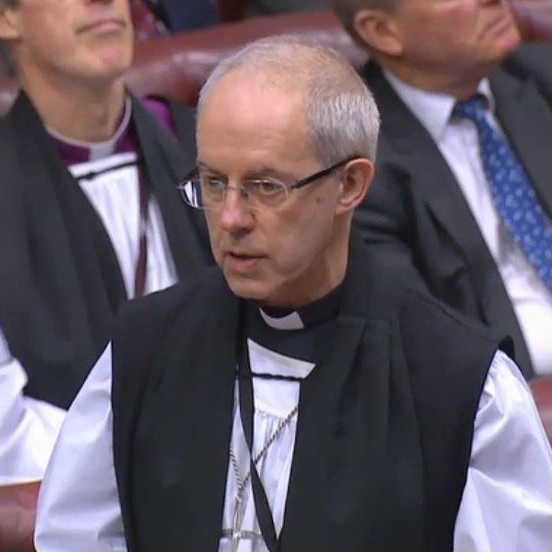
The Lord Archbishop of Canterbury: My Lords, I look forward especially to hearing noble and gallant Lords, diplomats and others with local knowledge of Afghanistan. We rightly remember the courage, suffering and sacrifice over the past 20 years and the courage being shown currently by our ambassador and service- people in Afghanistan, together with their colleagues, and reporters.
When we look back, I remember a cathedral full for the funeral of a soldier: family and many colleagues silent in dignity, some wounded, mourning their loss. The failure we face today is not military or diplomatic—they did all they could—it is political. Recovery and hope will come to Afghanistan with our supporting commitment to the neediest and most desperate. We have proven capacities in soft as well as hard power. We owe an absolute, lavishly generous moral covenant to all those who are at risk because they served with us in Afghanistan or took seriously our frequently professed commitment to its future, women and girls included.
An Afghan refugee, now a UK citizen, said to me this week, “Families, in such times of trouble, belong together.” His words are not politics but humanity. This is about morals, not numbers. Will the Government confirm that their policy will reflect moral obligation and not be controlled by numbers?
In Pakistan, a country facing huge pressure, including from refugees, we must undertake dialogue and support, learning afresh the religious and cultural literacy which is essential to effective work. We must not put any groups there or in Afghanistan into a corner where they may be driven to greater extremism. The aid we offer must support dialogue, inspire hope and prepare reconciliation, and must be genuinely additional, not a transfer from other places of need. I ask the Government: will that be the case?
We must renew commitment to freedom of religion and belief everywhere, a point not much mentioned so far. That will count in Pakistan and Afghanistan for Christians and religious communities such as Shia, Hindus, Jains, Ahmadis and Sikhs. A WhatsApp from a Christian in Afghanistan yesterday asked for support there and in Pakistan. Memorably, he said, “I am willing to die for Jesus, but I do not want to die forgotten.”
This is a very bad time, especially for so many in Afghanistan and for those who serve there. It is a time for prayerful humility and for us to display generosity, virtue and courage. Rebuilding our reputation in such ways will give many others hope as well.
Extracts from the speeches that followed:
Lord Blunkett (Lab): I introduced the gateway programme all those years ago, which is now renamed the resettlement programme. It is crucial that there be a safe corridor, but it is also, as the most reverend Primate the Archbishop of Canterbury said this morning, critical that we engage with Pakistan. Anyone who read Charlie Wilson’s War will understand precisely why the Taliban retained the capacity to be able to sweep aside the Afghan forces over recent months. Pakistan has played both a constructive and a very destructive role over the last 20 years. Now is the time to engage with it, but it will take a combined effort across the globe to ensure that we put right the terrible disaster that has befallen the people of Afghanistan over recent days. It could easily be reflected in a resurgence of the jihadists, who have rejoiced at what has happened.
Today is a very sad day for us all, but there is something to learn from and reflect on in terms of our humanitarian commitment and our willingness to re-engage with security.
Baroness Altman (Con): I too pay tribute to the bravery and dedication of our troops, local staff and aid workers and to those Afghans who helped us. In the name of humanity we must live up to our moral debt, as the most reverend Primate stated, to all those at risk in a Taliban Sharia state: Christians, other religious minorities, journalists and BBC staff there, as well as so many brave women now at risk, including those female judges who risked their lives to uphold our vision of the law, not the Taliban’s version that is now to be imposed. What is the Government’s estimate of the numbers of people involved here?
In closing, I urge greater appreciation of our western freedoms, which are often taken for granted: freedom of religion, equality, women’s rights, respect for diversity. Most of us assume these values will always be there for us. But we are not the global norm. Having worked so hard to build and maintain these values, it saddens me that so many in our country have criticised our past. It is tragic that today’s western leaders, after encouraging other countries to adopt and aspire to our freedoms, have abandoned them too rapidly. Short-term populist thinking has meant that the US lost patience before the Afghan people were ready to live with our values. We are honour bound to help as many as we can.
Baroness Northover (LD): Noble Lords have been acerbic about the plan which, as my noble friend Lady Ludford pointed out, was announced only last night: that we should take 20,000 refugees but over five years, waiting for most of them to be at major risk first, it seems. As the most reverend Primate the Archbishop of Canterbury said, this needs to be a moral issue, not a numbers issue. Safety from the Taliban should not be for just foreign nationals or the lucky few who made it in time to Kabul airport. How exactly, with an internet blackout, are people to fill out applications to leave? Do the Government recognise that anyone seeking to leave now puts themselves at risk because of Taliban control of all areas with their checkpoints?
There are so many who need to be helped: Afghan interpreters, to whom the noble Baroness, Lady Coussins, and others referred; journalists, especially women journalists and those working for the BBC; parliamentarians, especially women parliamentarians. I think particularly here of those with whom I have engaged and praised for their returning to their country of birth, and feel so worried now for them, as is my noble friend Lady Hussein-Ece. There are those who worked with the British Council; women judges, as mentioned by the noble and learned Lords, Lord Judge and Lord Goldsmith; those involved in teaching girls—this was an area that the Prime Minister said was a priority for him. There are Chevening scholars and others. It was astonishing that, at first, the Government were asking Chevening scholars to wait. What on earth were they thinking of? There are vulnerable UN workers and aid workers—so much of the economy was associated with reconstruction; so many will be at risk now.
Lord Ahmad of Wimbledon (Con, Foreign Office): Turning to human rights, I am also the Human Rights Minister. Issues around women and minorities are close to my heart. The most reverend Primate the Archbishop of Canterbury mentioned minorities and my community, the Ahmadis, in Afghanistan. Christians, Hindus and Sikhs were raised by my noble friend Lady Verma, among others. All of them are among our primary concerns in our dealings. I pay tribute to the work of noble Lords in your Lordships’ House, including the noble Baronesses, Lady Smith, Lady Royall and Lady D’Souza, and my noble friends Lady Hodgson and Lady Anelay, who have done sterling work on women’s rights. I will continue to work very closely with them on this important issue in Afghanistan. The Government maintain in the strongest terms their stance that the Taliban must protect and uphold human rights, including those of women, girls and minorities—and, as I said earlier, I noted the comments made about other groups.
 The Church of England in Parliament
You must be logged in to post a comment.