
The Bishop of Blackburn spoke in a debate on the second reading of the Police, Crime, Sentencing and Courts Bill, noting the lack of reference to faith communities and calling for more recognition for those communities in the bill:
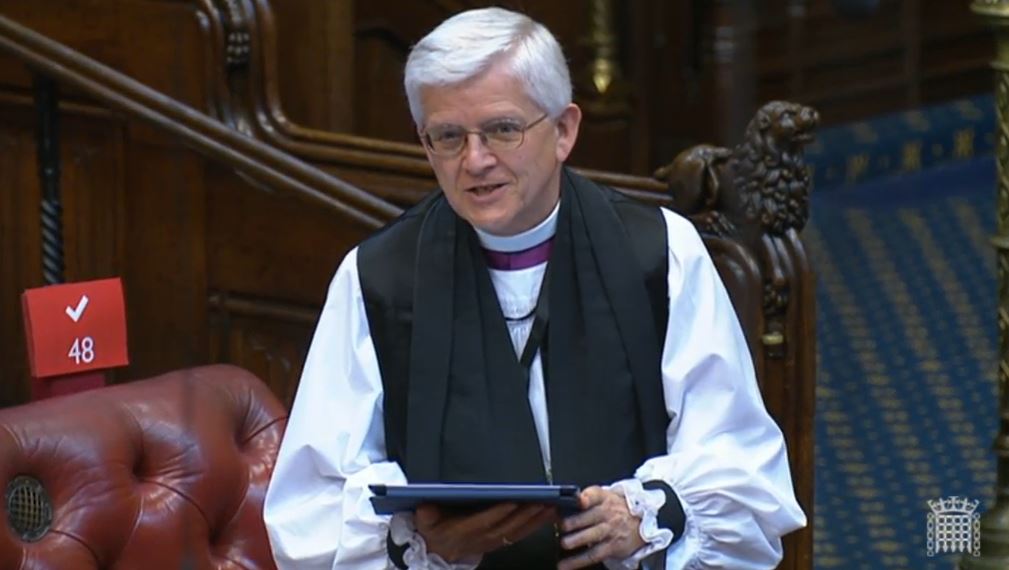
The Lord Bishop of Blackburn: My Lords, I offer to the noble Lord, Lord Sandhurst, my congratulations on his maiden speech. We are glad to welcome him to this House.
With so many words in this wedge of a Bill, it is easy to forget that we are talking about people—as someone said earlier, real people—and the potential consequences for real lives. There is a huge responsibility, therefore, to get these details right, for both the police and the public. The noble Baroness, Lady Chakrabarti, is right, that deep scrutiny is needed here in this House. An example of the wide range of the Bill and the important but almost impossible nature of covering all of its detail is that, although my friend the right reverend Prelate the Bishop of St Albans is unable to attend today’s proceedings, he has asked me to relay his intention to amend the Bill in Committee, to strengthen the ability of the police to deal with the issue of hare coursing. That is something to look forward to.
My main point—and noble Lords might expect me to spot and say this—is that there is an absence of almost any reference to the work of faith communities in several key areas in the Bill. Despite the differences between different faith bodies, this huge army of volunteers is present and active in nearly all communities. One good example is in Part 2, Chapter 1, where there is a consultation on plans to prevent and reduce serious violence, and consultation with education, prison and youth custody authorities. There is no mention of the faith communities that have a particularly good local source of knowledge and experience on the ground. Again, in Chapter 2 of that part, in the homicide review, members of the faith sector may have been intimately involved in issues leading up to that event, and will almost definitely have been caught up in the support and care for family members thereafter, when they conduct a funeral or other bereavement care. The same point applies, for the need of a reference to the faith community, regarding the rehabilitation of offenders, the referral of offenders, the remand of young people and the management of sex offenders. Massive investment is made by all faith communities and specific charities in serving the people most affected by the Bill. That ought to be recognised and included, as was referred to by the noble Lord, Lord Rooker.
I have two different points to make on Part 4, in support of the noble Baroness, Lady Whitaker. I cannot see why it is necessary to include Clause 62(1)(3) and the mention of those residing on land not their own not returning for 12 months. That implies that they could return in 12 months. That clause should be removed. Clause 63 needs to include a reassurance that if the court requires the forfeit of a vehicle and possessions, the people and families who live in those homes are not losing their home. This aspect of the Bill should not remove the homes of the Traveller and Roma community, but simply ensure they are on land appropriate for their use.
Finally, I have three questions on Part 1, in support of the noble Lord, Lord Davies of Gower. I support the idea of a police covenant report on the well-being of our much-valued police force, but does the Secretary of State have the resources to gather the material each year? Is an annual report far too frequent? If it is annual, it will be a permanent, rolling piece of work. As soon as one report is finished, work will have to start on the next. Is it possible to compare our unique police force with other professional bodies, and use that comparison as a criterion for assessment? There must be a better way of assessing the information. Ought there not be a call for more than a report? We are so good at producing piles of paper that get received and approved but then lead to little action. I would include a requirement in this report, prescribed by the Bill, for the Secretary of State to produce a series of recommendations that improve the conditions and well-being of the police and their families. We need to do more than simply know how they are.
Extracts from the speeches that followed:
Baroness Williams of Trafford (Con): Many noble Lords, including the noble Baroness, Lady Whitaker, the noble Lord, Lord Paddick, and the right reverend Prelates the Bishops of Blackburn, Manchester and Gloucester, expressed concerns about the provisions in Part 4 relating to unauthorised encampments. I must assure the House that this is not an anti-Traveller measure and it should not be portrayed as such. Those who cause harm are a small number, who often give an unfair and negative image of the vast majority of Travellers, who are completely law-abiding. The measures allow police to tackle unauthorised encampments where they cause significant damage, disruption and distress to communities and landowners. It has to be considered that it must be time-consuming and often costly for landowners to have unauthorised encampments removed or indeed to have to clean up after them. It is only right that the Government seek to protect law-abiding citizens who are adversely affected by some unauthorised encampments, a point well made by my noble friend Lord Goschen.
 The Church of England in Parliament
You must be logged in to post a comment.