
On 15th November 2021, the House of Lords debated amendments to the Police, Crime, Sentencing & Courts Bill. The Bishop of Gloucester spoke in the debate, supporting amendments designed to scrutinise the continuation of indefinite Imprisonment For Public Protection (IPP) Sentences:
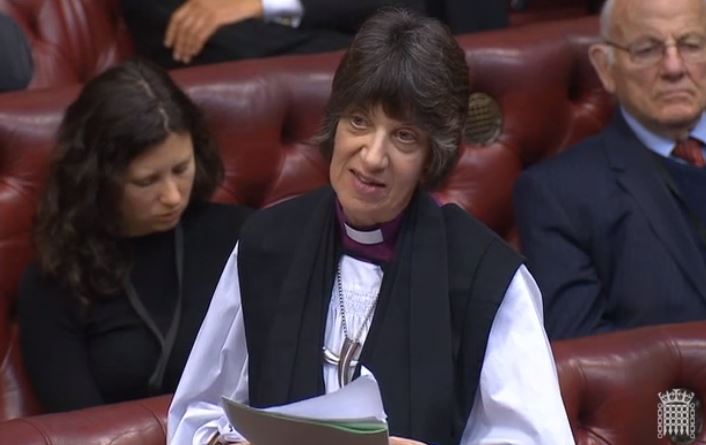
The Lord Bishop of Gloucester: My Lords, I add my voice to those who have already spoken in favour of these amendments. I declare my interest as Anglican Bishop to Her Majesty’s Prisons.
All the detail I was going to mention has already been carefully and expertly explained; again, I pay tribute to the organisations that have been named, including the Howard League, the Prison Reform Trust and UNGRIPP, for their excellent briefing reports and research. It resonates strongly with all the conversations I have with people in prison and family members who write to me or send me emails. The thing I am struck most by is the sense of hopelessness; many noble Lords have mentioned that. I am a proud patron of Prison Fellowship, whose motto is:
“We believe no one is beyond hope.”
We really need to listen to that in this debate.
The indefinite IPP licence goes against all the evidence about what enables people to move away from offending. As we have heard, people need to feel hopeful about their future. They need to have a plan to work at. As we have heard, the IPP licence stops people being able to look forward to a different future. It disrupts relationships and breeds anxiety, despair, hopelessness and alienation. Much more could be said, but I think it has all been said; I am heartened by the strength of feeling so apparent in your Lordships’ House.
I agree that this Bill provides a timely opportunity to address this enormous injustice of IPP sentences. I stand with those seeking to make these changes.
Extracts from the speeches that followed:
Lord Hunt of Kings Heath (Lab): I refer back to the speech made by the noble Lord, Lord Marks, when he referred to the briefing from the charity Women in Prison. This related how more than 53,000 children each year were affected by their primary carers being sent to prison and that 95% of children whose mothers are in prison were forced to leave home. One sentence encapsulated it for him:
“‘We’ve been sentenced’, says a mother, ‘but they’ve been sentenced with us.’”.—[Official Report, 1/11/21; col. 1036.]
The point was also at the heart of the contribution made by the right reverend Prelate the Bishop of Gloucester. She said that parental imprisonment was, for the children concerned, a well-recognised predictor of mental ill-health, poor educational achievement and employment prospects, and future criminality. It sets a context for discussing the particular circumstances of Baby A and pregnant women prisoners.
Lord Hodgson of Astley Abbotts (Con): Wherever you stand on the political spectrum, we can surely all agree that the rate of reoffending by prisoners on release is a reproach to us all. Further, in a well-ordered society, we should be making every effort to reduce it. This is one of the things behind the amendments that he and I have tabled.
Why is this? First, there are some hard economic numbers: the costs of our Prison Service and the ancillary services to back it up are stupendous. But there are other, more hidden but very severe social costs that are difficult to measure but nevertheless have a huge impact on our society over the long term: on the prisoner’s family, partner and children, who grow up in very disadvantaged circumstances, with greatly reduced life chances. As the noble Lord, Lord Blunkett, pointed out, there are other hidden costs. The people who have suffered from crime are traumatised by it. Elderly people whose houses have been broken into find it hard to leave their homes and go out. There is a very severe pressure on the fabric of our society, and it leads to neighbourhoods in which suspicions and concerns run rife.
While of course I understand and regret the economic and social costs, the basic issue for me is the point made by the right reverend Prelate the Bishop of Gloucester: it is about common humanity and behaving decently to our fellow citizens, to offer them the best chance of getting back on their feet. At no time is common humanity more needed than at that most vulnerable time when the prisoner is first released.
 The Church of England in Parliament
You must be logged in to post a comment.