
The Bishop of Gloucester tabled an amendment to the Police, Crime, Sentencing and Courts Bill on 15th of December 2021, requiring courts to reference the impact of sentencing on primary carers of dependent children:
85: After Clause 132, insert the following new Clause—
“Pre-sentence report requirements
(1) Section 30 of the Sentencing Act 2020 is amended as follows.(2) After subsection (3) insert—“(3A) A court must make inquiries to establish whether the offender is a primary carer for a child.(3B) If the court establishes that the offender is a primary carer for a child, unless there are exceptional circumstances before sentencing the offender the court must obtain a pre-sentence report containing information to enable the court to make an assessment of the impact of a custodial sentence on the child.”(3) After subsection (4) insert—“(5) In this section—(a) “child” means a person under the age of 18; and(b) “primary carer” means a person who has primary or substantial care responsibilities for a child.””Member’s explanatory statement
This Clause amends section 30 of the Sentencing Act 2020 to make clear the requirement for a sentencing judge to have a copy of a pre-sentence report, considering the impact of a custodial sentence on the dependent child, when sentencing a primary carer of a child.
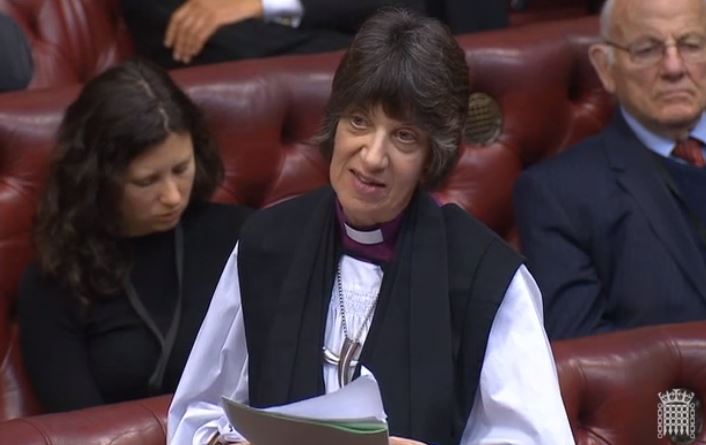
The Lord Bishop of Gloucester: My Lords, in moving Amendment 85 I will speak also to the other amendments in my name in the group. I am very grateful for the support of the noble Lords, Lord Ponsonby and Lord German. I am very grateful for the briefing and expertise provided to me by the organisation Women in Prison and I declare my interest as Anglican Bishop for Her Majesty’s Prisons.
In Committee I highlighted the injustice of punishing a child for their parent’s mistakes and I will not go over that ground again. But I want to frame this discussion by reminding us that when a parent goes to prison it can affect every area of a child’s life, from losing their familiar home and school through to reduced educational achievement and mental and physical well-being. The consequences can last a lifetime.
It is also important to highlight again that the imprisonment of a household member is one of 10 adverse childhood experiences known to have a significant negative impact on a child’s long-term well-being, including life expectancy. It raises the possibility of children being imprisoned themselves at some point in their lives. However, I want to be very clear on that point that there is nothing genetic about offending. If a child is failed by the system, left disenfranchised and excluded, we have failed them. We must do all we can to ensure that children can reach their potential.
In response to the Government’s counter-arguments in Committee I wish to make three points, knowing that other noble Lords will provide more detail. First, on pre-sentence reports, the Minister said in Committee that
“a request to the court for an adjournment in order to prepare a pre-sentence report is considered mandatory in cases involving primary carers”.—[Official Report, 1/11/21; col. 1041.]
However, as I understand it, the sentencer does not have to accede to that request and a PSR will be obtained only if the sentencer requests it. Making it mandatory for probation to request a PSR still does not create an obligation on a sentencer to request one.
Over the past decade there has been a decline in PSR volumes and a shift from written to oral PSRs. There are three delivery methods of pre-sentence reports: oral reports and fast delivery reports are both usually delivered on the same day as the court hearing by the court duty probation officer, while standard delivery reports require more detail and are delivered after an adjournment of up to 15 days to obtain additional information.
A research and analysis bulletin from HM Inspectorate of Probation in 2020 found that the recent shift towards oral PSRs, with a focus on speed and timeliness, has impacted on the quality of information provided to courts. In 2018-2019 58% of reports were orally delivered rather than written, twice as many as in 2012-2013, while 39% were fast delivery reports and only 3% were standard delivery reports. I am encouraged that between March and May 2021 a pilot commenced between the Ministry of Justice, HMCTS and the probation service of an alternative delivery model to increase the number of cases receiving pre-sentence reports from 53% to 75%. I note that women are identified as one of three primary cohorts for higher-quality reports on the day.
However, I believe the pilot focuses on delivering written fast delivery reports for women produced on the same day rather than full standard pre-sentence reports, which would enable more time for information to be sought in relation to children and the impact of a sentence on them. It is true that some sentencers request pre-sentence reports when sentencing a primary carer, but not all do. The point of this amendment is to ensure that judges and magistrates have the full picture when sentencing.
I come to sentencing guidelines. Provided by the Sentencing Council to judges and magistrates, they already acknowledge the devastating impact of parental imprisonment. In Committee, the Minister said:
“Courts are required by law to follow those guidelines, and the guidelines specify that being a ‘Sole or primary carer for dependent relatives’ is a mitigating factor when sentencing an offender.”—[Official Report, 1/11/21; col. 1039.]
It is my understanding that being a sole or primary carer can be a mitigating factor, but it is up to the judge to decide whether they consider it as such, so it is left to the sentencer’s discretion whether they consider it a factor which should change the sentence. It therefore cannot be said that the guidelines create an obligation on sentencers to consider dependent children.
On the ground, there is evidence that these guidelines are not always being consistently and robustly applied. Dr Shona Minson has carried out research into the application of the guidelines being applied in sentencing. She spoke with 20 Crown Court judges and asked:
“What kind of personal mitigation most often influences you in sentencing decisions?”
Half of the judges interviewed thought of family dependants. Half of them did not. So it seems that judges do not take a consistent view on the relevance of dependants as a factor in mitigation. According to Dr Minson’s research, judicial understanding of the guidelines in case law, which set out the duties of the court in relation to considering dependants in sentencing, is limited and, at times, incorrect.
In Committee, the Minister said that the judiciary “get it” when it comes to sentencing mothers. I think that this assertion needs testing. In fact, we simply do not know the number of women in prison who are primary carers, so it is no more than speculation to say that judges “get it” on this issue. If the Minister is basing his assertion on the decline in the number of women in prison, the latest annual prison population projections explain that this recent decline
“is likely driven by a drop in prosecutions and sentencing as a result of the COVID-19 pandemic … lockdowns have affected the mix of cases brought to criminal courts and restricted the courts’ ability to process cases”.
Between 2013 and 2019, the women’s prison population remained relatively consistent. Indeed, the fact that 500 new women’s places are being built is not a sign that women’s prison places are projected to fall.
Finally, I come to the importance of data. I was really encouraged to read in the recently published White Paper on the prisons strategy that the Government intend to
“begin recording data on prisoners’ family circumstances and caring responsibilities, and conduct analysis to better understand the circumstances and needs of offenders.”
I applaud and welcome this as a step in the right direction. Without data, we are making policy in the dark. I should welcome confirmation from the Minister on the timeline for this. Amendment 88 in this group asks that this data be collected at sentencing, disaggregated by gender, ethnicity, sentence and offender type, and made publicly available. I should welcome further discussions with the Minister to ensure that we are collecting the right type of information.
In conclusion, as a Christian, I believe that each precious and unique child is made in the image of God and must be treated with dignity and respect. I know from the work of charities such as Children Heard and Seen the devastating impact that losing a parent to prison can have on a child of any age. Research from the Prison Reform Trust found that children with a parent in prison felt invisible. We must consider the rights of children to a family life. At the heart of these amendments is not a plea never to send a mother—or, indeed, a father—to prison. Instead, I hope that we might work towards preventing long-term harm for children whose parents have done wrong but for whom a community penalty is more appropriate for both the offender and the children. I look forward to hearing what the Minister has to say. I will be listening carefully but, at this point, I flag that I am minded to test the opinion of the House on the amendment. I beg to move.
Extracts from the speeches that followed:
Lord Bradley (Lab): My Lords, I rise to speak—briefly at this hour—to this group of amendments and declare my interest in the register, particularly as a trustee and vice-chair of the Prison Reform Trust.
I strongly support these amendments, which have been so effectively moved by the right reverend Prelate the Bishop of Gloucester. I support everything she said. It is essential that the courts fully take into account primary caring responsibilities, especially for a child, in their sentencing decisions and recognise the consequences of not doing so on the impact on the child and the family.
I will not repeat all the arguments that I made in Committee, but, as we have heard, the key document before the courts at sentencing is the pre-sentence report. However, as the charity Women in Prison has pointed out in its supplementary evidence to the Justice Select Committee, the information from Her Majesty’s Prison and Probation Service shows a real decline in proper pre-sentence reports over the past decade. In 2010, for example, pre-sentence reports were available for 62% of all court disposals, reducing to only 53% in 2018. Almost half of the sentences that result in a custodial or community order have no new pre-sentence report prepared to inform the sentence. We have heard—and I support—the improvements that are being looked at in this area but that is the current situation and it must be urgently addressed.
Lord German (LD): My Lords, I too pay tribute to the right reverend Prelate for her dedicated work in this matter. We could see her laser-like approach to looking at each of the issues facing this group of people, which are clearly addressed in these amendments. These amendments cover a range of issues, but I would like to take up the points already made by the right reverend Prelate, the noble Lord, Lord Bradley, and the noble Baroness, Lady Bennett, about data.
It is interesting that on 6 December, the Minister, in replying to the right reverend Prelate the Bishop of Gloucester, said:
“We do not hold current figures on how many women in prison aged (1) 18 to 24 or (2) 25 years or older have dependent children.”
I appreciate that there is attention being given to this for the future, but I can only echo the words that, if you do not know, then you are going to be making policy in the dark, as the right reverend Prelate said right at the beginning.
However, figures have been produced by the Howard League. I think it gained these figures by doing an analysis of what it could glean from talking to prison governors and staff. We know that women make up 5% of the prison population but are more likely than male prisoners to be serving short sentences for non-violent offences. The majority of those women experienced childhood abuse, and many are victims of domestic abuse, so they are more likely than male prisoners to report poor mental health and problems with alcohol and drugs.
Here is the crucial figure: the Howard League says that two-thirds of female prisoners are mothers of dependent children, and that at least a third of these are single parents. That means around 17,000 children are separated from their mothers by imprisonment each year, and the vast majority of them are moved out of their homes as a result. I am sure that every noble Lord here can understand the strong detrimental effect that has on their development and well-being. The harsh impact on the welfare of their mothers goes far beyond the impact of the imprisonment itself.
Lord Ponsonby of Shulbrede (Lab): My Lords, I have also put my name to these amendments, so ably moved by the right reverend Prelate the Bishop of Gloucester, and I support them. I have to confess that, as she was speaking to each amendment, I was mentally going through the processes I go through as a sentencer. She introduced her comments by talking about probation reports. As I have mentioned, I became a magistrate about 14 years ago, when there were no oral reports, and fast-delivery reports were only just being introduced.
Most of the time, we saw standard reports. There has been an evolution over the last 14 years. There are oral reports, fast-delivery reports and standard reports. In the youth court we have far more enhanced reports, which are 10 to 20 pages long, and in the domestic abuse courts we will be more informed of the family situation when sentencing somebody convicted of a domestic abuse-related offence.
I do support these amendments. The reports put in front of magistrates’ courts and Crown Courts need to be appropriate, and, of course, they need to include the family circumstances of the person being sentenced. The great dilemma, in any system, is to get enough information in a timely manner but not so much that it delays things. I remember that when oral reports were first introduced in magistrates’ courts, we very much appreciated that, because we had experienced probation officers who would interview the offender on the day and come to the court and tell us the various pros and cons of the sentencing options. We knew those probation officers and trusted them to give us a balanced view and guidance on the appropriateness of certain sentences.
That is a good example I have just given. There are, of course, less good examples where we may not have been made aware of the family responsibilities of the person we were sentencing, and there is an absolutely consistent dilemma, whenever one is sentencing, over whether one has a whole picture.
Lord Wolfson of Tredegar (Con, Ministry of Justice): I turn to Amendment 85. As I set out in Committee, current legislation already requires the court to obtain a pre-sentence report in all cases unless the court deems it unnecessary on the facts of the case—for example, if the offender had been before the court three weeks earlier and a pre-sentence report was obtained then. This requirement is reflected in the sentencing guidelines, which courts have to follow. When sentencers request pre-sentence reports, guidance introduced in 2019 mandates probation practitioners to request an adjournment to allow time to prepare a comprehensive pre-sentence report in all cases involving primary carers and for those at risk of custody.
I am keen to reassure the right reverend Prelate that a key objective of this Government’s reforms is to improve both the quality and the prevalence of pre-sentence reports in the justice system. We heard first-hand experience from the noble Lord, Lord Ponsonby, about the quality of pre-sentence reports, which can be extremely good. We want to ensure that that quality is consistently good.
The Lord Bishop of Gloucester: It is good to hear what the Minister has to say. Some of those points were things that I challenged when I talked about the mandatory comments on PSRs. It was good to hear the Minister say, “We want to improve things; we want to improve the quality”. This amendment would ensure that the “I want” becomes something in legislation. I would go back as far as the Farmer review, where, even then, the issue of the potential for inconsistency in PSRs was raised.
There is still a gap between what is being said and the evidence. For that reason, although I know it is late, I would like to test the opinion of the House. This amendment would not in any way compromise the decision-making discretion of judges but, I hope, would be useful in assisting judges by ensuring that they have all the right information. Although it is late—I cannot help that—I would like to test the opinion of the House on Amendment 85.
The amendment was voted on and was disagreed: Content: 30 / Not Content: 79
 The Church of England in Parliament
You must be logged in to post a comment.