Bishop of Oxford asks about gas boilers in new build homes

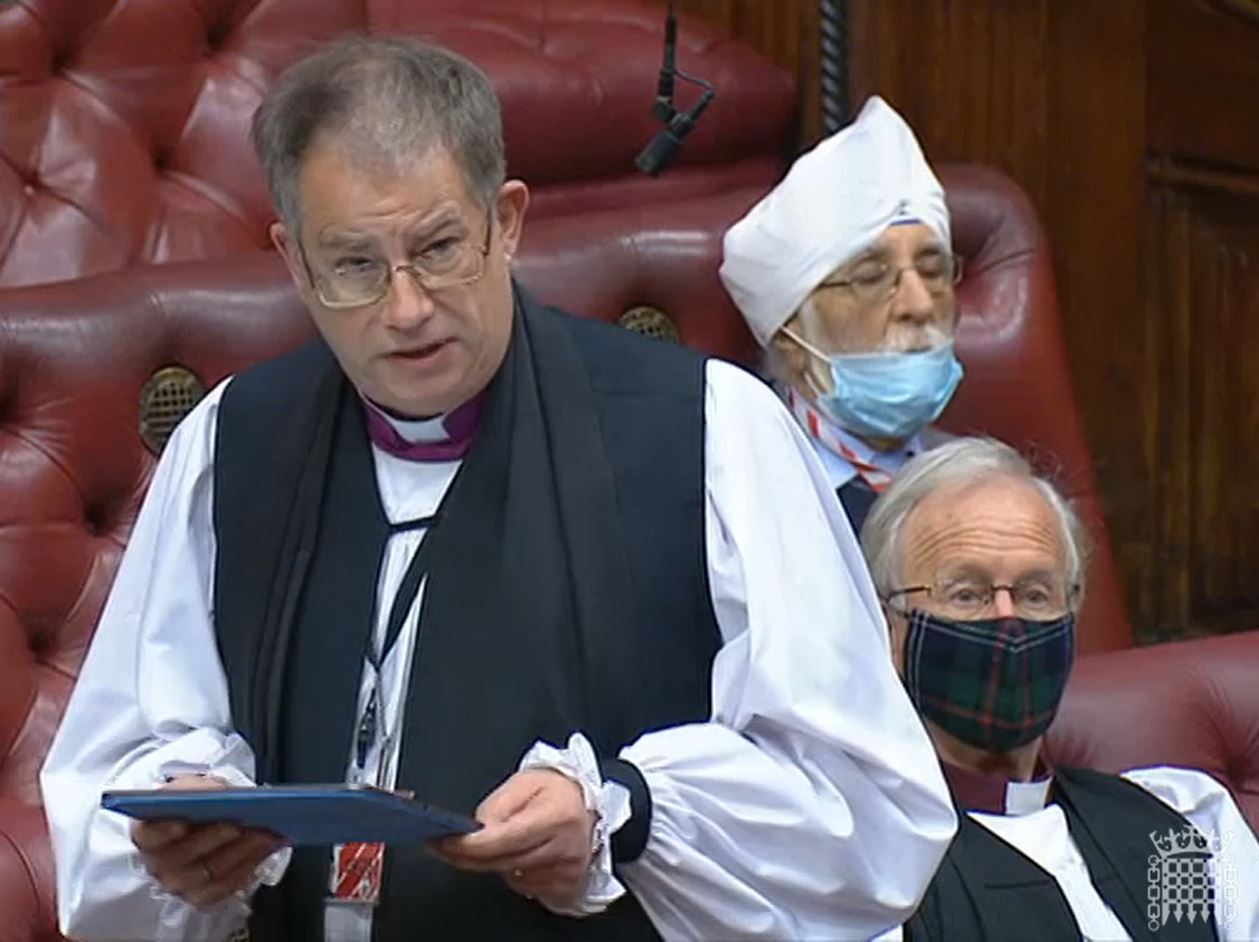
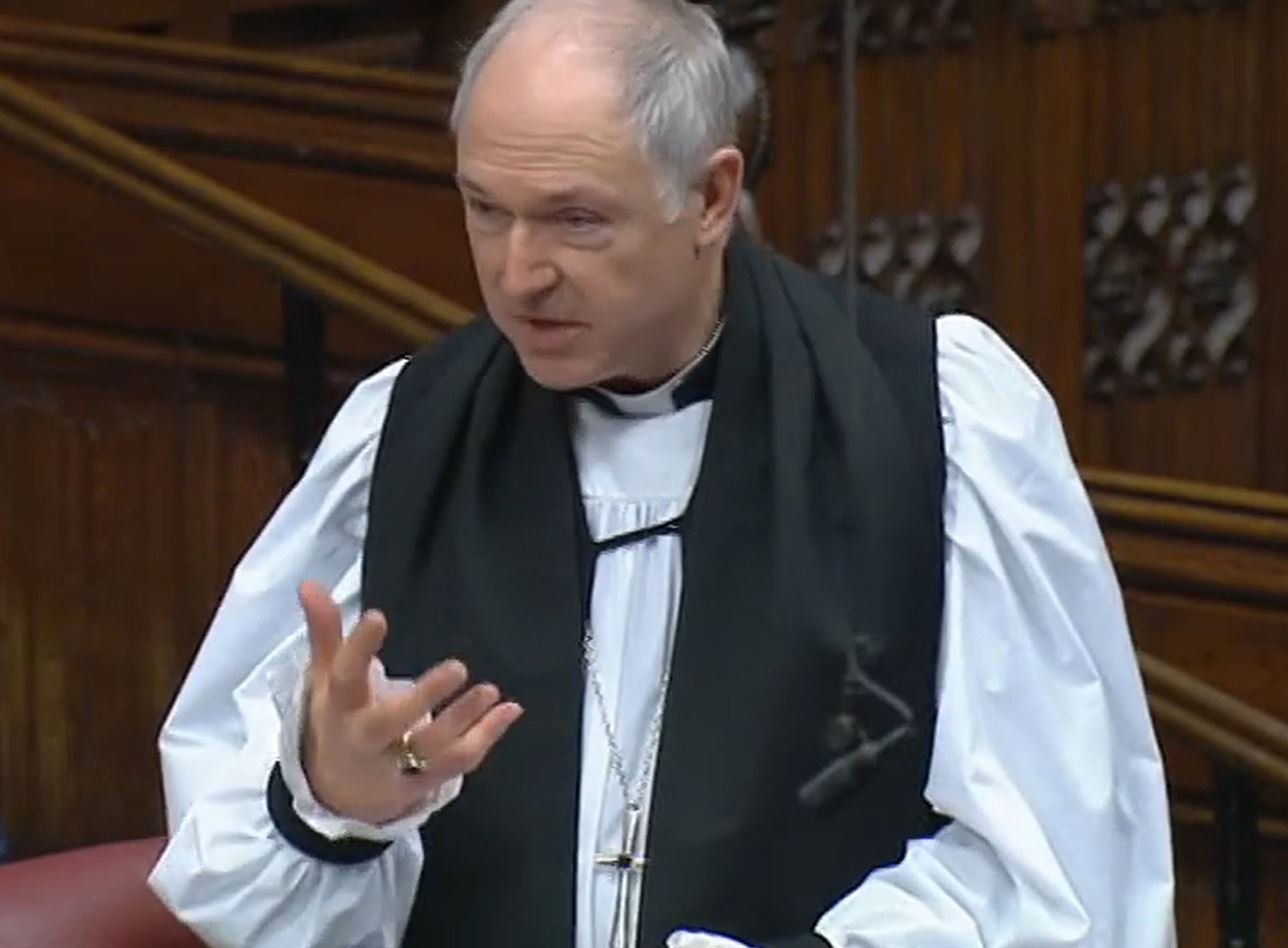
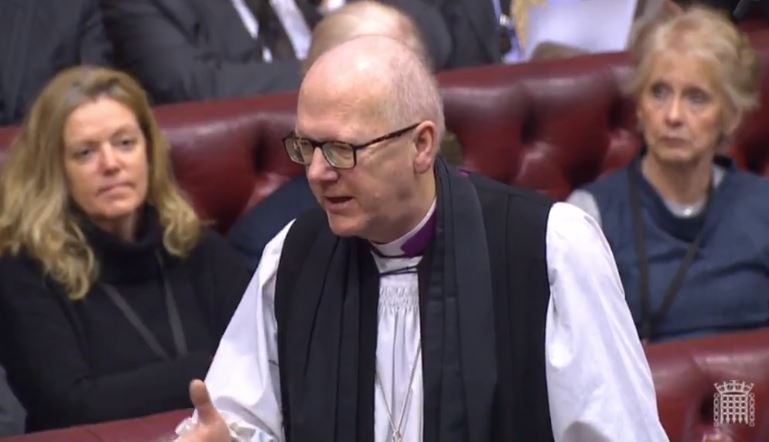
The Bishop of Oxford asked a question on the government’s heat and buildings strategy, and whether the government planned to change the target date for banning the installation of gas boilers in new build homes, on 28th February 2023:

The Lord Bishop of Oxford: To ask His Majesty’s Government what assessment they have made of progress on their Heat and Buildings Strategy, published on 19 October 2021; and whether they have any plans to change the date of 2025 for banning the installation of gas boilers in new-build homes.

Continue reading “Bishop of Oxford asks about gas boilers in new build homes”

Bishop of Durham asks about admissibility of asylum applications

The Bishop of Durham received the following written answer on 28th February 2023:

The Lord Bishop of Durham asked His Majesty’s Government:

  • what is the average processing time for a decision on the admissibility of an asylum application
  • how many individuals’ asylum applications were declared inadmissible in 2022; and what percentage of such individuals were returned to a safe or third country.
  • how many individuals, whose applications were declared inadmissible for asylum but who were unable to be returned to a third country, have been added to the list of asylum applications.
Continue reading “Bishop of Durham asks about admissibility of asylum applications”

Bishop of Exeter asks about preventing antimicrobial resistance

The Bishop of Exeter received the following written answers on 28th February 2023:

The Lord Bishop of Exeter asked His Majesty’s Government what assessment they have made of the ‘One Health’ approach outlined in the report by the United Nations Environment Programme’s Bracing for Superbugs: Strengthening environmental action in the One Health response to antimicrobial resistance, published on 7 February.

Lord Benyon (Con): The Government is aware of the report and Environment Agency staff contributed to initial United Nations workshops that led to its commission. Now that the report has been published, we will assess the content and conclusions. Defra, the Environment Agency and UKHSA are currently working together to investigate antimicrobial resistance in the environment under the Treasury-funded Pathogen Surveillance in Agriculture, Food and Environment (PATHSAFE) project. The Environment Agency is developing possible surveillance methods and data systems that could be used in the future to help us better understand and mitigate environmental antimicrobial resistance.

Continue reading “Bishop of Exeter asks about preventing antimicrobial resistance”

Bishop of St Albans asks about support for domestic businesses amid the rising cost of living

The Bishop of St Albans asked about support for domestic businesses such as market gardens, during a debate on rising food prices on 27th February 2023:

The Lord Bishop of St Albans: My Lords, security is one of the most fundamental responsibilities of any Government, yet with huge hikes in the cost of food from overseas, our domestic market is declining. Take, for example, the outstanding market garden sector in the Lea Valley in my diocese. About 10% of them had to close in the last year because of the cost of heating. What are the Government going to do to ensure that those market gardens are able to sustain themselves, to guarantee our basic food security in this country?

Continue reading “Bishop of St Albans asks about support for domestic businesses amid the rising cost of living”

Bishop of St Albans asks about assistance for victims of earthquake in Syria and Turkey

The Bishop of St Albans received the following written answer on 27th February 2023:

The Lord Bishop of St Albans asked His Majesty’s Government what assistance they are providing to support victims of the earthquake in Turkey and northern Syria.

Continue reading “Bishop of St Albans asks about assistance for victims of earthquake in Syria and Turkey”

Bishop of St Albans asks about UK’s human rights obligations towards migrants

The Bishop of St Albans received the following written answer on 27th February 2023:

The Lord Bishop of St Albans asked His Majesty’s Government what assessment they have made of the measures they would need to implement to ensure the UK is compliant with international human rights obligations to migrants in the event of withdrawal from the ECHR.

Lord Murray of Blidworth (Con): Further detail regarding the new legislation to tackle small boats will be set out in due course.

Hansard

Bishop of Exeter asks about mitigation of antimicrobial resistance

The Bishop of Exeter received the following written answer on 27th February 2023:

The Lord Bishop of Exeter asked His Majesty’s Government what discussions they are having with water companies to mitigate the risks of antimicrobial resistance.

Lord Benyon (Con): The Department of Environment, Food and Rural Affairs (DEFRA) and the Environment Agency (EA) have been working with the water industry to research the occurrence and transport of bacteria that are resistant to antibiotics through wastewater treatment works as part of the industry-funded Chemical Investigations Programme. Investigations have been carried out at 10 sites across the country to understand how the different treatment processes affect the presence and prevalence of particular organisms and resistance genes. The results were published by UK Water Industry Research in February 2023. In addition, the EA has completed a study to look at the amounts of antifungal substances that remain in biosolids as one of the final products of these wastewater treatments. These results will also be published in early 2023.

Continue reading “Bishop of Exeter asks about mitigation of antimicrobial resistance”

British Iranian Relations: Bishop of St Albans stresses importance of media and need to support those demonstrating in Iran

The Bishop of St Albans spoke in a debate on British-Iranian relations on 23rd February 2023, emphasising the importance of holding the Iranian regime to account, and the critical role played by media services such as BBC Persian:

The Lord Bishop of St Albans: My Lords, I thank the noble Lord, Lord Alton, for obtaining this debate, for his superb introductory talk and not least for his powerful call that we should oppose the persecution of Baha’is and Christians. I will raise just two issues in the few moments I have.

First, as we conduct British-Iranian relations, it is vital that we support loudly and clearly those who are demonstrating for their freedoms, in particular those who face the most opposition: the young and the women who are being opposed by their own Government. They are rightly demonstrating for freedom of speech and for their rights to an education and a job.

It is difficult to know exactly how many people have been caught up in the demonstrations although it is widely reported that, so far, between 600 and 800 protesters have been killed, more than 30,000 have been arrested and more than 40 have been executed. Those are probably very modest figures. I echo the question to the Minister from the noble Lord, Lord Alton: what attempts are being made to record the regime’s crimes so that they can be taken to the UN Security Council? What representations have His Majesty’s Government made to the Government of the Islamic Republic of Iran? Does the Minister agree that Supreme Leader Khamenei and President Ebrahim Raisi should be held to account?

Continue reading “British Iranian Relations: Bishop of St Albans stresses importance of media and need to support those demonstrating in Iran”

Bishop of Exeter speaks on healthcare in rural areas

The Bishop of Exeter spoke in a debate on healthcare in rural areas on 23rd February 2023, emphasising the need to address challenges in staff retention in the NHS and the care service:

The Lord Bishop of Exeter: My Lords, I begin by thanking the noble Baroness, Lady McIntosh, for securing this important debate. We all acknowledge that the NHS is operating under enormous pressure at the present time. Perhaps inevitably, publicity focuses on our inner cities but, as we have been hearing this afternoon, rural communities are also pinch points. My own county of Devon has the second-oldest population in the country. We should not underestimate the challenge, both logistical and financial, of delivering healthcare to an ageing population, particularly in coastal communities and remote rural areas.

In his 2021 report on coastal communities and their patchy provision of medical services, the Chief Medical Officer for England observed that some

“of the most beautiful … and historically important places”,

including in the south-west region,

“have some of the worst health outcomes in England, with low life expectancy and high rates of many major diseases”.

Continue reading “Bishop of Exeter speaks on healthcare in rural areas”

Bishop of St Albans speaks in debate on healthcare in rural areas

The Bishop of St Albans took part in a debate on healthcare in rural areas on 23rd February 2023, highlighting issues of age, access and infrastructure:

The Lord Bishop of St Albans: My Lords, I thank the noble Baroness, Lady McIntosh, for obtaining this debate. She is a powerful champion for these issues; we are grateful that she continues to raise them. I also add my thanks to and appreciation of all those who work on the front line in our rural areas. They often have to drive huge distances, sometimes along quite difficult roads; it is not always easy and is certainly not always as wonderful as our memories of remote rural areas from our holidays. I declare my interest as president of the Rural Coalition.

Although many people in this country dream of retreating to the rural idyll that is deeply embedded in the English psyche, they do not always realise that, if their dream comes true, they may face many challenges in living in rural areas: poor access to banks and cash; patchy broadband; sporadic mobile signal; virtually non-existent public transport; and little childcare. Then, of course, there is the topic we are exploring today: the stresses on the healthcare system, which is primarily and unsurprisingly designed for an urban context. Rurality faces a unique challenge in the delivery of healthcare, demanding that the Government adopt a clear strategy for improvement. I welcome His Majesty’s Government’s promise to rural-proof our healthcare system; my hope is that that promise will be able to deliver what is needed.

Continue reading “Bishop of St Albans speaks in debate on healthcare in rural areas”