
On 7th July 2023, the Bishop of Southwark took part in a debate marking the 75th anniversary of the Windrush Generation, speaking about the history of the Empire Windrush and the need for appreciation of the contribution of immigrants to the UK:
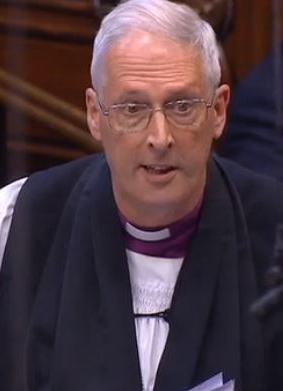
The Lord Bishop of Southwark: My Lords, I am grateful to His Majesty’s Government for the opportunity to debate this important anniversary. On 22 June, together with the Archbishop of the Province of the West Indies, I had the privilege of welcoming to the national service at Southwark Cathedral Their Royal Highnesses the Duke and Duchess of Gloucester, bishops from the Caribbean and England, other church leaders, members of the community and, prominently, members of the Windrush generation and their descendants. It was a witness to and thanksgiving for 75 years of change in Britain, the contribution that those pioneers made, how we have changed as a nation and the burdens we have made that generation bear.
The previous week, I attended a reception hosted by His Majesty the King at Buckingham Palace, at which the portraits he had commissioned—we have heard about them—of members of the Windrush generation were exhibited. We not only marvelled at the art but met both sitters and artists. As many of your Lordships will know, the King has previously commissioned series of portraits down the years for those engaged variously in the Battle of Britain and the D-day landings, as well as for those who survived the Holocaust. In each case, we witness in paint people who are the product of extraordinary lives and whose essential character is distilled on to canvas for future generations to remember, interpret and cherish.
Although each piece is by a different artist, this latest exercise in portraiture, now on exhibition in the Palace of Holyroodhouse, has a common feature of the miracle of human personality into old age—something that I am sure this House will appreciate. Many convey extraordinary power and joy; others, a quiet strength, with struggles along the way chiselled into their features. Portraiture reminds us of the intensely personal nature of life away from the great aggregates that normally determine policy. Here are lives that speak of what Governments and communities did in the past and how we treat them now.
It further reminds me of two photographic exhibitions: the first, by the photographer Jim Grover at the OXO Tower on the South Bank, marking the 70th anniversary of Windrush; and the second, a current exhibition also by him at Clapham Library in the Mary Seacole Centre on Clapham High Street, running until September. It includes an image of the war memorial to African and Caribbean servicepeople of two world wars, which was installed in 2017 in Windrush Square in Brixton in the heart of the global diocese of Southwark.
The noble Baroness, Lady Benjamin, spoke of the magnificent Windrush monument unveiled last year at Waterloo. That is really where we come in with Windrush. The “Empire Windrush” was a prize of war, a German liner renamed after a river in the Cotswolds that returned many ex-servicemen—for many of the Caribbean travellers on board had served in the RAF—to Britain, whose factories, mines and services faced shortages and whose infrastructure was worn out or in ruins. They were adventurous but not needy. The fare was £28 and 10 shillings—it is rare now to find a group such as your Lordships’ House that knows what I mean when I say “10 shillings”—which was a substantial amount, for the average industrial earnings then were less than £6 a week. The Colonial Office billeted them in my diocese in a deep shelter at Clapham South, and the nearest labour exchange was in Coldharbour Lane in Brixton. Hence the association with the area was established. They received a warm welcome from the nearby church of St John, Angell Town. Would that all the churches our friends visited had extended them the same welcome. In many they were rejected and, sadly, that welcome was not to be their experience—a cause of lament, shame and sorrow.
The legacy of the last 75 years is still with us. There are still disproportionate outcomes for which there is no ready or reasonable explanation. In the instance of what we call the Windrush scandal, Amelia Gentleman of the Guardian had been publishing articles setting out the problem with unsettling clarity for months; it is good that her book is in the Chamber. The immediate proximity of the Commonwealth Heads of Government Meeting in April 2018 made it impossible to ignore what she was saying. The Home Office and the Prime Minister made a public acknowledgement of the wrongs that needed to be righted.
Yet we need to note that, of those affected, only one in four of those who applied to the compensation scheme has received any compensation. The speech from the noble Lord, Lord Rosser, was telling; 41 individuals who made an application have died while waiting for their claims to be processed. It is worth reminding ourselves that the imposition of what was originally deemed a hostile environment by legislation in 2014 and 2016, requiring proof of a right to remain, has deprived individuals of jobs, homes, benefits and their health. In at least 83 cases—the final total is unknown—individuals with right of abode or indefinite leave to remain were unlawfully deported by the Government.
As one official remarked recently, it represents the crumbling of lives as the weight of unfairness and impossibility is forced upon these people. To have to provide some of the very same documentation that was demanded to prove a right to remain in order to receive compensation leads me to deep concern. It is also a matter of regret that the current Home Secretary decided to drop the Government’s commitment to follow through on the recommendations from the Williams inquiry to establish a migrants’ commissioner; surely that is needed. Reconciliation events have also been dropped, as has the commitment to strengthen the powers of the Independent Chief Inspector of Borders and Immigration. A commitment made is better when it is honoured.
I am grateful once again to the Government for facilitating this debate, on a remarkable generation who changed this country for the better. Those of us who live in the midst of great diversity need to articulate a narrative of appreciation and respect for the contribution of those who have helped us become the nation and people we are—equal in dignity, humanity and status, in this United Kingdom of different nations and peoples. We encourage the Government to widen its declaration of appreciation and to express a much deeper appreciation of the positive benefits of immigration, which has in so many ways blessed, enriched and changed our national life and identity.
Extracts from the speeches that followed:
Lord Davies of Brixton (Lab): As the right reverend Prelate the Bishop of Southwark already mentioned, these things happen partly by chance. The arrivals on that epoch-making trip on HMT “Empire Windrush” were housed in Clapham, so it was to the labour exchange in Coldharbour Lane in Brixton that many came to seek work on their arrival. Later arrivals followed their lead. They sought housing in the area, which was cheap at the time. Much of it was run-down, in multiple occupation and still suffered the scars of the late war, but it was available in those pre-gentrification days. They did not come just to Brixton, of course, but nevertheless the result was and still is a special connection between Brixton and those of the Windrush generation. It has proved to be the centre of many events held to mark this special time.
There have of course been ups and downs—to say the least—over 75 years and some parts of the story are contested. Times were tough. The pioneers and the younger generations who followed had to cope with discrimination and poor living conditions. They had to battle for their civil and employment rights, and doubtless more still needs to be done. However, I believe that, in Brixton, we have created something special that would not have been attained without those who came on the “Empire Windrush” and those who followed.
Baroness Scott of Bybrook (Con):The Home Office has a multilayered approach to reviewing the process continually in order to ensure that we have an appropriate level of external scrutiny. That was brought up by a number of noble Lords, including the noble Lord, Lord Rosser, and the right reverend Prelate the Bishop of Southwark. The tier 1 review is conducted by a separate team that has not worked on any claim and so is totally independent. The tier 2 review is an independent review processed with the Adjudicator’s Office, and the Home Office has accepted all recommendations made by the adjudicator.
(…)
The noble Lord, Lord Rosser, the noble Baroness, Lady Twycross, and the right reverend Prelate the Bishop of Southwark brought up Wendy Williams’s three recommendations. When Wendy Williams wrote the report, she recognised the challenges and applauded the Home Office response to the challenge. As I stated, the Home Office has regular reviews and delivers the intent of all the recommendations, but not in a specific way. Extensive continual consideration of how to deliver the scheme is embedded in and throughout the department.
The Office for the Independent Examiner of Complaints, set up last year in response to the Windrush lessons learned review, is in place. There is also insight and challenge from the Windrush working group. There has been a major internal change in culture and the willingness to listen as policies develop and implementation has begun. The Home Office will continue to challenge itself internally on its culture on this subject.
The noble Lord, Lord Rosser, brought up the issue of compensation previously accepted if claims are relooked at. Whenever changes are made, they are applied retroactively.
The right reverend Prelate the Bishop of Southwark brought up the important issue of deaths of claimants while still awaiting compensation. It is really regrettable that any claimant passes away before a compensation award can be made. The Home Office prioritises claims where we are aware of any critical or life-shortening instances in any claimant. Where someone passes away before their claim is finally resolved, we work closely with the representatives of their estate, normally their family, to ensure that compensation is paid as quickly as it possibly can be.


You must be logged in to post a comment.