
The Bishop of Gloucester gave a speech on building community infrastructure during the Kings Speech debate on 9th November 2023, with a focus on prisons and the justice system:
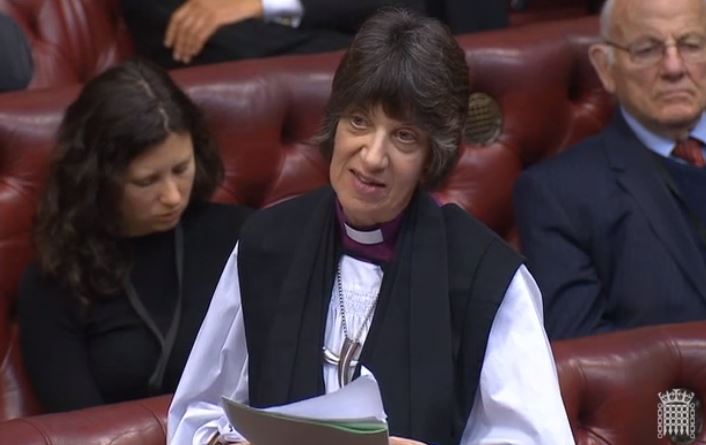
The Lord Bishop of Gloucester: My Lords, it is a privilege to speak in this debate and I thank the Minister for his thorough introduction.
In the Old Testament there is a beautiful vison of the prophet Isaiah of the perfect future with God:
“Never again will there be an infant who lives but a few days … No longer will people build houses for others and not live in them … People will not labour in vain, nor will they bear children doomed to misfortune”.
Whether or not you are a person of faith, I believe most of us would say yes to those words in the gracious Speech about the Government seeking, in all respects, to make long-term decisions in the interests of future generations. But how will that be realised? We need interconnectedness across disparate Bills and government departments, and a commitment to the well-being of individuals, always set within the big picture of people belonging together as interdependent human beings—hence that word “community” and its importance in the gracious Speech being picked up in the themes of today’s debate.
The gracious Speech spoke not only of delivering a plan to regenerate towns and to put local people in control of their future but of the Government’s commitment to keep communities safe. All of this is possible only if there is joined-up, holistic and long-term thinking. Discussions around local communities, housing, health and public services cannot be boxed separately from that stated commitment to keep communities safe.
I will unashamedly mention prisons again today, and declare my interest as Anglican Bishop for His Majesty’s Prisons. I was delighted to hear the speech of the noble Baroness, Lady Burt. Prisons hold up a mirror to so much that is needed regarding housing, education and training, health and public services. On my most recent prison visit, a couple of weeks ago, the group of men I met shared their stories, mainly owned their failings, and named things that had contributed to their offending—mental health problems, broken relationships, constant movement through the care system, a lack of housing which could be called “home”, addiction to numb the pain of poverty, lack of education and training, learning about crime in prison, and the consequences of a criminal record when even attempting to turn their lives around on accessing work and housing on release. A focus on rehabilitation in prisons and beyond the gate is broadly lacking. Given that two-thirds of people in prison are there for non-violent offences and that over half go on to reoffend within a year of leaving custody—rising to almost two-thirds among those sentenced to less than 12 months—prison is failing everyone, not least victims, families and whole local communities, and it is not addressing serious contributory factors.
For example, we know that the instability created by lack of, or inadequate, housing puts strain on families and communities and can create a domino effect, impacting health, education, and many of those underlying causes of criminal behaviour. We also know that a high percentage of people who leave prison do so with no home to go to and, unsurprisingly, soon return through the revolving door of prisons. It is an expensive way to house people.
In Gloucester, there is a business creating modular, eco-friendly homes which, incidentally, employs prisoners. These homes could be the answer to so much homelessness but, despite the enthusiasm of police and crime commissioners and councillors, bureaucratic processes and funding stymie the possibilities. Combine lack of appropriate housing with poor education and training and a lack of adequately resourced addiction and mental health services, and the risk of offending is increased.
This is about asking not for more money but for redistribution of finance. On top of the annual cost of prison at over £50,000 per person, the social and economic cost of reoffending has been estimated at £18 billion per annum, while the cost to victims, families and communities is impossible to estimate and undoubtedly impacts on the pressure on health and public services, not least regarding the health and mental health needs of prison staff and their families. It is vital to see the big picture and refocus the finance.
The very welcome government commitment to sensible presumption against short sentences will require redirecting funding to substantially supporting probation and community alternatives, which again link with the themes of today’s debate: for example, community sentence treatment requirements aiming to reduce reoffending by improving access to mental health and substance misuse treatment in the community. There is some good early data from pilot areas.
Incidentally, as other noble Lords have said, it is disappointing that the gracious Speech did not include plans to take forward reforms to the Mental Health Act. Many women in particular are still sent to prison as a place of safety or for their own protection. This is inappropriate, expensive and does not lead to change, and prison staff are not equipped to deal with the levels of self-harm and disturbing behaviour.
In my recent engagement with the justice system in the Netherlands, I have been struck by the focus on integration and reintegration, which is so different from the vocabulary of being tough and more punitive. There, people in prison work on their reintegration from day one. This includes plans for housing, purposeful work, health and care plans, plus a focus on a prisoner’s social networks and family ties. The rate of crime continues to decline in the Netherlands.
That wording of “long term”, which was used in relation to regenerating towns in the gracious Speech, needs to be writ large across all policy and decision-making in the themes of today’s debate. There are no short-term, quick solutions here. We need courageous, data-driven and joined-up decision-making if we are to truly change this country for the better. It does not begin with tough, law-and-order rhetoric.
Extracts from the speeches that followed:
Baroness Pinnock (LD): My Lords, it has been a really interesting, wide-ranging and well-informed debate. I hope Ministers have been listening carefully, because they have been given plenty of ideas, freely given, for them to take up and introduce as part of their bid to create a better Britain—or whatever the phrase is. What has become crystal clear during this debate is the disappointment expressed by many at the paucity of the Government’s ambition. The Government have run out of energy and ideas, but what has not diminished is the scale of the challenges facing people who are delivering vital public services. For people who are waiting for an operation, waiting for years on the housing list or waiting for a GP appointment, these challenges have direct and personal consequences. The failure of the Government to show some understanding of the situation many people face by addressing the immediate issues they are facing in the gracious Speech is leading so many to complete despair.
As my noble friend Lady Barker said, there is not a strategy in sight in this gracious Speech. As the right reverend Prelate the Bishop of Gloucester said, where is the long-term vision that is promised? That leads me to the NHS. We are all now going to remember the wonderful image provided by my noble friend Lord Allan of the Government in the driving seat of the NHS car. It is veering across all the lanes, doing many U-turns, running out of fuel and failing to reach its destination. It is memorable, but what is sad is that it resonates so much to so many: that that is where we are with our National Health Service.
Baroness Merron (Lab): I listened closely to the right reverend Prelate the Bishop of Gloucester, who spoke of the very real impact of disjointed government on victims, families and communities. What a missed opportunity this gracious Speech has been. I can only hope that the next gracious Speech will be different and will grasp every opportunity for change.
Viscount Younger of Leckie (Con, DWP): On rather a different note, I want to pick up on what my noble friend Lady Verma said. She devoted her speech to a most important subject: hate in schools. She is absolutely right that every child must be able to go to a school where there is always 100% respect for every individual in the school, but also within that community. That includes pupils and teachers. I will indeed pass her points on to the Department for Education, with my own endorsement and, I am sure, the endorsement of the rest of the House. This chimes with the comments made by the right reverend Prelate the Bishop of Gloucester. I listened carefully to her points, which admittedly were linked to prisons but did focus on the very important subject of communities.
At the heart of the gracious Speech—here I might have been lucky, but was not in the end, to have some words from the noble Baroness, Lady Pinnock, but here goes—are long-term decisions that will deliver a brighter future for millions of people around the country, whether by providing greater security for home owners and tenants, getting people the care they need more quickly, protecting the health of future generations and ensuring that every young person has the education they need to succeed, or strengthening society by ensuring that public bodies are focused on delivering for the communities they serve.
(…)
Through the tobacco and vapes Bill, by effectively ensuring that anyone turning 14 or younger this year will never legally be sold tobacco, we will protect future generations from the harms of smoking and reduce future demand on the NHS. There has been—I think it is fair to say I am on safer ground with this—a general welcome for this. I appreciate the comments from the House, with a very personal speech from the noble Lord, Lord Rennard. This was also spoken to by the noble Baroness, Lady Walmsley, and the right reverend Prelate the Bishop of Gloucester. This Bill will also tackle vaping among young people by taking measures currently under consultation, which was mentioned, to reduce the appeal and availability of vapes.
 The Church of England in Parliament
You must be logged in to post a comment.