
During a debate on the Safety of Rwanda (Asylum & Immigration) Bill on 12th February 2024, the Bishop of Lincoln spoke in support of amendment 8 to the bill, which would insert a stipulation that those granted refugee status have automatic right of return to the UK into the bill, explaining his experience of Rwanda and urging that the UK not place a burden on the Rwandan people that the country may not be able to cope with:
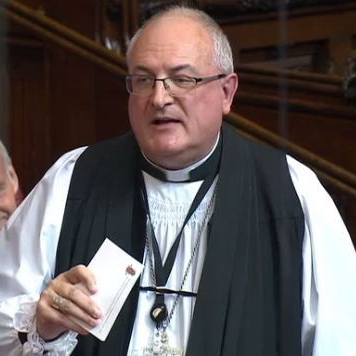
The Lord Bishop of Ely: My Lords, I rise to speak because I suspect I am in a minority as one of the very few Members of this House who have had direct contact with Rwanda, having had 10 years’ engagement with the diocese of Kigali, the capital city, and the great joy of visiting the country and seeing life outside in the countryside. One of the most moving things of my nearly 40 years of ministry was praying at the national memorial for the holocaust in Kigali with a local bishop who had lost so many members of his family. He was still so distraught that I had to find the words for our prayer together.
I put on record that I have come across so many wonderful Rwandans who would be hugely great examples to us individually of the practice of forgiveness and trying to make life beautiful again after a terrible tragedy. I can think of one instance where I met a priest; most of his family had been murdered, and in an act of forgiveness he took the murderer of his loved ones into what was left of his family, because he felt there was a requirement upon him to demonstrate and show forgiveness in this terrible situation.
It is also true, in my experience, that Rwanda has done a remarkable job in developing its economy. I was going to say it was a “tiger economy”—that is perhaps the wrong fauna for the Great Lakes region, but there have been real strides forward in their economy. Of course, people have been very eager to support their President because he has largely delivered to them peace.
It is also my direct experience, relating to what the noble Baroness, Lady Kennedy, said, that the institutions of civil society remain substantially undeveloped. It seems to me that, although we may agree with the noble and learned Lord, Lord Hope, and might want to say that Rwanda could in the future be a third-party partner in dealing with these issues, I would strongly say that that day has not yet come.
Of course, I am not in principle against the idea of third-party partnerships; it is very interesting what we hear about Italy. It seems to me that what is required is a real, dedicated commitment to a partnership among western nations in seeking to see how this could be done effectively and generously towards those whom we categorise as criminals, many of whom have suffered dreadful trauma and persecution in their homeland, which is the only reason they have taken the risk and put themselves in the hands of these dreadful criminal gangs.
It is also very important that we take account of the fact that, if we are going to even think about the prospect of sending people to a third-party country, there has to be a guarantee, as evidenced in Amendment 8, that people have a right to return and establish their claims here. If this is not allowed, it is simply a case of our throwing the problem away. That seems to me to be simply immoral, and not something that we as a nation should be contemplating.
We need to look very carefully again at putting this burden on the people of Rwanda and how we might think much better about working together with other nations in developing a pattern that will help us, in the longer term, cope with huge further migration through climate change, which we have not even contemplated yet and which will affect us very deeply.
Extracts from the speeches that followed:
Baroness Butler-Sloss (CB): My Lords, it is a great pleasure to follow the right reverend Prelate, with his fascinating and personal knowledge of Rwanda, and the very useful advice he has given us this evening. I have put my name to the seven amendments set out by the noble Lord, Lord Anderson of Ipswich, and I do not intend to refer in great detail to any of them, particularly at this time, because I would like to get home before midnight, if that is possible, and I am in the last group.
Shortly, the points I wanted to make are these: it is obvious that Clause 1(2)(b) is out of kilter with Clause 1(3). You only have to read Clause 1(3) to see that the Government of the Republic of Rwanda has “agreed to fulfil”—that seems to me to be partly in the present, but almost certainly partly in the future. In the treaty, which we pored over in the debate that I listened to and did not speak in—I thought enough people had spoken—the 10 requirements that we discussed are clearly not all fulfilled. The right reverend Prelate points out—and he knows; he has been there—that the structures are not all yet in place.
Lord Falconer of Thoroton (Lab): My Lords, I shall first address the remarks of the right reverend Prelate the Bishop of Lincoln. Speaking entirely for myself, nothing I say is intended to cast any aspersions on the state of Rwanda, the suffering that it has gone through or the plight in which it currently finds itself. I found his remarks incredibly moving. The Supreme Court made clear that it was not a lack of good faith that had led Rwanda to be in the position that it is in; it was just that Rwanda did not have a system that could properly deal with the analysis of asylum claims in a way that would be acceptable to the commitments that we as a country have made to asylum seekers.
I agree very strongly with what the noble and learned Lord, Lord Hope of Craighead, and the noble and learned Baroness, Lady Butler-Sloss, said: that Clause 1, in so far as it says that
“Rwanda is a safe country”
is not right, and it would be wrong for us as a Parliament, or as the House of Lords, to agree to that which we know is wrong.
Lord Sharpe of Epsom (Con, Home Office): This partnership is part of a suite of measures to tackle illegal migration and builds on wider collaboration with Rwanda on many shared issues. As I have set out previously, we have assurances from the Government of Rwanda that the implementation of all measures within the treaty will be expedited. The treaty itself will follow the usual process with regards to scrutiny and ratification. I say to the right reverend Prelate the Bishop of Lincoln that I am afraid I cannot improve on that, and I will continue to defer to the Home Secretary.
I would like to provide reassurance to noble Lords that the treaty enhances the role of the previously established independent monitoring committee, which will ensure that obligations under the treaty are adhered to in practice and will be able to take steps to address any concerns at an early stage. Therefore, the Government argue that the amendments in the name of the noble and learned Lord, Lord Hope of Craighead, are not necessary, although I of course take his points about words. As the noble and learned Lord said, the Bill reflects the strength of the Government of Rwanda’s protections and commitments given in the treaty to people relocated to Rwanda in accordance with the treaty. It addresses the point made by the Supreme Court that Rwanda’s systems could be strengthened, on the basis of the facts before the Supreme Court at the time.
 The Church of England in Parliament
You must be logged in to post a comment.