
The Bishop of Lincoln spoke in debate on child poverty on 29th April 2024, highlighting the importance of effective infrastructure for housing and employment, and the experiences of children and families in rural communities:
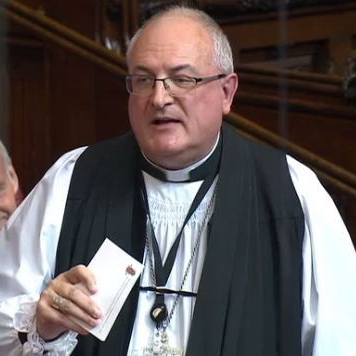
The Lord Bishop of Lincoln: My Lords, I too am grateful to the noble Lord, Lord Bird, for securing this debate and for his passion and his challenge. Like the noble Lord, I come from a poor London Irish family, but from south of the river, if that is allowed. We have heard from the noble Baroness, Lady Lister, about the causes of child poverty and that they are systemic, and about the potential for changing them—not by exceptionalism, as may have applied in our cases.
As the Bishop of Lincoln, I am very conscious that in greater Lincolnshire I see vibrant resilient communities but, in the midst of a commendable spirit, there are considerable challenges. The effects of deep poverty feel widespread and tangible in a way that I have not seen since I began as a priest in the mid-1980s. Damp, low-quality accommodation, particularly in the private rented sector, has an impact felt particularly by children at crucial stages of their development. In response to this, the Archbishops’ Commission on Housing, Church and Community set out five values for good housing: it should be safe, sociable, sustainable, satisfying and secure. Failure to deliver this only serves to entrench child poverty.
I worry particularly about the impact of intergenerational poverty. In many of our communities, the lack of employment and social opportunities is apparent. The industries that used to sustain towns such as Grimsby have changed. We have a fishing plant but no longer a resident fishing fleet. That affects employment prospects and a sense of pride in place. Children are profoundly affected by that context as they grow up.
The Institute for Fiscal Studies recently published a report to mark the 25th anniversary of the introduction of Sure Start centres, highlighting the extraordinary difference that these made to the educational outcomes of children who engaged with them or even those who lived near them. This second aspect explains why children living in poverty in rural areas in other parts of Lincolnshire and elsewhere did not benefit as much as those in urban areas. It is simply because those living in the countryside did not have the same access.
Partly this is a question of infrastructure—the transport links to ensure that services can be accessed. However, I wonder whether it is also a question of priorities of government and others. The recent Hidden Hardship report noted that disadvantaged young people in remote rural areas are 50% less likely to gain two or more A-levels or enter university than those living in major cities. A similarly ambitious approach to child poverty 25 years on from Sure Start must always keep in mind the rural context. What assessment is being made of the particular needs of rural communities as the Government assess the root causes of child poverty?
The noble Lord, Lord Bird, issued a challenge to the Church in relation to doing away with poverty, particularly child poverty. There is a crisis of capacity in the voluntary sector. Churches will continue to run toddler groups and open warm spaces where they are needed. Yet churches do not have an endless supply of volunteers. The real challenge for all of us is to think about what facilities we can make not just for children’s physical and food education, not only for their access to services and schools, but to think about what access they have to relationship-building and hope. A generation of hope is one of the most important things in this—giving children the possibility of confidence. One of the hidden areas of poverty in terms of relationships is the number of children who are child carers, looking after their single and sick parent. This is not being acknowledged much at all publicly. Often, one child is responsible for all their younger siblings.
One of the most impressive places which I visited recently, having done so several times, is the St John St Stephen & Shalom youth centre in Grimsby, in East Marsh, which has been celebrating its 50th anniversary.
I never witnessed this before, but there is a plaque on the wall outside commemorating those former members of the centre who have been murdered or have died through drug-related incidents. This is the place where, over 50 years, 5,000-plus children and young people have been offered hope and the chance to build successful relationships with safe adults outside of their immediate family. I applaud this and hope that examples such as St John St Stephen & Shalom youth centre give us an incentive and hope not to give up on these children but to work with them and for them, in that way to transform our whole society.
Lord Shipley (LD): If levelling up is to be a success for the Government, child poverty needs to be addressed. The point is that levelling up is about people, not places. It is about individual children, and hence the two-child limit seems wrong. It was introduced in 2017, seven years ago. The Resolution Foundation has told us that it increased poverty, particularly for families with three or more children. It should cease, as it is increasing poverty in poor households. All the organisations that one can think of—the National Association of Head Teachers, the Church of England, Save the Children, the Child Poverty Action Group and Barnardo’s—say that it should cease.
As the right reverend Prelate the Bishop of Lincoln reminded us, Sure Start was a success. It was introduced in 1999 to improve child development. Some 250 projects were created, concentrated in places where high numbers of children under five were living in poverty. Those centres helped with play, learning, health and childcare. I recall that, when I was leader of Newcastle City Council, we had a major success with our Sure Start centres. It is about aspiration and addressing some of the issues that the noble Earl, Lord Effingham, reminded us of.
Baroness Sherlock (Lab): Tonight’s debate has highlighted the multifaceted nature of poverty. Whenever we have debates on poverty, there is always a temptation for some people to say that it is not about money and other people to say that it is only about money. Manifestly neither is correct. It is not just about money but it is not not about money either. The noble Baroness, Lady Janke, the right reverend Prelate the Bishop of Lincoln and other noble Lords made a very clear point of explaining what happens when you simply do not have enough money. If that is the case, all the strategies and all the preventive work in the world does not help you feed your kids that night; you simply cannot afford to do it.
On the basic level of access to resources, Britain is not in a good place. Over a fifth of our population lives in relative poverty. I know that the Government prefer absolute poverty as a measure, probably because it normally falls as real incomes rise, but, in the latest statistics in the document Households Below Average Income, we learned that the share of people living in absolute poverty is going up again, as the noble Baroness, Lady Janke, pointed out. There are 600,000 more people, half of them children, living in absolute poverty, in what is still one of the richest countries in the world by global standards. We should not be in this space.
Viscount Younger of Leckie (Con, DWP): Some questions were raised by the right reverend Prelate the Bishop of Lincoln and also alluded to by the noble Lord, Lord Shipley, about social housing, which is an important subject. Their questions were linked to items of damp and mould; they asked what the Government were going to do about this. The Government have now introduced Awaab’s law through the Social Housing (Regulation) Act 2023, which gives the Secretary of State powers to set out new requirements for social landlords to address hazards such as damp and mould in social homes within fixed time periods. We are now analysing the responses to the consultation, and then we will publish a response setting out findings and bringing for secondary legislation as soon as possible.
 The Church of England in Parliament
You must be logged in to post a comment.