
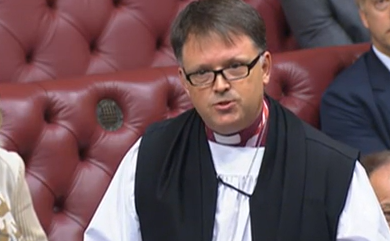
The Bishop of Norwich spoke in support of a government amendment to the Great British Energy Bill which would stipulate that Great British Energy had scope for involvement in community energy projects on 11th February 2025, welcoming the amendment and highlighting the role churches might play in these projects:
The Lord Bishop of Norwich: My Lords, I support the Government’s Amendment 8. It is good that the Government have introduced this amendment so that Great British Energy can facilitate, encourage and participate in local community energy projects. I pay tribute to the noble Earl, Lord Russell, for the work he has done on this, as well as a number of different campaigning organisations and other Members of your Lordships’ House. This is a very important amendment, and it will be a great help to a whole range of different community organisations.
I also support the comments made by the noble Baroness, Lady McIntosh, and the noble Earl, Lord Russell, in pressing the Minister about the community energy fund. Some reassurance there would be very helpful.
Village halls, sports centres, voluntary youth organisations and churches could all benefit from being able to generate local energy for local people. I certainly see the potential for our churches, which have wonderful south-facing roofs. With the planning consent given to King’s College Chapel in Cambridge to have solar panels and other landmark projects such as York Minister and Salisbury Cathedral, there are new opportunities emerging.
I warn your Lordships that, if you are ever invited to go to a dedication of solar panels on a church roof, just beware. When I went to dedicate the solar panels on the roof of St Peter Mancroft church in the centre of Norwich back in September, a very observant member of the public rang 999, saying that a youth was stealing lead off the roof. When I came down, having dedicated the solar panels, I had to answer to two local police officers who had turned up—it was a great compliment to be called a youth, though.
This is important work for community groups and the charitable sector to be able to contribute to their local communities in new ways, particularly in areas of low economic activity, and to provide income for their sustainability. There is a challenge that I wanted the Minister to be aware of, however. The connection charge that is asked for to upgrade the electricity connection to many churches and community centres often prohibits them being able to do this sort of work. In the diocese I serve, St Margaret’s church in Lowestoft has just been quoted a sum of around £100,000 to make the connection. That means that the project is just unaffordable, so we need to be creative and think more about how community groups can be able to engage.
But I warmly support the Government bringing forward their Amendment 8.
 The Church of England in Parliament
You must be logged in to post a comment.