
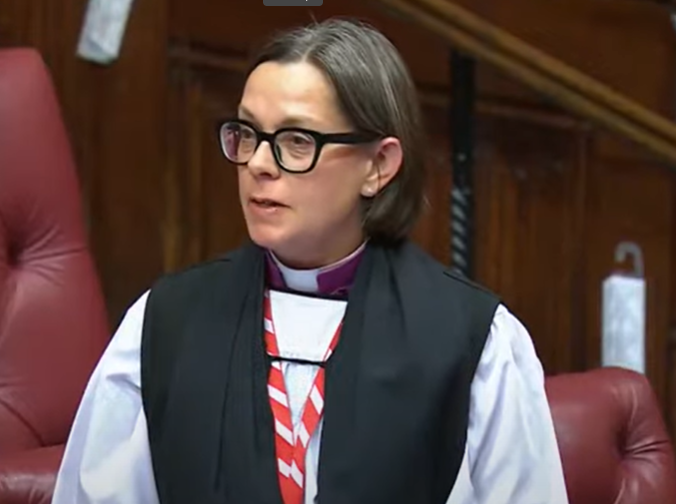
On 27th March 2025, the Bishop of Newcastle spoke at the second reading of the Employment Rights Bill, welcoming the bill and emphasising the need to enable workers to flourish in order to grow the economy:
The Lord Bishop of Newcastle: My Lords, I am glad to speak in this Second Reading. I look forward to the maiden speeches and welcome new Members to your Lordships’ House.
Some years ago, I undertook research on the apostle Paul and work. Paul was never one to shy away from hard work and spoke of the personal cost of his tent making business, describing it as wearisome and fraught with the challenges of local politics. Two thousand years later, we continue to live amid diverse uncertainties.
The desire to make work pay and improve workers’ rights, as proposed by this Bill, must pay attention to the obvious: people who work are human beings. A strong economy needs resilient workers. As we scrutinise this legislation, we do so affirming that workers matter. If we get this right, we can move closer to a society in which people are viewed with inherent value and dignity. When people are valued and supported in what they do, they contribute to greater economic flourishing.
Noble Lords will know that in-work poverty has risen significantly in recent years, particularly in the north-east region, with those in less secure work much more likely to be experiencing poverty than those whose contracts offer basic protections and guaranteed hours. The disproportionately negative impact on the lives of children is well documented, with the North East Child Poverty Commission reporting heightened concern following yesterday’s Spring Statement. With the Bill before us today, legislating against exploitative contracts is a step forward in ensuring that every person can access good work, plan ahead and provide for themselves and their families. But there may be unforeseen consequences.
I welcome reforms to parental leave and strengthened flexible working. I would like to see a statutory right to paid kinship care leave on a par with adoption leave—a point made just now by my noble friend Lord Palmer. A right to paid leave would enable kinship carers to take time to make necessary adjustments and continue in paid employment. This is a matter I have already raised with the Minister, and I was very grateful for her time in listening. I raise this matter again here and look forward to further conversations.
At a time when SMEs face additional pressures, a challenging economic environment and additional costs through rising national insurance contributions for employers, I urge the Government to continue listening to the SME sector, much of which is part of the social enterprise economy, adding to community and individual resilience. There is deep concern among SMEs about the potential impact of union access to the cohesive nature of employer relations, points made noble Lords already.
In conclusion, while I welcome this Bill in extending basic rights, protections and entitlements to workers, concerns remain as to how these individual protections will truly enable collective flourishing and a stronger and resilient society for the confident future desired by everyone.
Extracts from the speeches that followed:
Baroness Bennet of Manor Castle (GP): There was a failure to recognise changing social structures, whereby the previously unpaid and unacknowledged labour of women has been brought into the paid workforce. That work has to fit around the continuing demands they still face. We are, as the right reverend Prelate the Bishop of Newcastle and the noble Lord, Lord Palmer, both highlighted, people with responsibilities and needs outside work that our working structures do not adequately acknowledge. The economy is paying the price of this too, with skills, energy and talents excluded by inadequate labour protections.
The Blair and Brown Governments failed to redress the imbalance between workers and employers created under the Thatcher Government, and so we are where we are today. They too allowed the minimum wage to drift downward in real terms, subsidising the profits of giant multinational companies in particular, at a cost to us all. As the noble Lord, Lord Barber, said, we have seen a race to the bottom in employment, and that has to stop.
I often hear those on the Government Benches say that they want to get workers into good jobs. We in the Green Party take a different view: we want every job to be a good job, and those that are unavoidably difficult and unpleasant to have conditions that reflect the conditions of work. We clapped essential workers during the pandemic, but we did not lift their pay or the respect in which they are held. This Bill has the potential to do much more than it currently does. I invite noble Lords to consider the relative position of sewer cleaners and bankers, and what would happen if we did not have the former working for us all.
Baroness Jones of Whitchurch (Lab, DBT/DSIT): I thank the noble Baroness, Lady Barran, and the right reverend Prelate the Bishop of Newcastle for raising the issue of kinship care and foster caring. We are committed to ensuring that all employed parents and carers receive the support they need to strike the appropriate balance between their work and family lives. For the first time, the Government’s Children’s Wellbeing and Schools Bill will create a legal definition of kinship care, for the purposes of specific measures in that Bill. By defining kinship care in law, the legislation will ensure that all local authorities have a clear and consistent understanding of what constitutes kinship care. I hope this assures noble Lords of the Government’s intentions in this sensitive area.
 The Church of England in Parliament
You must be logged in to post a comment.