
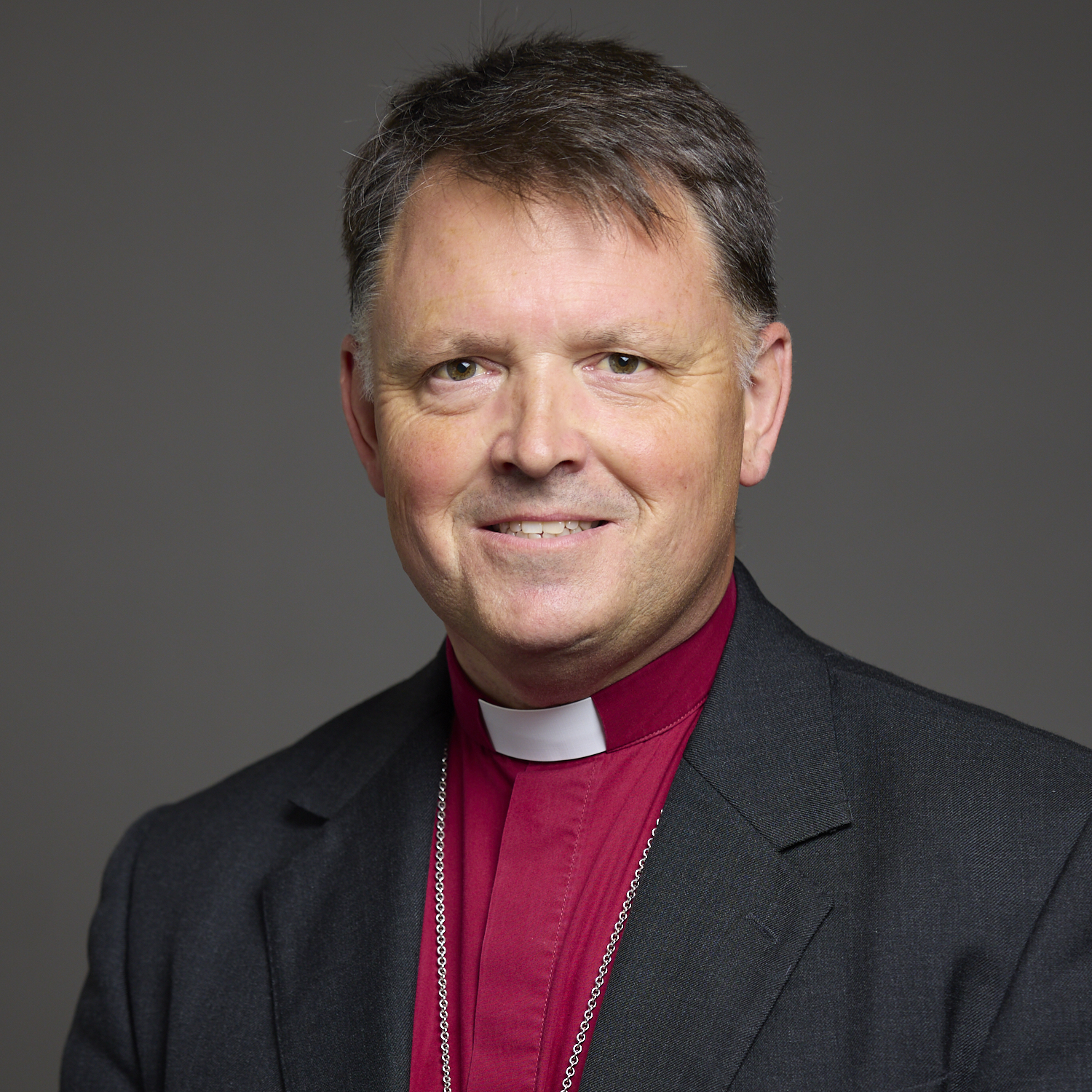
The Bishop of Norwich received the following written answers on 1st September 2025:
The Lord Bishop of Norwich asked His Majesty’s Government what support will be available to schools to decarbonise following the closure of the Public Sector Decarbonisation Scheme.
Lord Wilson of Sedgefield (Lab, DENZ): More than £1 billion in public sector decarbonisation funding is still being invested through the Public Sector Decarbonisation Scheme (PSDS) and Integrated Settlements with Greater Manchester and West Midlands Combined Authorities through to 2028. Additionally, the government and Great British Energy committed approximately £80 million to support around 200 schools in England to install rooftop solar panels and complementary technologies. Each school on average could save up to an estimated £25 000 per year.
11 schools have already installed solar panels which is estimated to save £175 000 on their total energy bills. Great British Energy also awarded £10 million in grant funding to mayoral strategic authorities to roll out clean energy projects at the centre of communities. A significant proportion of this will be used for solar panels for schools across England.
The Lord Bishop of Norwich asked His Majesty’s Government what plans they have to deliver climate finance to communities in the UK most impacted by climate change.
Baroness Hayman of Ullock (Lab, DEFRA): This Government is working hard to both understand the impacts of climate change and deliver the support needed to communities in the UK most impacted. For example, delivering on the Government’s Plan for Change, this Government is investing record levels of flood protection. We are investing a record £2.65 billion over two years (2024/25 and 2025/26) for the construction of new flood schemes, and the maintenance and repair of existing ones. With this fresh funding, 1,000 flood schemes have been or will continue to be supported, better protecting 52,000 properties by March 2026.
In addition, the Government is strengthening the capability of local authorities to protect businesses and communities from the impacts of climate change through the Local Authority Climate Services (LACS). Developed through the collaborative efforts of Defra and the Met Office, the LACS provides local authorities with targeted data on climate change impacts to their local areas to help guide the decisions made in response to climate risks and support climate adaptation planning. The UK Government Emergency alerts are also in place to warn businesses and communities of dangerous weather conditions which may impact on their affairs.
The Flood Re scheme also supports local communities. Flood Re is a joint Government and industry scheme that provides reinsurance in such a way as to promote affordability and availability of insurance for UK households at high flood risk. Flood Re does not deal directly with homeowners but instead allows insurance companies to pass the flood risk element of home insurance policies over to Flood Re for a set premium based on council tax bands.
The Lord Bishop of Norwich asked His Majesty’s Government what plans they have to deliver climate finance to communities around the world most impacted by climate change.
Baroness Chapman of Darlington (Lab, FCDO): It remains our ambition to deliver £11.6 billion of International Climate Finance between April 2021 and March 2026, of which £1.5 billion should be Adaptation and Resilience finance for 2025 to support to the most vulnerable communities who are experiencing the worst impacts of climate change. We are working with our partners to ensure that Small Island Developing States and Least Developed Countries – among the most climate vulnerable – are able to access the climate finance they need from the global system for adaptation and resilient growth. We are also championing locally led approaches and the meaningful engagement and involvement of marginalised people in climate resilience action.
The Lord Bishop of Norwich asked His Majesty’s Government what assessment they have made of the barriers faced by charitable organisations, financial or otherwise, when looking to join heat networks; and whether they will provide support to charitable organisations to overcome these barriers.
Lord Wilson of Sedgefield: Charitable organisations use a diverse range of buildings, thus there is no one-size-fits-all solution for how they decarbonise their buildings. In high-density urban areas, heat networks are often the lowest-cost, low-carbon heating solution.
The Government has a number of schemes to support the development and growth of heat networks, including the Green Heat Network Fund, which provides funding to develop new and existing low carbon heat networks across England.
We are working across Government and with the National Wealth Fund to explore further funding opportunities for the heat networks sector that will catalyse more private investment and support more connections.
The Lord Bishop of Norwich asked His Majesty’s Government what assessment they have made of decoupling electricity and gas prices.
Lord Wilson of Sedgefield: As unabated gas generation is displaced and transitions to a reserve role, wholesale electricity prices will increasingly decouple from the price of gas. Accelerating the deployment of renewable generation, as we are through our Clean Power 2030 Mission, will reduce the frequency with which gas sets the marginal price, helping to rapidly decouple electricity from gas prices without the need for more complex arrangements. This will in turn reduce consumer exposure to volatile international gas prices.
The Lord Bishop of Norwich asked His Majesty’s Government whether they plan to introduce a social energy tariff for community organisations.
Lord Wilson of Sedgefield: The Government believes that our mission to deliver clean power by 2030 is the best way to break our dependence on global fossil fuel markets and protect billpayers permanently.
The creation of Great British Energy will help us to harness clean energy with less reliance on volatile international energy markets and help in our commitment to make Britain a clean energy superpower by 2030.
In the short-term, the Government wants to provide businesses and community organisations with better protection from being locked into unfair and expensive energy contracts, and more redress when they have a complaint. Last year, the Government launched a consultation on introducing regulation of Third-Party Intermediaries (TPIs), such as energy brokers. This is aimed at enhancing consumer protections, particularly for non-domestic consumers. The Government published a summary of consultation responses earlier this month, and a Government response will follow in due course.
Since 19 December 2024, Small and Medium Enterprises (SMEs) with fewer than 50 employees have been able to access free support to resolve issues with their energy supplier through the Energy Ombudsman. This means that 99% of British businesses can now access this service with outcomes ranging up to £20,000 in financial awards.
For domestic customers, we recognise that we need to support households struggling with bills whilst we transition to clean power by 2030. This is why we delivered the Warm Home Discount to around 3 million eligible low-income households last winter. On 19 June we announced that we are expanding the Warm Home Discount to around an additional 2.7 million households. This means that from next winter, around 6 million low-income households will receive the £150 support to help with their energy bill costs.
The Lord Bishop of Norwich asked His Majesty’s Government what engagement they are undertaking with producer countries as they develop an approach to implementing Schedule 17 to the Environment Act 2021 so that it delivers robust due diligence standards while ensuring that smallholder producers are meaningfully supported and not disadvantaged.
Baroness Hayman of Ullock: The UK Government works closely with producer countries bilaterally and through key international platforms, such as the Forest, Agriculture and Commodity Trade (FACT) Dialogue. FACT convenes 28 major producers and consumers of globally traded agricultural commodities to agree collective actions that protect forests and other vital ecosystems, while promoting sustainable trade and development. A core focus of FACT is the inclusion of smallholder farmers in international value chains – an issue that was central to recent meetings we convened with the Government of Malaysia.
The UK also provides direct support to smallholder farmers through its Overseas Development Assistance. For example, we are co-funding the National Initiatives for Sustainable and Climate Smart Oil Palm Smallholders programme alongside the Netherlands. This helps smallholders improve the sustainability of the palm oil sector. We also support the Living Income Community of Practice, an alliance of partners developing data and tools aimed at lifting smallholders out of poverty.
We will set out our approach to addressing UK consumption of forest-risk commodities in due course.
 The Church of England in Parliament
You must be logged in to post a comment.