
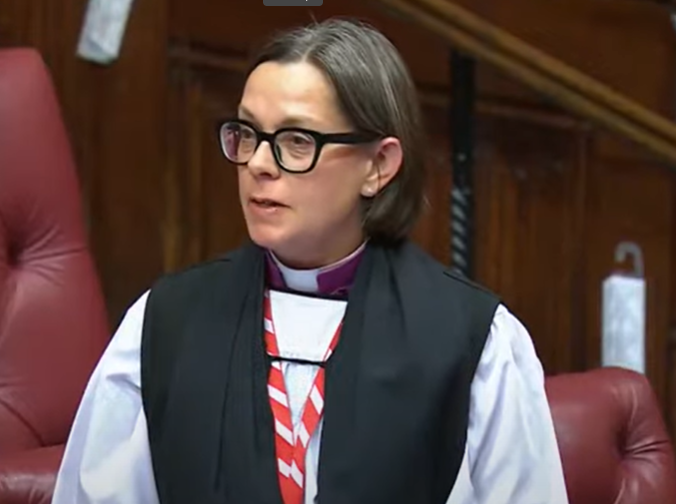
The Bishop of Newcastle spoke in support of an amendment aimed at providing additional protection for those with learning disabilities during a committee debate on the Terminally Ill Adults (End of Life) Bill on 6th February 2026:
The Lord Bishop of Newcastle: My Lords, I will speak to Amendment 108, to which the right reverend Prelate the Bishop of Lincoln has added his name. He regrets that he cannot be in his place today, as he is interested in this amendment as lead bishop for the L’Arche community in the UK. With the Church of England, L’Arche strives to provide a positive and inclusive residential community in which adults with and without learning disabilities can live and grow together.
Health inequalities come into focus for much of the Bill. As we heard in the Select Committee on the Bill, people with learning disabilities experience significant inequalities in health outcomes. The learning disabilities mortality review found that 40% of the deaths of individuals with learning disabilities in 2023 were linked to avoidable, treatable or preventable causes—double that of the general population. As we heard from Ken Ross on behalf of the National Down Syndrome Policy Group, people with Down syndrome are likely to die 27 years earlier than their peers. He highlighted
“a systemic direct and indirect bias shown within the health service, which could also be linked to a lack of understanding of the needs, wishes, health, learning and communication profiles of this particular group”.
That bias is linked to what other people feel a life worth living is like, sometimes pejoratively described as a life without dignity.
We have heard about the high suggestibility of some people with learning disabilities, and the discrimination they face both in and outside the healthcare system. This is closely linked to capacity. It is clear that additional protections are needed for this group, which is why due consideration should be paid to this amendment.
 The Church of England in Parliament
You must be logged in to post a comment.