
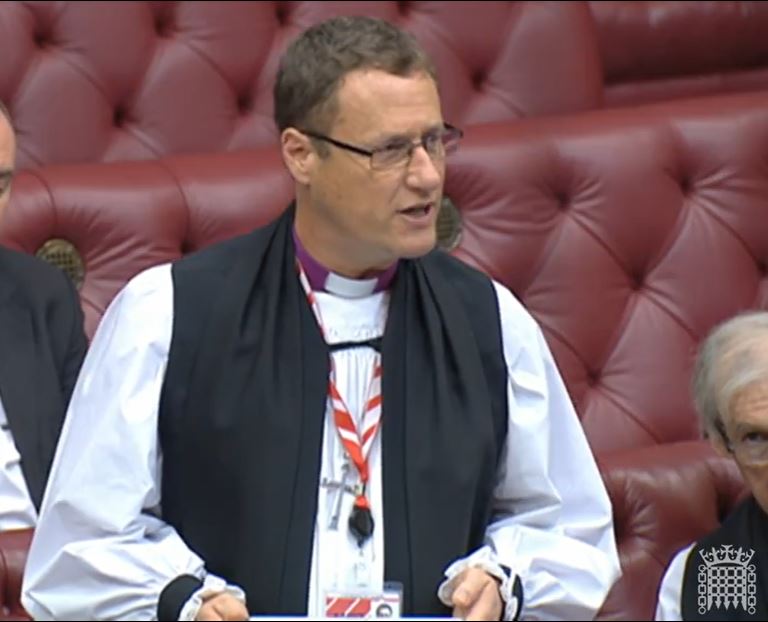
The Bishop of Leicester asked a question on welfare reform during a discussion on the Access to Work Fund on 5th March 2026:
The Lord Bishop of Leicester: My Lords, although I recognise that spending on Access to Work has increased in recent years and applaud the Government’s ambition to support more disabled people into work, this will most likely require more financial investment and more training of specialist staff. Therefore, have the Government assessed how their welfare reforms will affect demand for Access to Work and how the scheme can be strengthened to meet what may be an increased case load in coming years?
Baroness Sherlock (Lab, DWP): The right reverend Prelate raises a very important point. The Government hope there will be more demand for support. In reviewing Access to Work, we also have to review the whole landscape to look at how well supported employers are to be able to do the things they can do, which was the point raised by the noble Lord, Lord Sterling. What is the right thing for an employer to do, what can the individual do themselves and what can the state do to help them directly?
One of the challenges in recent times is that, along with that growth, we are getting very different types of cases. Broadly speaking, when the scheme was much smaller, people traditionally applied for a piece of physical kit for a physical barrier. The biggest single case now is people needing help with mental health. There are also cases of people coming through with a range of learning conditions, which are quite complex to assess and need a lot more work. We are having to review that, alongside broader policies, but the right reverend Prelate makes an important point to connect them.
 The Church of England in Parliament
You must be logged in to post a comment.