
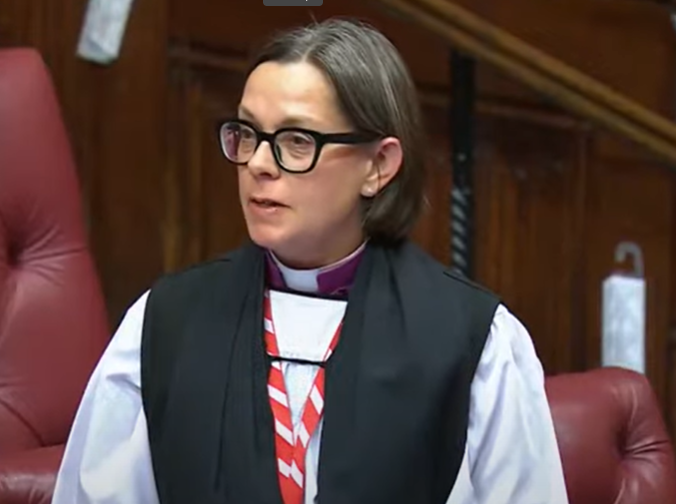
During a debate on the Terminally Ill Adults (End of Life) Bill on 20th March 2026, the Bishop of Newcastle spoke in support of amendments to the bill aimed at providing protection to those vulnerable to coercion:
The Lord Bishop of Newcastle: My Lords, I am grateful to my right reverend friend the Bishop of Southwark for preparing the way for some of the comments that I wish to make briefly now. Broadly, this group seeks to address issues around communication, language barriers and interpreters and I support the amendments laid before your Lordships’ House in that regard.
Amendments 171A and 174A in the name of the noble Baroness, Lady Nicholson, would require the provision of an advocate for women who might have additional vulnerability to coercion, especially due to cultural and religious factors. It is a very interesting and significant idea, which highlights the complex factors at play in considering certain groups of people. It is often those who are subject to health inequalities who hold the most distrust towards the health service, and understandably so since we are still in the shadow, even now, of the pandemic.
The noble Baroness, Lady Berridge, has already raised the evidence given by Dr Jamilla Hussain earlier in the passage of this Bill. Dr Hussain warned us about failing to recognise this issue of inequality. She said that
“introducing this Bill without addressing structural inequities and mistrust will likely result in widening disparities, poorer end-of-life experiences for already disadvantaged groups and potentially inappropriate deaths”.
The provision for raising assisted dying with people, as currently in the Bill, could be highly damaging to the already strained trust in the health service.
Secondly, and briefly, I make a general point about issues of communication, language and interpreters. Again, Dr Jamilla Hussain talked about the challenges of having end-of-life conversations. She said that these are nuanced, sensitive conversations, and understanding is not always straightforward. I know myself how, when I worked and lived in New Zealand, I had to work very hard to communicate in another language, te reo Māori, but also to convey my words and my thoughts into that language and that cultural context. This Bill assumes a sense of clear, individual and fully informed choice. However, when it comes to communication, language barriers and interpretation, this is so often mediated, culturally shaped and indirect. It seems that we are left with a very difficult decision about whether we are prepared to live with the degrees of uncertainty that this then gives us, or whether we are going to somehow restrict access to any assisted dying service. I expect that neither of these is satisfactory. I support these amendments and urge your Lordships to consider them.
 The Church of England in Parliament
You must be logged in to post a comment.