
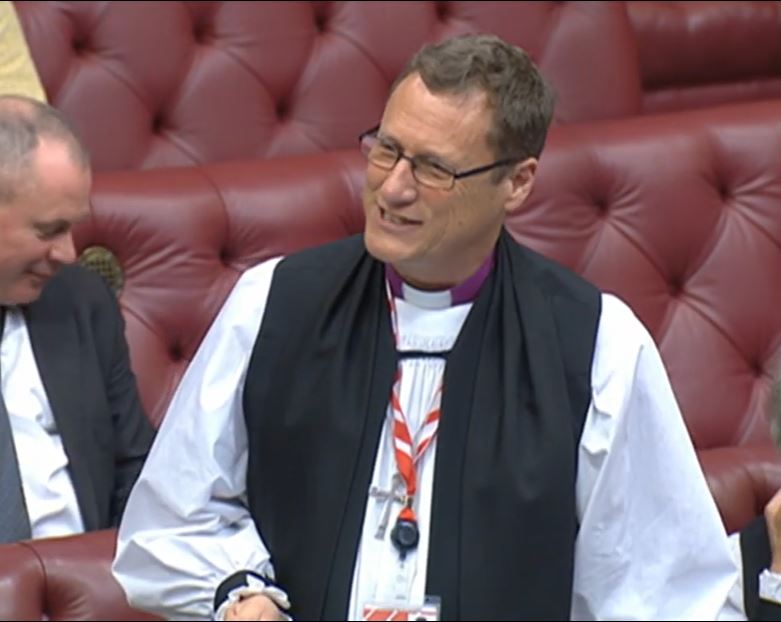
The Bishop of Leicester spoke in a debate on child poverty on 18th June 2026, raising the potential benefits of automatic entitlement to free school meals:
The Lord Bishop of Leicester: My Lords, I congratulate the noble Baroness, Lady Lister, on securing the debate and thank her for her tireless work in addressing child poverty. Like many others, I welcomed the publication of the Government’s child poverty strategy and was delighted by the Government’s decision to abolish the two-child limit on universal credit. Like others, I felt that the Government missed the opportunity to deliver some quick wins—measures that would not require legislation yet would make a tangible difference to children’s lives.
The noble Baroness, Lady Lister, already mentioned a number of these measures, but I wish to focus on just one: auto-enrolment for free school meals. On the face of it, it is a very modest proposal, yet it would have profound positive consequences for some of the disadvantaged children in the country. Around 250,000 children in England who are eligible for free school meals are not enrolled to receive it. That is approximately one in 10 of all those who should be benefiting from this scheme; in the north-east, it is one in five.
The entitlement exists, but it is not making its full potential impact. There is a substantial body of evidence, including a major cost-benefit analysis conducted by PwC for impacts on urban health, which demonstrated that free school meals improve concentration in the classroom, boost attendance, raise attainment and improve long-term health outcomes. Yet, some of the children most in need of this benefit are missing out. This is because under the present system, families must apply for free school meals. They must navigate forms, eligibility checks and, in many local authorities, repeat the process each time circumstances change. This creates administrative barriers, stigma and confusion, particularly for parents with limited digital access, for those for whom English is an additional language or for families in unstable or temporary accommodation.
I previously spoke in your Lordships’ House about the poverty-shame nexus—a mutually reinforcing relationship between material hardship and the emotional experience of shame. This is particularly relevant as, time and again, researchers have found that shame and stigma are among the biggest barriers that prevent parents from applying for free school meals.
This is not only a question of feeding hungry children, though that alone would be a good enough reason to introduce it. Free school meal eligibility is the gateway to pupil-premium funding, currently worth £1,515 per eligible primary school pupil and £1,075 at secondary level. When five local authorities introduced auto-enrolment in October 2023, they identified more than 2,500 additional eligible children in their first cohorts, with opt-out rates of less than 1%.
The question arises: why, if local authorities have piloted this measure, does it now require government action? Last year, the charity Feeding Britain convened a working group of 29 local authorities to examine this question. I commend its report to the Minister. In brief, however, this approach reaches only those families who already engage with their local authority for other welfare support, which, again, because of stigma, not all do.
Most importantly, the managed migration of families from legacy benefits on to universal credit will, over the next few years, substantially reduce the number of families applying to local authorities for housing benefit and similar payments, so the window of opportunity for local authorities to introduce auto-enrolment is closing. The working group’s proposal, which I commend to the House, is to build automatic registration into universal credit itself, extending the sort of mechanism that already exists for council tax support and for the NHS Healthy Start scheme.
I know that this Government are committed to social mobility, and education is at the heart of achieving this. Can the Minister explain, therefore, why this measure—one which would help direct resources more accurately to schools serving disadvantaged children, with no changes required to the pupil premium framework—was not included in the child poverty strategy?
Extracts from the speeches that followed:
Baroness Donaghy (Lab): I cannot forget that for 14 years before the Labour Government came in, poverty and homelessness were on the increase. If a child in poverty started school at the age of five in 2010, they would almost certainly have left education by 2024—a whole school generation deprived of the best opportunities. The excellent briefing sent to us by the Royal College of Speech and Language Therapists sets out its crucial work in tackling child poverty through helping to support children’s speech, language and communication skills, and ensuring that services are accessible to families living in poverty.
On the issue of accessing local services and support—I agree with everything that the right reverend Prelate the Bishop of Leicester said on this—the Government are launching the Pride in Place programme and Best Start Family Hubs, as well as launching the new crisis and resilience fund and increasing the early years pupil premium, which have already been referred to.
Baroness Teather (LD): I just want to talk about free school meals. The right reverend Prelate the Bishop of Leicester devoted all his speech to this topic, and it was a very welcome and informed contribution. I very much welcome the expansion of free school meals to all families on universal credit, but, again, underregistration risks leaving people behind. The September expansion is a perfect moment to switch to a national opt-out or auto-enrolment system using data the Government already hold—for example, the warm home discount. So my next question to the Minister is: will they think again and introduce a national auto-enrolment alongside this September’s rollout so that no eligible child slips through the cracks?
The child poverty strategy has some measures around school uniform, but I would argue again that we could go further; we could agree a cap on the cost of school uniform, which would make such a difference to so many families.
Lastly, as I read the child poverty strategy, the thing that occurred to me most of all was how so many of these topics feel very similar to the things that we were trying to address in 2010, 2011 and 2012, and yet we are facing into a very different world. I suppose it left me a little nervous about whether the child poverty strategy is being brought into conversation with the big strategies and challenges that as a country we are facing now, around food security, the impact of global conflict and the impact of climate change. All these are going to fall disproportionately on the poorest families, and my view is that it is their perspective that might hold the key to helping us to understand how we as a nation might tackle those bigger challenges. I urge the Government to use what they have already done in their strategy, bringing in the perspectives of those affected by poverty into conversation with a much wider strategy.
Baroness Sherlock (Lab, DWP): Free school meals were raised by many noble Lords and Baronesses across the debate. Extending free school meals to all children in households on universal credit is a really significant step in tackling child poverty. I recognise the desire always to go further, but let us not just bank this and move on; let us look at this and see what a significant step it is. This expansion will lift around 100,000 children out of poverty and put money back into the pockets of families who need it most. We all know that children who are not hungry are more likely to attend school, to get better results and to improve their long-term life chances. That is one of my answers to the noble Baroness, Lady Coffey, about who should get them and who should not.
I am afraid I will not be able to do all that the right reverend Prelate the Bishop of Leicester would like, but I can tell him that the DfE is updating the eligibility checking system, which will make it easier for local authorities and schools to check whether children are eligible for free school meals and to ensure they receive a healthy, nutritious meal during the school day. I take his point about changes in the system, but local authorities are already taking innovative approaches to maximising take-up. For example, Sheffield runs an annual data-matching exercise using pupil records and housing benefit data to identify eligible children, which it can justify under its duty to support eligible children. I will undertake to make sure that the right reverend Prelate’s remarks on this are shared with my colleagues in the Department for Education, because he gave a lot of attention to it. I will make sure it is looked at carefully.
On the matter of free school meals, as a word to my noble friend Lord Brooke, we propose to make changes related to increasing fibre, reducing sugar and further restricting foods higher in fat, sugar and salt in free school meals, in line with the nutritional advice set by the Scientific Advisory Committee on Nutrition.
Baroness Lister of Burtersett (Lab): The right reverend Prelate the Bishop of Leicester was one of many people who emphasised the importance of education from different perspectives—free school meals, teachers, and so forth—as did the right reverend Prelate the Bishop of Peterborough, the noble Baronesses, Lady Wheatcroft and Lady Teather, and my noble friends Lord Kestenbaum, Lady Paul, Lady Donaghy, Lady Blower, Lord Brooke and Lord John. Education clearly came up in lots of different ways, so its importance was recognised.
 The Church of England in Parliament
You must be logged in to post a comment.