
On 24th June, the Bishop of Manchester moved a motion to direct that the Clergy Conduct Measure be presented to His Majesty the King for Royal Assent. The motion passed:
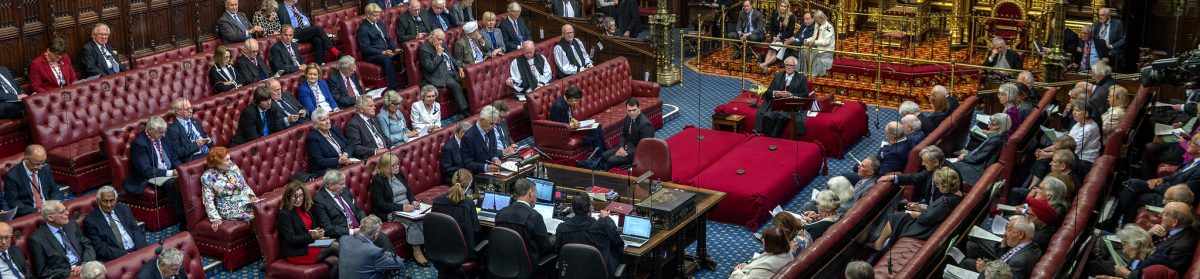
The Lord Bishop of Manchester: That this House do direct that, in accordance with the Church of England Assembly (Powers) Act 1919, the Clergy Conduct Measure be presented to His Majesty for the Royal Assent.
Lord Kennedy of Southwark (Lab, Chief Whip): My Lords, I have it in command from His Majesty the King to acquaint the House that His Majesty, having been informed of the purport of the Clergy Conduct Measure, has consented to place his interest, as far as affected by the Measure, at the disposal of Parliament for the purpose of the Measure.
The Lord Bishop of Manchester: My Lords, the Clergy Conduct Measure is a vital part of the Church of England’s ongoing reform of clergy discipline and safeguarding. During the passage of this Measure through the General Synod, the Church has acknowledged that the current clergy discipline system does not always serve complainants well. Too often, they have found the process opaque and painfully slow. Equally, it has not served clergy well, leaving many in a state of prolonged anxiety and limbo, worried they will lose house and job.
This new Measure is the result of six years of detailed work to address that situation. The key principle at its heart is proportionality. The system introduces three different tracks that complaints will be allocated to: as a grievance, as misconduct or as serious misconduct. Each of those tracks has its own independent procedure for the investigation and resolution of the complaint. So, by triaging cases effectively from the outset, the Measure seeks to ensure that every complaint is handled appropriately and at the right level of seriousness. Crucially, this will, we believe, lead to a much quicker process.
The Measure makes vital strides in aligning safeguarding and discipline processes. The one-year limitation period is abolished for allegations of serious misconduct, meaning that somebody who has been seriously harmed will be able to bring a complaint, regardless of when the alleged conduct took place, without having to seek special permission. In cases involving children or vulnerable adults, safeguarding professionals will automatically become a party to the complaint, providing critical input into the decision-making process. This alignment will be significantly better for both complainants and respondents. It ensures that safeguarding is treated not as some sort of separate silo but as absolutely central to and integrated within the disciplinary framework.
Alongside this, new statutory duties are to be placed on bishops to implement support for all those who are affected by a complaint. There are also significant protections for clergy: the introduction of restraint orders against those who persistently bring vexatious complaints—and we have them. For the most serious cases, where the cleric is prohibited from ministry for life, we have reintroduced deposition from holy orders: what used to be called being “defrocked”. That disappeared with the last clergy discipline Measure, but one thing that came out of the IICSA inquiry was the need often for victims and survivors to know that this person is no longer even legally a member of the clergy, whether or not they are allowed to function as a member of the clergy.
The Measure will be supplemented by rules made under secondary legislation. That will be considered by the General Synod next month and then laid before Parliament. I have been part of the committee drafting those rules, and I can assure noble Lords that they provide further safeguards, including robust case management powers for tribunal judges, greater protection for vulnerable witnesses by way of special measures when giving evidence, the power to appoint litigation friends for children and those with a disability or who lack capacity, and prohibitions on harmful cross-examination during hearings, unless an advocate has been appointed. These provisions basically mirror the best practice nowadays in the secular courts.
During the passage of the Measure to the General Synod, a very wide consultation took place. I am very pleased that the Church of England employee and clergy advocates, who are part of the faith workers’ branch of Unite and represent over 2,500 clergy and employees, have this week confirmed to me their support for the Measure being passed by your Lordships. I will leave it to the noble and learned Baroness, Lady Butler- Sloss, to take us through this in a little more detail in a few minutes’ time but, as noble Lords will be aware, when we first took this to the Ecclesiastical Committee, it found it “not expedient”. That had not happened since the early 2000s, but it is scrutinising us with great assiduity at the moment, which we appreciate.
The principal concern was that the original draft of Section 31(3) provided that disciplinary hearings would be held in private. The committee asked the Church to look again at that, and we did. The Measure was reintroduced to the General Synod in February and that section was amended, so that the presumption is now that hearings will take place in public—although not always, and I may say more on that later if noble Lords are interested. The Church is very grateful for the work of the Ecclesiastical Committee and, indeed, your Lordships’ House in scrutinising our Measures. We have better legislation because of it, just as the nation has better legislation in secular law. The revised Measure obtained overwhelming support on final approval in the General Synod. There were no votes against, which, considering the wide range of people on the General Synod of the Church of England, is quite something.
The Church is very aware that there remains further work to be done on our safeguarding structures. That work is continuing. It will come to the General Synod and to Parliament in due course, as will the rules for this Measure. The Measure is not a silver bullet—it does not resolve all past safeguarding issues in the Church—but it is a necessary and important step forward in how discipline is administered, and one that will be a benefit to all those who take part, both those who have proper complaints or grievances and those who are respondents to those matters. The road to reform has been a long one and I know there are many well beyond this Chamber who, according to your Lordships’ pleasure, would wish to see this Measure now obtain Royal Assent. I beg to move.
Baroness Brinton (LD) [V]: My Lords, I declare my interest that one of my sons is a priest in the Church of England.
I thank the right reverend Prelate the Bishop of Manchester for introducing the Measure to your Lordships’ House today, and the Ecclesiastical Committee for its helpful report on the revised Clergy Conduct Measure, published earlier this month, both of which have been very helpful. I also thank those people who have provided briefings and comments ahead of this debate.
My Front-Bench portfolio—victims and vulnerable people—means that I have a particular interest in formal processes to investigate and remedy complaints, whether minor or very serious. I should also add that, as president of the Lib Dems between 2015 and 2019, I was a witness at the Independent Inquiry into Child Sexual Abuse regarding historical sexual abuse by a senior Liberal Party MP. As president, I was involved with changes to our own party’s disciplinary process and worked with the Committee on Standards in Public Life, as well as my opposite numbers in other parties at that time. Some of my questions today reflect my experience of those processes a few years down the line.
Assessing how process works in practice is where I want to start. The statement of purpose for the CCM currently speaks of preserving
“the collective good standing of clergy”.
If viewed from the Church of England’s perspective, this is logical. A new Measure should work so well that it will root out established poor behaviour through a transparent process in which all participants feel heard, even if one party disagrees with the outcome. That would certainly speak to the continuing of the collective good standing of the clergy.
However, those with experience of past complaints under previous Measures that were unsatisfactory might be concerned that this would repeat the old practice, where the good standing of the clergy was there to protect the Church of England, regardless of the claimant and the cleric. That, of course, would be a failure, so it is good to hear the Bishop explain to your Lordships’ House how this system will work.
My first question is: what review and reporting structures will there be to ensure that it is the former and not the latter outcome? Which bodies in the Church will see annual general reports on how the system is working? If minor changes need to be made in practice, is there capacity to do this without starting all over again through synod and then Parliament?
I move on to the details of the process. The division into four categories of complaint is helpful, as is the flexibility for the assessor and/or the bishop to change or reallocate the complaint, in the words of the Measure, if further evidence surfaced so that it needed to move into a different category. I am pleased to see a formal process for vexatious complaints and litigants. It is a sad part of the tribalisation of our society that far too many people move straight to complaints and use the law repeatedly, rather than all parties being more considered and discussing things earlier on in the process —where that is appropriate, of course. It is clearly not in some of the more serious cases that are likely to appear.
The changes in process to reflect the IICSA recommendations are also clear and helpful, and it is right that the penalty by consent, where a penalty was agreed with a bishop entirely in private, has been abolished. The previous arrangement would inevitably lead complainants to believe that deals were being done behind the scenes. That is never good, so it is good that it has gone.
I also want to examine the boundaries between safeguarding and the complaints procedure, because the safeguarding procedure and the complaints procedure are separate but interlinked. IICSA’s full report demonstrated the failures of a number of organisations in our society that at best ignored warnings about abuse and at worst hid appalling long-term abuse by people involved. How will the Church judge the very different needs of a safeguarding service and a conduct process? It is vital that they are not separated but that they are different.
Finally, I note that the Ecclesiastical Committee report expresses concern that it was disappointed that its comments in a previous report about meeting in public were not taken into account, so it was good to hear from the right reverend Prelate that this has now been accepted. Accountability and safeguarding must be at the heart of any process like this, and transparency is also vital. As long as synod and other relevant bodies regularly see the annual data on complaints, including those unfounded or vexatious complaints and allegations of sexual behaviour, then the Church has the mechanism to monitor the type of cases and the judgments in those cases over time. Only that way will the Church get a clear idea of whether it has a fully functioning process. That is because the Church must be firm on dealing with those who are perpetrators of abuse, but also clear when vexatious claims are made to undermine clergy. That is a hard task, but I believe this Measure and its process appears to have the capability to do so. I wish it well.
Baroness Butler-Sloss (CB): My Lords, I will speak to the report that I seek leave to present to the House, as chairman of the Ecclesiastical Committee. I will leave the answers to the noble Baroness, Lady Brinton, to the right reverend Prelate, although I will make just one or two comments.
I chair the Ecclesiastical Committee, which was created in 1919 as a statutory committee, oddly, and not a Select Committee, which means we do not have parliamentary privilege—which every now again I need to remind the 15 MPs and 15 Peers who are its members. Our entire duty is to scrutinise the Measures of General Synod before they reach both Houses of Parliament. The right reverend Prelate gave the exact date, 2003, when there was last a finding by a previous committee of a Measure being inexpedient. Since then, every Measure passed has been accepted by the committee that I now chair.
However, in the last year, we have stopped two. That was almost unheard of. The first of the two that we stopped was the conduct Measure, and for a very good reason: the Church, through the General Synod, took the view that most of the hearings of serious misconduct should be heard in private. The committee which I chair took the view that the Church needed to be transparent and accountable and to be seen to be so by the public, who were becoming, as your Lordships will know, in some ways rather disillusioned over a number of sexual abuse cases and what the IICSA’s very good report had said. We stopped it on only one issue, although in the report there is also our concern that, where there are what are, in effect, Henry VIII clauses in a Measure, we would like to see the draft regulations, which would actually show what happens on the ground. We put that in the report, which I will present to your Lordships, and the Church has taken that on board.
The Church accepted that there should be the transparency of public hearings and made changes to the draft rules. Unfortunately, from that point of view, the lawyer to the committee pointed out, quite rightly, that these were ultra vires the Measure—in other words, they went beyond the measure—and therefore could not be accepted. Consequently, it had to go back to the General Synod. The committee is absolutely delighted with the current wording of Section 31(3) and is happy to find it expedient. So all is well now. It is an enormous improvement on the previous conduct Measure of 2003. Speaking personally, I cannot wait for it to become a part of the new system of the Church, because it is a huge improvement.
The interesting point raised by the noble Baroness, Lady Brinton, about safeguarding is an important one. Helpfully, church lawyers have provided a flow chart, including grievances, minor misconduct and serious misconduct, which, I assume, is largely either fraud or sexual abuse. That flow chart will make it much easier for everybody who has to work with it to understand exactly how this will work. As the noble Baroness, Lady Brinton, said, safeguarding is clearly interlocked with conduct, for obvious reasons. I have personally been involved in discussions with members of the Church about safeguarding, with my background as a former family lawyer and family judge. They are certainly finding their way on this. I hope that that will be one of the future Measures of the General Synod to come before this House, certainly not before the end of next year.
I do not feel qualified to express a view on the other aspects that the noble Baroness, Lady Brinton, raised. However, I hope that the House will accept my report, as well as the Measure.
Lord Parkinson of Whitley Bay (Con): My Lords, I am grateful to the right reverend Prelate the Bishop of Manchester for introducing the Measure and to the noble and learned Baroness, Lady Butler-Sloss, for setting out the work that the committee that she chairs and that Members, from your Lordships’ House and another place, have done as part of the scrutiny.
As the right reverend Prelate says, the Measure has been a long time in the making. It was first proposed in 2020 and originally approved by General Synod in 2025, but one can go back even further, because, as he and others have said, it implements the recommendations that were made by the Independent Inquiry into Child Sexual Abuse, which my noble friend Lady May of Maidenhead set up when she was the Home Secretary, in 2014, when I had the privilege of working for her as a special adviser.
Like many noble Lords, I was moved and impressed to hear the discussion between my noble friend and the most reverend Primate the Archbishop of Canterbury, who took part in the “Today” programme—my noble friend guest edited it over the Christmas period—talking about the extensive work that the Church has been doing to make sure that it is delivering for victims and survivors of abuse and speeding up the processes that it has to investigate questions of conduct. It is to be commended for that and for the attitude reflected by the comments of the right reverend Prelate that this is still ongoing work and that there is always more to do to make sure that the processes are working for victims and survivors. Our first thoughts must be with all of them today, as they have been in the debates throughout this Measure.
As we heard, slightly unusually, the Measure was first declared not expedient by the Ecclesiastical Committee. The dialogue between the two parliamentary bodies is a good one when looking at important Measures such as this. I welcome the engagement of the Church on that.
I have a few questions that relate to the changes that have been made to Section 31(3) and the central question of whether the court and tribunal hearings will now happen in public. I completely agree with what the noble and learned Baroness, Lady Butler-Sloss, said about the importance of transparency and accountability, and can understand why that change has been made, but these are complex issues that we are dealing with, and the Church is not a regular employer and this is not a regular type of job; this is a vocation and much broader. We ask a lot of our clergy; it is not a nine-to-five job or a Monday-to-Friday job either.
As the Measure sets out in Section 3(1)(d), the meaning of misconduct can include
“conduct which fails to meet the standards required of a clerk in Holy Orders”,
which is a broad term. As the Measure later sets out, supporting a particular political party or even voicing that support can be drawn into it. If a clerk in Holy Orders is divorced, they must tell their bishop within 28 days. Of course, some clergy are not permitted to marry: if you are a gay cleric, you are allowed to form a civil partnership, but it must be a celibate one. These are sensitive issues that do not apply to regular workplaces.
Can the right reverend Prelate say a little about whether allegations of previous relationships that clergy might have had would be covered by the hearing in public or by the new provisions of Section 31(3)(b)? These allow future rules to set out circumstances where, in sensitive cases, they can be heard without some of the prurient details of people’s private lives being brought into it. That would be useful to hear.
The Living Ministry study has found that, of clergy surveyed, 40% feel isolated in their ministry, 41% feel demoralised and 35% have shown signs of mild or clinical depression. Speeding up the system is good for those who are accused, as well as for those who bring complaints. Like the noble Baroness, Lady Brinton, I welcome the provisions on vexatious complaints. I agree with her about not being speedy in our litigiousness and sorting things out in a human way, as well as having these proper and formal structures to investigate more serious complaints.
We all appreciate that this is a deeply sensitive and complex area. We are appreciative of the work that has gone into this, in the General Synod and the Ecclesiastical Committee here. I note in the report that the committee is picking up the point about the Henry VIII powers. We are strict with Governments in this House on that and, seeing as it is to Henry VIII that we owe the existence of the Church of England, we will be no more sparing in our criticism of secondary powers with the Lords spiritual.
If the right reverend Prelate can say a bit about that, we would welcome it. I thank him and colleagues for the work that they have done and look forward to this new Measure delivering speedier justice for victims and those accused alike.
The Lord Bishop of Manchester: I thank all noble Lords who have taken part in this short debate and for the questions that have been raised. I particularly thank the noble and learned Baroness, Lady Butler-Sloss, for the scrutiny that she and her committee have given to this matter. I would be grateful if she could pass that on to the committee when it is next in session.
The noble Baroness, Lady Brinton, referred to IICSA. I was another person who gave evidence in person at IICSA. I was the expert on Anglican religious monastic communities before IICSA. It was a gruelling experience to hear some of the horrific things that had been done by people who were claiming that this was an expression of monastic life when it was far from it. The noble Baroness asked about review and reporting structures. Under the existing Clergy Discipline Measure, there is a clergy discipline commission. Similarly, there will be a clergy conduct commission as part of the new Measure, which will constantly review how the Measure is working and whether it needs tweaking here or there. It will produce regular reports to the General Synod, as its predecessor has done. That will allow us to keep the Measure under review at all times.
This raises the question, as the noble Baroness said, of how you make minor changes. We hope that minor changes will largely be made to the rules or to the code. The rules will be laid before Parliament under the negative procedure, if I recollect correctly, so there will be an opportunity for Parliament to comment if there are issues with them. Minor changes that way can be dealt with fairly quickly. I expect that at some time in its life the Measure will need more substantial amendments: that has been the case with the existing Measure. It was produced in 2003, but a number of amendments have been made to it in the years since—particularly in areas around safeguarding, not least so that in safeguarding cases the one-year rule of timing out complaints did not apply. We are extending that in the new Measure to all things that fall at the serious misconduct level, rather than just those that are about safeguarding abuse.
Safeguarding is well integrated. We are going through a process, diocese by diocese and cathedral by cathedral, of independent audits by the INEQE organisation. Manchester gets its turn in May of next year. I have been struck by how positive many of those reports have been as they have come out. They have shown a very different picture of safeguarding in the Church of England today from what it clearly was sometimes in the past. While we are not complacent and those reports are providing us with further areas of work to do, we are conscious that significant progress has been made. That external scrutiny by an organisation that has nothing to do with the Church of England I am sure will continue on a regular basis. I assure the noble Baroness, Lady Brinton, that there will be that kind of auditing of what is going on, and not the Church marking its own homework.
Again on safeguarding, earlier this year your Lordships’ House approved the safeguarding redress Measure. I was the vice-chair of the committee that produced that Measure. Once it is completed, the legal processes will offer a means of redress that is far beyond anything that has been possible before. It picks up much of what was in the IICSA report. IICSA did suggest that government might want to have some sort of redress scheme. We have not seen that yet from Governments of either party, but we have seen that from the Church of England.
The noble and learned Baroness, Lady Butler-Sloss, reminded us that having the hearings in public is one way of giving the public confidence in how matters are being dealt with. But the noble Lord, Lord Parkinson of Whitley Bay, rightly asks what we do about matters where the interest might be prurience, or where details are discussed where a member of the clergy has a failing in some respect that is not necessarily appropriate for airing in public. Under the existing Measure it is done in private, and I have not yet seen a complaint of that nature ever brought to me in the many complaints I have had to deal with over more than 25 years as a bishop. There will be provision under the new system, and the rules will specify in greater detail that cases, or parts of cases dealing with such details, can be heard in private. That will allow sensitive details to be handled, for matters that should not be coming into the public domain. I hope the noble Lord will accept my assurances on that.
If this was a nine-to-five job, I would have gone home quite a while ago. It is not, but it is one I owe to King Henry VIII, because I sit in this House and indeed in my see by virtue of powers appropriated by the Crown that previously to Henry VIII belonged to the papacy. I have much for which to be grateful to the late King. I hope that with those comments, your Lordships will feel it right to let this go through.
Motion agreed.


You must be logged in to post a comment.