
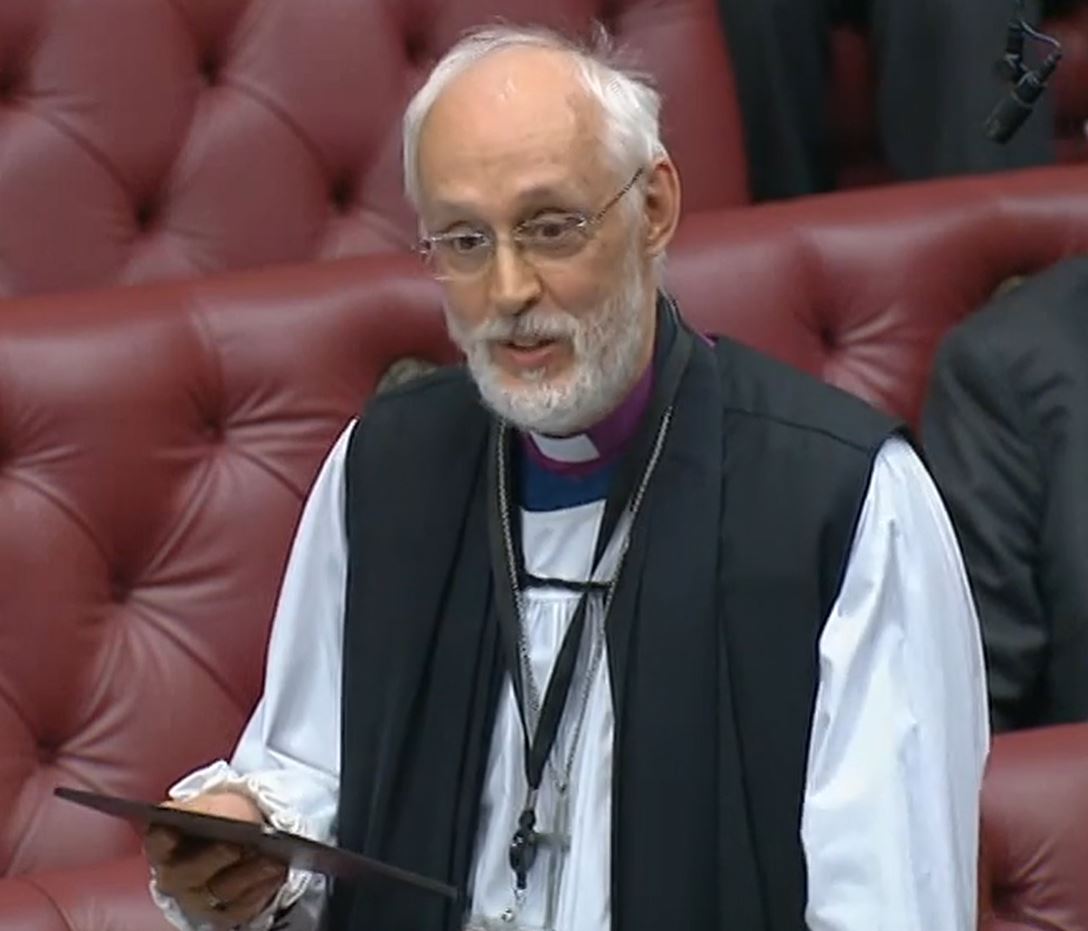
The Bishop of Manchester spoke in support of amendments to the Financial Services and Markets Bill focused on strengthening adherence to regulatory principles on 29th June 2026:
The Lord Bishop of Manchester: My Lords, I, too, support all the amendments in this group, but I will limit my remarks to Amendment 80, to which I have added my name. I note that I appear to be the only man to have signed any of the amendments in this group. I hope that does not mean that climate concern is now becoming divided on gender lines; climate risks are not sex specific. Perhaps I might encourage some other men to rise and support amendments in this group.
We have heard that Clause 17 will remove the requirement that the FCA and the PRA have regard to certain regulatory principles, including those relating to environmental obligations. As the climate crisis grows and public services are forced to adapt to a growing range of climate-related challenges, weakening such regulations is neither environmentally nor economically sustainable. The regulatory principles of the previous Financial Services and Markets Act 2023 were intended to ensure that climate risks were incorporated into regulators’ day-to-day decision-making. I am afraid that the evidence is not very good that they have been sufficiently incorporated in practice.
We have just heard from the noble Baroness, Lady Sheehan, about deforestation. In 2022, a report from the Make My Money Matter campaign found that over 30% of UK pension fund public equity and corporate bond investments were in institutions with a high risk of causing deforestation. When I was chair of the board of the Church Commissioners, I was very proud that it was one of the major investors in sustainable forestry across the world and was constantly seeking to increase our investment in that sector as something that was doing climate good at the same time as making the returns we needed as an investment institution.
Deforestation is already a priority in the Government’s net zero strategy, but weak regulation has enabled the UK financial system to fuel climate destruction directly. If we weaken the existing framework, it will only move us further in the wrong direction. As the climate crisis deepens, we have a responsibility to exercise wise stewardship over our planet to ensure that the consequences of environmental degradation are not simply passed on to future generations. That, for me, is a theological point as much as a practical one. It can be done only if we embed climate and nature implications in financial decision-making at every level.
It is not just an environmental imperative; it is an economic one as well. Climate change presents significant challenges to the Bank of England in meeting its primary objectives of controlling inflation and ensuring financial stability. As we have heard from the Energy and Climate Intelligence Unit, climate change was responsible for a third of the UK’s high street food price inflation in 2023. Meanwhile, the UK recently experienced its worst inflationary crisis in four decades due to the price volatility of fossil fuels bought on the global market. Without action, vulnerable communities, including those in my own diocese of Manchester, will tend to bear the greatest weight of fluctuating prices and economic insecurity. I have just come from the launch earlier today of a new inquiry by the Trussell Trust into the need for food banks and why that, sadly, continues to be a growth area in our community. Why are people finding it harder and harder to afford to feed their households week on week, year on year?
The General Synod of the Church of England has set out ambitious targets for attaining net zero, recognising our responsibilities as God’s stewards of the planet. I note that similar robust targets have been set by the former mayor of Greater Manchester, where much of my diocese lies. I wonder whether the honourable Member for Makerfield will have, and indeed express, a view in the other place. In the meantime, we need to use every lever we have to bring human-made climate change under control—including this Bill. We should not make any legislative changes that act in a contrary manner. What is set out in Amendment 80 would not only remove the deregulatory changes in Clause 17 but strengthen regulatory responsibilities by embedding climate considerations in decision-making and making environmental responsibilities clearer. I hope the Minister will set out how climate risks will remain central to the decisions that regulators make, should this clause remain in the Bill.
 The Church of England in Parliament
You must be logged in to post a comment.