
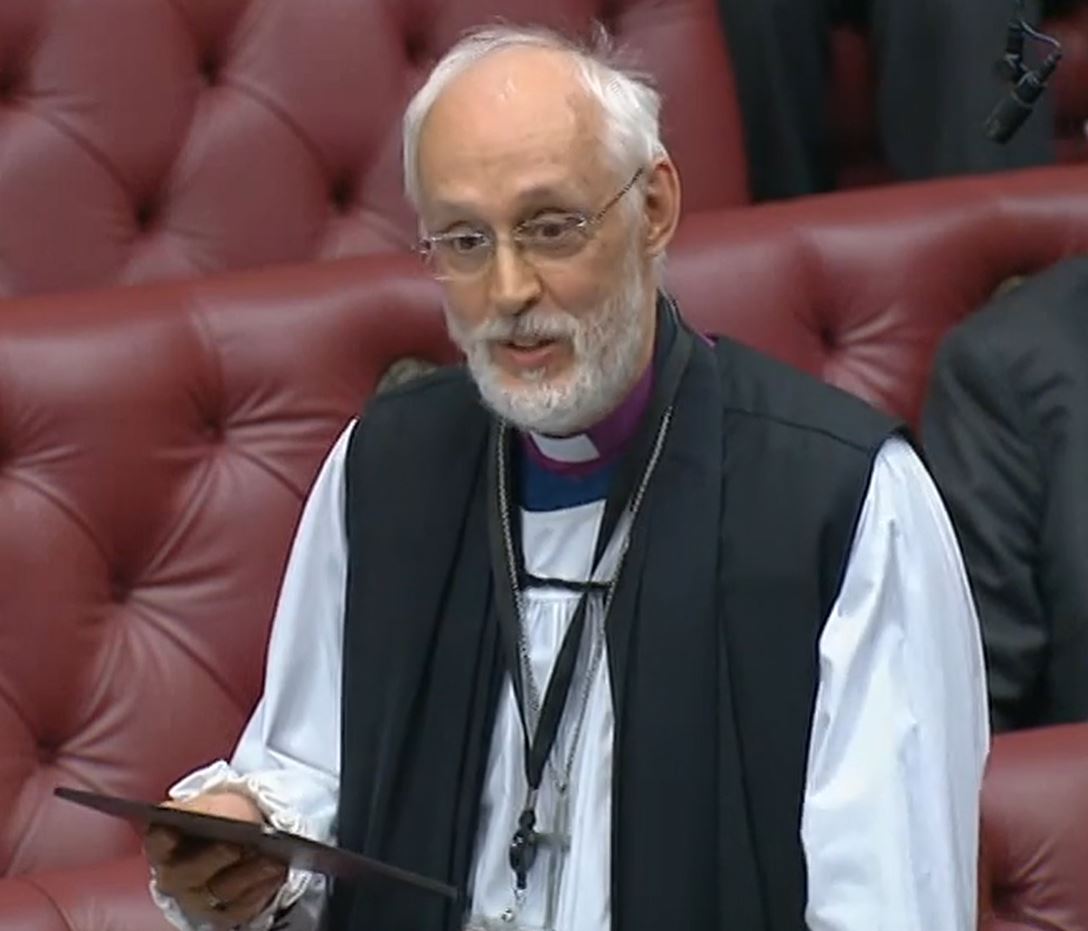
On 29th June 2026, the Bishop of Manchester spoke in a debate on the Climate Change Act 2008 (International Aviation and International Shipping) Regulations 2026, commending the regulations and their environmental impact:
The Lord Bishop of Manchester: My Lords, it is a privilege to follow the noble Lord, Lord Deben, on matters of climate change. The way he spoke with such passion and wisdom is an example of this House at its best.
Climate change presents the greatest collective action problem of our age. Every nation would prefer others to act first, which is why strong climate leadership matters. I found myself challenging the Government for not doing enough earlier this afternoon in Committee of the Financial Services and Markets Bill, so I want to commend these regulations tonight.
Emissions from aviation and shipping have grown rapidly over the past 20 years. According to the Climate Change Committee, as the noble Lord, Lord Deben, has just said, aviation emissions are projected to become the largest sector by 2040. Legislating specifically to incorporate these industries into carbon budgets is, therefore, the fair and proportionate thing to do. These regulations are not introducing new sector limits or altering targets. As the Government have already said, they are fulfilling prior commitments set out in carbon budget 6, which has already been legislated for, and carbon budget 7.
Embedding these commitments in legislation empowers the Government to hold these industries to account for their emissions. It sets a clear example to other nations of our commitment to international climate goals. Omitting aviation and shipping from carbon budgets would weaken the credibility of our climate framework and damage our position when it comes to international climate diplomacy, which is so important.
Earlier today, in Grand Committee, one noble Lord sought to persuade us—if I understood the argument—that, because there are other nations with a worse record than ours on combating climate change, it would be detrimental to our competitiveness, and therefore a mistake, for us to take carbon emissions seriously. Britain’s role in the world should never be to seek to win some unsavoury race to the bottom.
Turning to theology, if I may, most serious modern Christian theologians—including the Pope, as the noble Lord, Lord Deben, has just referred to—have long discarded the old argument of dominion. At its least pernicious, this assumed humans could disregard our impact on the environment because God had given it to us to exploit. At its worst, often among ultra-conservatives in the USA, it positively encouraged exhausting the planet’s resources in the belief that destroying our environment would hasten the return of Jesus Christ. Those views may be less often publicly stated now than 20 years ago, but I fear their malevolent presence still lurks behind some of the most vehement opposition to limiting carbon emissions. We are not the planet’s despotic overlords; we are a part of creation. We have a responsibility, as others have said, to pass on to future generations a world as beautiful as the one we inherited.
We are already witnessing, as the noble Baroness, Lady Jones of Moulsecoomb, has reminded us, the effects of climate change through fluctuating weather patterns, pressures on food production and more extreme climate events. As time goes on, it will be the most vulnerable, those experiencing poverty and the generations after us who will feel the effects most strongly. This lunchtime, I was at the Trussell Trust food bank in Hammersmith and Fulham for the launch of a much-needed inquiry into the need for food banks, for which I am a member of the panel.
The rapid increase in prices of basic foodstuffs over recent times, so impacting on our poorest sisters and brothers, is a direct consequence of the increasingly extreme weather climate change we are already experiencing and which, last week, we lived through. If noble Lords had been trying to take a service wearing fancy robes on Sunday in Manchester Cathedral, they would be very much on my side.
The window of opportunity for action is quickly closing, but these regulations present an important step towards ensuring that every sector fairly plays its part in meeting our climate commitments. I commend them.


You must be logged in to post a comment.