The Bishop of Norwich spoke in support of amendments on wellbeing and accommodation standards for members of the military during a debate on the Armed Forces Bill on 2nd September 2026:
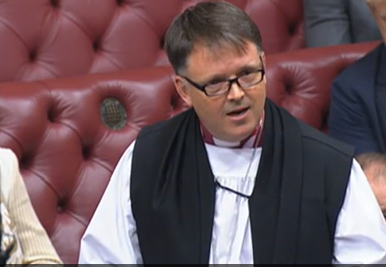
The Lord Bishop of Norwich: My Lords, I rise to support Amendments 17 and 18 in the name of the noble Baroness, Lady Smith of Newnham, and I am very grateful to her for spending time over the weekend explaining them in more detail. The noble Baroness is quite right in what she has just said to this House about the need to care for those who are in single accommodation, recognising that that accommodation can be used throughout a whole service career.
My two concerns around why I think single accommodation needs to be brought in scope with further consideration are about, first, well-being and, secondly, retention. Well-being is vital for the good running of His Majesty’s forces. We ask a huge amount from those members and we should be providing them with accommodation that is of a standard that is comfortable to live within, because, certainly on deployment, they are often living in accommodation that is very challenging. It is good for mental health and it is good for general all-round health and fitness to have accommodation that provides that basis for a good, well-lived life.
On retention, we know that we are not recruiting at the levels we should be, that there is loss of forces, and we would like to see people staying for longer military careers. Having accommodation of a good enough standard, places that people can call home, is vital for retention. I very willingly support the noble Baroness, Lady Smith, on her Amendments 17 and 18.
Later in the debate, the Bishop tabled amendments to the bill on the status of the Provost Marshall:
Clause 16, page 36, line 22, leave out paragraph (b)
Member’s explanatory statement:
This amendment, and others in the name of the Lord Bishop of Norwich, seek to remove the requirement that an offence must be a “serious offence” for a Provost Marshal to be the appropriate authority and instead allow the Provost Marshal to be an appropriate authority in all service offences.
The Lord Bishop of Norwich: My Lords, in moving Amendment 27, I will speak also to Amendments 28 to 34 in my name; I thank the noble Baroness, Lady Smith of Newnham, for her support. I declare an interest, both for this series of amendments and for my contributions in Committee earlier today, as the father of a soldier. The amendments I am proposing are all interlinked and aim to give service police the same authority to authorise and/or request pre-charge custody as is given to commanding officers in all offences. I am grateful to the Minister for his work on the Bill and for the generosity of his time in speaking to me over the weekend about the amendments in my name.
The Bill initiates the change to give service police power to authorise custody in some circumstances. This is a very welcome change and a step in the right direction in making service police investigations truly independent of the chain of command. However, in my view, it does not go far enough by failing to give service police power to authorise custody in all circumstances. The current wording of the Bill allows service police to authorise custody only for specific offences while allowing the commanding officer to authorise custody in all circumstances.
The Bill creates the definition of “serious offence” in Clause 16(3), which sets out the offences that service police can authorise custody for. However, this definition does not include key offences such as battery, harassment and stalking, as has already been mentioned, even in the case of domestic abuse. It does not include theft, even in high-value cases, nor the vast majority of military conduct offences. The definition of “serious offence” is different from “serious service offence”, which is defined in the Armed Forces (Powers of Stop and Search, Search, Seizure and Retention) Order 2009. This definition is used by service police to authorise searches upon arrest. It gives a far simpler definition of offences to include those offences and specific military conduct offences that are indictable. These differences will create additional complexity and bureaucracy for service police acting in very dynamic arrest situations and increase the risk of authorisations for custody and/or searches being made incorrectly when the definitions are so similar.
The provision to allow service police to authorise custody for serious offences is a partial step to give service police greater parity with their civilian counterparts. It is noted that the authority will likely be delegated only to OF-2s—Royal Navy lieutenants, Army captains or RAF flight lieutenants—within the service police. The civilian rank to authorise custody is a sergeant for all offences, a rank and responsibility level significantly lower than that of an OF-2. The provision also gives the service police authority to authorise custody and reduces the following risks about availability, sufficient understanding and impartiality, which are frequently experienced. I will briefly go through each of those.
First, on availability, it is a regular occurrence that commanding officers or their delegated representatives are not contactable by telephone at night and at weekends. This means that service police have to physically attend commanding officers’ houses to gain custody authorisation. When some service police shifts have only three personnel covering a huge regional area—there are five regions covering the entirety of the UK—this can delay other vital investigative actions, such as victim engagement and contact, recovery of forensic evidence and/or the conducting of searches.
Having sufficient understanding is the second point. At the moment there is an issue of some commanding officers and their delegated officers not having sufficient training in their powers. This has led to authorisations of custody being delayed as they seek further advice and, on rare occasions, custody not being authorised without significant pressure from RMP senior officers explaining the obstruction that will be caused to an investigation by not authorising custody. The intent of the Bill to allow service police OF-2s and higher to authorise custody will mean that custody will be authorised by personnel specifically trained to deal with these circumstances.
Finally, there is impartiality. An additional issue is the conflict of interest posed by allowing commanding officers or their delegated representatives to have sole decision-making on authorising custody. The noble Baroness, Lady Brinton, spoke eloquently and movingly about this area on the previous group. While most officers within the Armed Forces can appropriately be entirely impartial, there have been occasions when clear conflicts of interest have arisen. There is a significant reputational risk to the Armed Forces in this current arrangement, I suggest. Giving additional powers of authority to service police will negate the risks of conflicts of interest by ensuring that an independent service police officer can authorise custody in all circumstances.
I assure the Minister and the noble Baroness, Lady Goldie, that the proposed amendments standing in my name do not remove the ability of a commanding officer to authorise custody. None of these amendments removes their jurisdiction to conduct a summary hearing. None of these amendments changes the current situation of the case eventually being referred to the CO to consider a charge. I beg to move.
Lord Coaker (Lab, MoD): Turning to the amendments in this group, I thank the right reverend Prelate the Bishop of Norwich for his views and acknowledge his concerns around Clause 16. As I have explained, the Government’s view is that, in its current form, it makes a targeted and proportionate change to the authorisation process for pre-charge custody in the most serious service police investigations. I will look at the particular issue that the noble Baroness, Lady Goldie, raised about the availability of commanding officers to make these decisions.
As I have stated throughout this speech, in routine cases commanding officers authorising pre-charge custody remains appropriate. However, for investigations of more serious offences, a focused power for provost marshals, confined to offences outside the commanding officer’s summary jurisdiction, is created. Therefore, the amendments seeking to expand the provost marshal’s custody authorisation powers to the investigation of all offences, not just serious offences, undermine, in the Government’s view, the preservation of the commanding officer’s centrality to custody decisions in appropriate non-serious contexts.
Amendment 34, seeking to allow provost marshals to apply to a judge advocate for an extension of custody in all cases, is therefore not required. Commanding officers will retain their powers to authorise custody in some cases and therefore continue to apply for an extension under Section 101(1). Provost marshals’ powers applying for an extension to custody without charge for these cases in which they have authorised custody is covered by new subsection (1A) of Section 101.
Amendment 29, on the removal of reporting requirements to the provost marshal for serious crime and the substitution of the provost marshal of the investigating service police force, is additionally therefore not required. This part of the clause is about reporting to the appropriate authorities on arrest and, when an arrest is made for a serious offence, notifications to both the provost marshal for serious crime and the other relevant provost marshals are required for deconfliction purposes. The way the clause is drafted ensures that all provost marshals are covered appropriately, as per Section 375 of the Armed Forces Act, which contains the definitions relating to service police.
I apologise again to the Committee for going through this in significant detail but, as we continue our discussions around this, I thought it important to lay out the Government’s view and the rationale for some of the changes we are making with respect to provost marshals in serious cases and for retaining the authority of the commanding officer with respect to summary cases: in particular, trying to resolve the need to move quickly because of some of the serious crimes that the new Defence Serious Crime Command is dealing with, while not undermining the authority and operational effectiveness of the commanding officer. With that, I ask the right reverend Prelate the Bishop of Norwich to withdraw his amendment.
The Lord Bishop of Norwich: My Lords, I am grateful to the Minister for his response and for agreeing to look further at the availability of commanding officers. We should remember that, very often, it is their delegated
person being dealt with. They can frequently not have had their required training in this area, which means that it is actually the Military Police advising the delegated person to make the decision to tell the Military Police. There are some things to explore there within the Ministry of Defence and I am grateful that the noble Lord has agreed to look at that further.
The key thing here is speed and simplicity. Both are needed in the custody process so that there is justice for all and decisions are made in a timely way, so that the due process can happen. I am grateful to the other speakers—to the noble Baroness, Lady Smith of Newnham, for her support and to the noble Baroness, Lady Goldie, for her very considered reflections and challenge. I look forward to seeing how this progresses with the Minister’s response and I reserve the right to bring this back on Report, but for now, I beg leave to withdraw my amendment.
Amendment 27 withdrawn.


You must be logged in to post a comment.